Blog
Tuesday, February 15, 2022 - 20:19
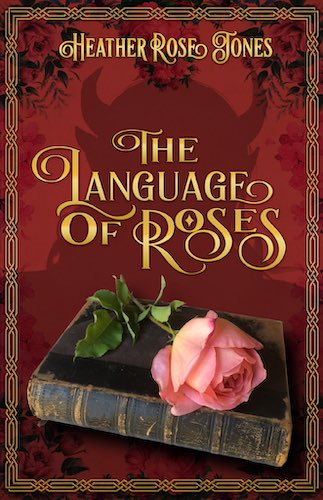
You can now pre-order The Language of Roses from the publisher -- Queen of Swords Press! You know, I really do need to get an author newsletter out...
Major category:
PromotionPublications:
The Language of Roses View comments (0)
Monday, February 14, 2022 - 15:35

When I'm in the middle of a run of covering full-sized books, I sometimes forget how densely packed with interesting analysis articles can be. There's also a bit more feeling of accomplishment when I get to increment the numbers of publications every week, rather than once a month or so! It's been a while since I did an update on the scope of the project. This is item #339, which means I've covered more than a third of the publications in my master database. The master database includes 911 entries currently, though there's some duplication (articles published in more than one place) and a handful of items are ticked off as "not relevant". More and more I'm being picky about how I prioritize tracking things down. There are some topics that have their own academic cottage industry that far oustrips the amount of LHMP-relevant information to be found. And I regularly feel like I need to work harder to expand outside the topics beloved by the anglophone academic community (with the caveat that my own ability to read and digest material is limited to a small set of European languages).
I'm once again donating a f/f historical research consultation to a political fundraiser. (Romancing the Vote, I won't post a link because it will be obsolete in a week, but if you catch the window you can search on that.) I'm torn between hoping that the auction winner picks an era and setting I have lots of information on, and hoping they pick one that will challenge me to learn new things. In either case, I have an ulterior motive in making the donation: I'm trying to start writing up "chapters" in an overall handbook for writing f/f historical romance, and doing it on an external deadline helps. (The donation can also take the form of a manuscript critique, but in the prior instance the winner picked the "research essay" option.) I have no idea when I'll get enough of this put together to make a viable book (so don't hold your breath), but it does help me feel like there's an ultimate goal to the Project.
Major category:
LHMPFull citation:
Ballaster, Ros "`The Vices of Old Rome Revived': Representations of Female Same-Sex Desire in Seventeenth- and Eighteenth-Century England", in Suzanne Raitt (ed.), Volcanoes and Pearl-Divers: Lesbian Feminist Studies. Onlywomen, 1993.
This is one of those articles where I had to go check the publication date and then revise some of my knee-jerk reactions to certain details. 1995 doesn’t always feel that long ago (Heather, it was over a quarter of a century ago!) But in terms of queer historical scholarship it’s an entirely different era. Reading through that filter, I become aware of the “academic cohorts” people operate in. Who are they citing? What is taken for granted and what feels new and radical? History is not a static field, and queer history is a very clear example of that principle.
Ballaster uses the lens of Delarivier Manley’s The New Atalantis, and especially its “New Cabal” as a lens for exploring knowledge of, and attitudes toward, female same-sex eroticism in 17th and 18th century England. (Manley’s book was published in 1709 and so speaks to both centuries.)
Manley’s description of the sex lives of the New Cabal is exaggeratedly coy. This women-only group meets censure for reasons the narrator pretends not to understand, for what could women do together that would be improper? Those who slander them “must carry their imaginations a much greater length than I am able to do mine…they pretend to find in these the vices of old Rome revived.” While accurately noting that 17-18th c texts often refer to female same-sex erotics only by circumlocution, Ballaster interprets “the vices of old Rome” to be a reference to the belief that the fall of Rome was due to rampant male homosexuality, and suggests that this need to find parallels with male behavior might seem to connect with Trumbach’s claim that there were no social models or roles for female homosexuality in the early 18th century—a claim that Ballaster will demonstrate to be false.
[Note: I think Ballaster is mistaken about even the superficial reading of “the vices of old Rome”, given the demonstrated awareness in 17th century writings of Martial’s epigrams and Lucian’s Dialogues in reference to f/f sex, and use of references to those as one of the standard circumlocutions. Furthermore, as Ballaster eventually argues, the satirical context of Manley’s narrative undermines a literal reception of the narrator’s mock-ignorance. But here I am leaning on discussions in more recent work, such as Wahl 1999, which points out the potential legal protection in hiding political satire behind the mask of innocent disbelief.]
The New Atalantis was, first and foremost, a political satire. A separate key to the women of the New Cabal identified them primarily with women in the household of Queen Anne, and Manley was not the only political satirist who used insinuations of lesbianism against Anne’s court. (See e.g., Miss Hobart in Hamilton’s Memoirs of the Life of the Count de Grammont.) The general view of queer historians at the time this article was written (it cites Faderman, Dekker & van de Pol) was that the potential for f/f sexual relations in the 18th century was either not taken seriously or dismissed entirely, and that even the women who were romantically involved did not see their relations as potentially sexual until the end of the 19th century, with the exception of Hobby whose suggests that the work of Katherine Philips indicates something resembling a “lesbian identity.”. But Ballaster goes on to argue against the prevalent view. [Note: which is a great relief, since otherwise I’d spend most of this article muttering and grumbling, as I did when summarizing the relevant work by Faderman and Dekker & van de Pol, et al.]
Rather, Ballaster asserts, there were a variety of representations of female same-sex desire in circulation during the 17-18th centuries that challenged patriarchal norms. Alongside the image of the gender-transgressing cross-dresser or “hermaphrodite”, and the rise of romantic friendship, the sharpest challenge came from the image of the “tribade”—women whose same-sex relations were explicitly centered around sexual desire.
The article now reviews the state of the field of lesbian historical theory in the mid 1990s, especially the ways in which it conflated gender identity and sexuality in ways that muddle the interpretation of 17-18th century experiences. This distinction becomes most pertinent in comparing the different challenges presented by cross-dressing women--whose transgression was overt, but could be erased by removing the exterior signs, and the tribade—whose transgression was inherently covert, and which could not be subsumed into a heteronormative framework.
In looking for representations of f/f sexual desire, Ballaster reviews the corpus of 16-18th century medical representations of sex between women, including theories of a physiological cause or consequence of f/f sex, and popular pornographic tropes, such as “initiation” or convent scenarios.
While such literature can be discounted in its details as reflecting male fantasies, it does demonstrate that awareness of f/f sexual possibilities was in general currency, at least in certain circles. The contrast between male-authored sexual scenarios, and female-authored romantic/platonic scenarios raises the question of whether it is meaningful to speak of a “lesbian identity” in either context.
Representations of “lesbian desire” in the 17-18th centuries fell in three general models (per Vicinus): “the aristocratic libertine woman depicted in pornography and political satire, the cross-dressing woman of the working classes, and the romantic friend of the middle classes.” But Ballaster notes that real-life exceptions can be found in all cases, such as middle-class cross-dressing actress Charlotte Charke. Ballaster is less interested in whether a class-based distinction is “real” than in how it is given meaning by modern historians. In particular, how the first category is often dismissed as inauthentic due to the prevalence of male authorship. But female authors expressing the other two models were well aware of the social and literary conventions they were operating within, just as much as writers of pornography and satire. The poetry of Katherine Phillips is explored once more regarding what it can tell us about the “real” experiences of the women writing and written about in her work. Regardless of the potential place of sexual expression within Phillips’ life, it’s clear the relationships she depicts disrupted and challenged the centrality of heterosexual marriage.
If female same-sex desire was considered genuinely subversive, this challenges Faderman’s position that romantic relations between women were tolerated and even approved by society because they were considered non-sexual and not perceived as challenging patriarchal structures. But just as Faderman claims that 19th century romantic friendships were viewed as inconsequential, Ballaster points out that earlier authors such as Brantôme viewed f/f sexual relations as inconsequential—both in the sense of “having no consequences for the social order.” So perhaps men’s opinions on the subversive potential of f/f relations are not a reliable guide to women’s experience of that subversive potential?
Both the “marriage” of Sarah Ponsonby and Eleanor Butler and the explicit sexual details revealed in the diaries of Anne Lister suggest the existence of an “underground” culture available to women who desired women. Lister in particular depicts a variety of means by which such women identified each other and established connections and relationships.
The article now returns specifically to Manley’s New Atalantis and other sexually-charged satirical writings about Queen Anne’s circle. In addition to the roman a clef characters of The New Cabal, a more direct satire, but targeting the queen’s favorite Abigail Masham, The Rival Dutchess: or Court Incendiary depicts Masham as confessing to “having too great a regard for my own sex”. (The context makes it explicitly clear that she is talking about sexual desire.) And these were not the only works that used the motif of communities of aristocratic, learned women inclined toward same-sex desire as a sign of “the world turned upside down”. But they also convey a complicated anxiety about women in positions of power, and women who gain influence over the powerful through sex (whether sex with men or women).
Interpreting Manley’s work as indicating anxiety about all-female networks in general is complicated by her own gender, as well as the clearly political motivations of her attacks. Further, within Manley’s text, women are presented as the wise and knowledgeable commenters on the New Cabal, as well as the subject of that commentary. And the socio-economic structure of the New Cabal, as described within the work, might be considered an idealized, libertine, self-regulating (and verging on socialist) state. The women of the New Cabal, regardless of Manley’s superficial political intent, offer a vision of an entirely different social and sexual economy, centered around women who pledge to devote themselves sexually only to other women. It is not an imitation of heterosexual relations, but another thing entirely.
Place:
Event / person:
Wednesday, February 9, 2022 - 08:06

The contracts are all in, so it's time to announce the full 2022 Lesbian Historic Motif Podcast fiction line-up!
Our January story, already broadcast, was:
- "Palio" by Gwen Katz - horseracing politics and flirtation in 17th century Siena
The four stories we just bought (in no particular order, as the schedule isn't set yet) are:
- "A Farce to Suit the New Girl" by Rebecca Fraimow - set among a Jewish theater company in late 19th century St. Petersburg
- "From the Bird's Nest" by Jennifer Nestojko - a gentle episotolary story of claiming one's life in 19th century New England
- "The Wolf that Sings on the Moutain" by Miyuki Jane Pinckard - rivalry and supernatural danger in Heian era Japan
- "The Sprits of Cabassus" by Ursula Whitcher - curses, ghosts, and religious tourism in 4th century Cappadocia
It's always interesting to see the themes that emerge in each year's submissions, both those chosen and those not. Ghosts appeared several times. The performing arts were a noticeable presence, with singers, actors, and music hall performers. Several submissions were set in religious communities. The distribution in era was fairly similar to previous years, but with an unexpected cluster in the 17th century. (Yes, it's one of my favorite centuries--were people playing to that?) Geographic distribution was also similar to previous years with a heavy focus on North America and the British Isles. (I've never received a submission set in South America, and only one set in Africa if you don't count Ancient Egypt.) In the first three years of the fiction series, most of the submissions came in during the last week of January, but last year and this one there was a fairly steady flow throughout the month. Much easier on my nerves!
So for those of you thinking ahead to submitting next year, what is it that catches my eye and makes it to the final round? The first hurdle is simply "good writing". Prose that is not only competently written but that uses language in skillful ways. The writing should paint a vivid picture and it should be clear that every word and sentence was chosen to create the desired effect. If you're a beginning writer, the place to put your energy is in learning and practicing your basic writing skills. Plotting, characterization, and background research are relatively easy to pick up and are can be fixed in revisions. But solid writing chops are essential to make it in the door. They require work and practice and, ideally, good critique partners.
The next hurdle is that the central character(s) of the story should clearly fit the lesbian/sapphic theme in some way and should do so in a way that rings true to their historic context. I'm kind of picky on that point. I don't want modern personalities dressed up in costume on a stage. And, needless to say, the historic setting itself should also ring true. I can enjoy playing fast and loose with history as much as the next person, but it's not what I'm looking for in this series.
After that, the considerations become more flexible. I tend to be drawn to stories that are "a story" rather than a character sketch or a slice of life. I like an episode where the central character changes in some way in response to the events. But I hope I'm open to a diversity of narrative structures, not all of which have that pattern. I generally hold to the notion that a story should come to an end rather than merely stopping, and that stories should have an underlying meaning and theme that real life doesn't always have. And, in general, I prefer stories in which all the characters--even villains--have complex lives and personalities rather than simply fulfilling a functional role. They don't all have to be likeable or pleasant, but they should make sense.
The ultimate consideration--and the one that can be the hardest on authors--is that I want to buy a reasonably balanced diversity of stories in terms of setting, era, and plot. If I get four fabulous stories about late 17th century sword-wielding opera singers who rescue their girlfriends from convents, I'm still only going to buy one of them in any given year. (Though if I ever did get four fabulous stories on that theme in a single year, I might suggest kickstarting an anthology!)
Major category:
LHMPMonday, February 7, 2022 - 20:25
One of the long-term "resource" projects that I'm gradually collecting data for is a catalog of romantic, erotic, and sexual behaviors indexed to the cultures and eras when they were popular, and placed in their social context. Think about the simple kiss. What did kissing mean in a given culture? Who kissed whom? In what context? What was communicated between the people who kissed? How as that kiss interpreted by those who witnessed it? If you're writing a sapphic historical romance, under what circumstances might ytour characters kiss? Will their first kiss be erotic or social? Is there a difference in kissing technique for different types of relationship? Will a kiss mean the same thing to both protagonists?
THe easy approach is to assume that the gestures of affection in your story will be identical to the ones you're familiar with, but that approach flattens out history and drains away much of the joy of writing (or reading) about people in another time.
Have you ever chucked somone under the chin? Have you done it without realizing that it's a gesture with a long social history? Would your fictional characters do it? Now repeat those questions for a much larger repertoire of signs of affection. (Why do I never pick projects that have a clear "done" point?)
Major category:
LHMPFull citation:
Fisher, Will. 2013. “The Erotics of Chin Chucking in Seventeenth-Century England” in Sex Before Sex: Figuring the Act in Early Modern England. ed. James M. Bromley and Will Stockton. Minneapolis: University of Minnesota Press. ISBN 978-0-8166-8076-4 pp.141-69
One of the reasons I wanted to include this article, in addition to the brief inclusions of f/f interactions, is that it offers many examples of a type of erotic interaction that may be unfamiliar to contemporary people—at least, as a formal concept. For that reason, I’d like to include some additional quotations from the 17th century sources that describe exactly what is going on.
(from John Bulwer’s 17th c Chirologia; or The Natural Language of the Hand) “we…stroke them gently with our hand whom we make much of…or affectionately love. … drawing our hand with sweetening motion over the…face of the party to whom we intend this insinuation.”
(from Daniel Rogers’ 1642 treatise Matrimonial Honour describing actions to be avoided outside marriage) “[husbands must refrain from] stroking [women’s] cheeks…with wantonness.”
This article pairs nicely with Diane Watt’s “Read My Lips: Clipping and Kyssyng in the Early Sixteenth Century” in that it explores an interaction that inhabits the boundary between social and erotic behavior. The ambiguity of that boundary can be highly relevant to seeing female same-sex erotic relationships in contexts where we aren’t going to get evidence of actual genital activity. A kiss may be just a kiss, but a chin-chuck always carries with it an erotic implication.
Although Fisher makes passing allusions to medieval examples, one could be forgiven for coming away from this article thinking that chin-chucking had been invented in the 16th century. Not so! (I have a blog tag for it, although it doesn’t manage to gather up all the examples.) This gesture is well established in classical Greek art as associated with erotic courtship (both m/f and m/m, and in at least one surviving vase painting, between a f/f couple). It continues as a standard artistic motif (and presumably, social reality) throughout the middle ages. We see f/f examples in illustrations of the myth of Callisto (where Jupiter in disguise as Diana clearly indicates the sexual nature of the interaction with a chin-chuck touch) or in illustrations of “sodomites” such as the one used for the logo of this blog.
Chin-chucking is—and is not—sexual. It implies erotic intentions, but is not itself a sex act. It reflects social hierarchies—and because it does so, it can be used to signal and enforce them. To touch someone’s face in an intimate fashion is to emphasize that you have either the right (via an existing relationship) or the power (via a social hierarchy) to invade their personal space.
When did chin-chucking cease to be erotic? That’s a separate question, but I’ll assert that the modern-day remnants of the gesture primarily retains the age/status implications. When Aunt Gertrude pinches your cheek at the family get-together, she’s performing an act of hierarchical dominance, mediated through the illusion of familial intimacy. (Think it’s not about dominance? Who gets to pinch whose cheek?)
But to get back to how this topic fits into the depiction of historic same-sex relationships: think about the powerful symbolism of having a repertoire of actions your same-sex couple can perform in public that simultaneously have that plausible deniability and convey erotic meaning. Your characters neither need to entirely hide their affection nor entirely betray their sexual desires in doing so. But exactly how they express themselves will vary according to time and culture. And that’s why topics like this deserve study.
Fisher examines the social and erotic context of the gesture-group known as “chin-chucking”, which is loosely defined as “reaching for, touching, fingering, pinching, caressing, cupping, or clasping of the cheek or chin.” The central version of the gesture involves one person holding the chin of the other person with the fingers of one hand. [Note: although Fisher considers this topic specifically within the context of 17th century England, there is a much wider context involved. See my commentary for further consideration.]
This action held an ambiguous position within social interactions. While generally signaling erotic interest, it was not unambiguously a “sexual” act. Within an otherwise neutral context, it might be considered “innocent”, but in combination with other actions or in suggestive circumstances it could be considered “proof” of the existence of a sexual relationship (or at least the intention to have one). To tease out the limits and implications of this gesture, Fisher examined around a hundred texts of the 16th and 17th centuries, as well as numerous depictions in art. He argues that the literary and artistic examples both reflect and shape social attitudes towards appropriate contexts for chin-chucking.
Using examples from poetry and ballads, Fisher shows how even when the persona of the work protests that chin-chucking is an innocent pastime, it always carries sexual implications. But these implications are even more striking in non-fictional contexts. Court cases for adultery included descriptions of the “freedoms and familiarities” that implied adulterous relationships, including “kissing and stroking her upon the face and sometimes chucking her under the chin” or “kissing and embracing…his arms sometimes about her neck and at other times about her waist.” In one particularly telling sequence from the diaries of Samuel Pepys, the (married) Pepys details the gradual progression of his interactions with a (married) woman whose husband’s career he could further. First he comments on her attractiveness and speculates on finding an excuse to get her to come to his office (alone). When she does, he “stroke[s] her under the chin,” noting in his diary that he was not “uncivil” to her and didn’t want to offend her. But on another visit he kisses her, which she protests against. But evidently Pepys kept dangling the prospect of a quid pro quo and on another occasion he “caressed her”. Eventually he took her out drinking and then “arrive[d] at what I would, with great pleasure.” We see her a progression of actions from the ambiguous chin-chuck to the less ambiguous kiss to the boundary-crossing “caress”, finishing with a sexual act. At the early stages, there is plausible deniability, and the boundaries of the sexual are constantly shifting and being negotiated across a continuum.
Chin-chuck interactions are found in art and plays, where stroking the face is a sign of flirtation, seduction, and often evidence of a sexual relationship. These interactions sometimes occur between same-sex couples, as in paintings of Callisto’s seduction by Diana (the disguised Jupiter), or the attempted seduction by Queen Olivia of the disguised Rosania in James Shirley’s The Doubtful Heir. Olivia “plays with [Rosania’s] hair and smiles…and strokes her cheek.” And later directly suggests that they kss and “find out pleasure by warm exchange of souls from our soft lips.” (F/f interactions of this type often involve gender disguise, while m/m interactions typically do not.)
The question of what counts as “sexual” or “erotic” and how actions are given social meaning changes over time. Something might be considered sexual (or sex-adjacent) behavior in one era and not at others. [Note: Fisher states that chin-chucking “today…is not generally considered to be a sexual act,” but I would argue that, although it isn’t a named erotic act currently, in the way that kissing is, it is still recognized as an “intimate” act, and one that has highly variable acceptability depending on the participants and circumstances.]
A detailed analysis of who performs chin-chucking on whom in 17th c England, and what judgement is placed on it, uncovers a complex set of hierarchies that parallel those involved in more clearly sexual activity. The person who performs the touching is depicted as the seducer, or at least the active/dominant member of the couple. But although this role generally defaults to the male, older, socially dominant partner, those hierarchies can be disrupted. Literary depictions of the goddess Venus usually show her as the active partner in chin-chucking of her (younger, subordinate) lover. Depictions of m/m chin-chucking in literature almost always align with an age hierarchy (and in mythological cases, with a dominant/divine, subordinate/mortal hierarchy).
Fisher connects this with theoretical framings of early modern sexuality as being oriented around age and status differences as much as around gender. This contributed to a fluidity of sexuality as one’s age and status relationships were contextually determined, even when gender was not.
When erotic behavior conflicted with the expectations of gender/age/status hierarchies, we may see negative judgments expressed that depend, not on the act itself, but on the question of who takes which role. Female sex workers who “fail” on the basis of both gender and status may be mocked or derided for taking the active role in chin-chucking. A woman (as opposed to a mythic goddess) who takes the active role in kissing and chin-chucking might be viewed as transgressively arousing, but might instead be treated as ridiculous, especially if her lover is significantly older. Conversely, when a woman is performing chin-chucking in a context where other physical elements of the scenario place her in a subordinate position (as in one of the illustrations in the pornographic Satyra Sotadica) it can be taken as a sign of eager consent.
Thus, while chin-chucking gives us a window into the continuum of early modern erotic interactions, it also gives us a window into how such activities negotiated and structured sexual relations along axes that encompass more factors than gender alone.
Place:
Sunday, February 6, 2022 - 07:00
Lesbian Historic Motif Podcast - Episode 222 - On the Shelf for February 2022 - Transcript
(Originally aired 2022/02/05 - listen here)
Welcome to On the Shelf for February, 2022.
This year, the timing was almost right to be able to announce the year’s new fiction line-up today. But rather than cut the timing too close on getting contracts turned around, I’m putting this episode together before I start reading submissions. So even I don’t know exactly which stories will be chosen. We received a good number of stories—not a new record, but very close to previous years. I’m always a little surprised that we aren’t more inundated. But we’ll keep plugging along. I’ve sort-of already committed to a 2023 series by way of agreeing to commission one piece. So keep your eyes on the blog within the next week or so to see the announcement of the line-up.
Around this time, you already start seeing people talking about what books they’re excited about for the rest of the year. I got involved in a facebook discussion of how those sorts of lists often overlook self-published and small press books, especially now that we’re seeing more and more books featuring queer characters from major publishers. Not fair! people say. We created these genres when no one else would touch queer stories and now we get kicked to the side and ignored! But it’s never quite that simple. (As I pointed out in the discussion.) To eagerly look forward to a book, you have to know it exists and when it will be released. I know I harp on about this regularly, but if I were to put together a list of “10 sapphic historicals I’m looking forward to in 2022,” it would mostly be books from mainstream publishers. Why? Because those are the books I can find information on. The ones that already have publication dates announced and advance publicity easily available. They’re the ones that people are talking up months in advance.
One of the usual complaints about traditional publishing models is the long timelines involved. But those timelines are also what makes it possible to get buzz circulating in time to make a splash at release. And the established book publicity ecosystem—the community of reviewers and bloggers—has traditionally operated with an advance publicity framework. Short timelines and just-in-time production supply chains don’t mesh well with that framework. And so the books that do are the ones that get talked about.
If small queer presses and self-published authors want the same level of visibility, they have to make themselves visible. They can’t count on being the only game in town any more.
News of the Field
This next item may be somewhat niche, but if you’re a US citizen and a supporter of progressive politics (and I have to say, if you aren’t a supporter of progressive politics, this podcast probably makes you uncomfortable on a regular basis) there’s a fund-raising auction you might want to check out called Romancing the Vote 2022, run by the same ad hoc coalition of romance writers and readers who put together the Romancing the Runoff fundraiser last November. And once again, I’m donating a sapphic historical fiction consultation to the auction. This is either a research essay on the setting of your choice, or a manuscript evaluation specifically focusing on historic women-loving-women content. Check out the link in the show notes for more information.
Publications on the Blog
The Lesbian Historic Motif Project blog extended my recent focus on classical Greece and Rome with several essays from the collection Ancient Sex, New Essays edited by Ruby Blondell and Kirk Ormand. This included the essay by Sandra Boehringer on Lucian’s Dialogue of the Courtesans #5 that became the final chapter of her book that I previously covered; Deborah Kamen and Sarah Levin-Richardson’s “Lusty Ladies in the Roman Imaginary,” which looks at the concepts of active and passive sexual roles through the lens of “active” women; and Kate Gilhuly’s “Lesbians are not from Lesbos,” which follows the development of the several independent sexual reputations associated with the isle of Lesbos and the figure of Sappho.
For this month’s offerings, I decided to clean up a number of assorted journal articles that have been lying around on my computer desktop for quite some time. They cover topics including representations of female same-sex desire in early modern England, grave memorials in England featuring same-sex pairs, the erotic context of the gesture known as “chin-chucking”, and an article on cross-dressing women in Delarivier Manley’s “New Cabal.” So a mixed bag, though all focusing on English topics. I often feel guilty about how skewed the blog is toward English topics and sources. But on the other hand, to the extent that my goal is to provide materials for people writing historic fiction, that seems to be where most people are setting their stories—much as I might like to read more variety.
Book Shopping!
No new books for the blog received, although I just ordered one I’ve been looking forward to for quite some time – an academic study of lesbian historical fiction. More on that when it arrives and I’ve had time to digest it. But I did receive a fun, historical-related book from a kickstarter campaign I backed. It’s an art book titled Classics…but Make it Gay. It’s a collection of re-interpretations of famous works of art through a queer lens, with contributions from over 60 artists. The book was successful enough they’re doing a second volume. Check out the link in the show notes.
Recent Lesbian Historical Fiction
And speaking of new books, what are the recent and forthcoming historical novels that I know about? There are two January books to catch up on. The first is the most recent in a series that has previously managed to escape my notice: The Raven and the Firebird self-published by Cameron Darrow, the fifth book in the Ashes of Victory historic fantasy series, which focuses on an institution of English witches in the period between the first and second World Wars. It looks like Darrow’s series may be best when started at the beginning. The description rather throws you into the middle of an ongoing storyline.
As daily life settles in at the EVE Witchcraft Conservatory, new opportunities, lives and love abound. Victoria and Katya's relationship is ever-evolving, while Millie and Elise are coming to understand what it truly means to be a Bonded witch. At the same time, the school is flourishing, a place of discovery, encouragement and equality. To women and witches everywhere, Longstown has become a beacon brighter than any other. But is it bright enough to shine through the storm rolling in from Germany? For when Helga arrives with an announcement, she brings with her a request: help. Help that only the most famous, most powerful witches in history can provide. Agreeing means thrusting EVE directly into German politics and gaining the attention of Adolf Hitler and his growing Nazi party, while declining would go against the very principles EVE was founded on, yet keep the school safe. EVE's public choices may be nothing to the private ones, however. After all, its greatest secret was never going to stay that way forever...
The second January book is the start of a new series by Edale Lane’s Past and Prologue Press. The book is Daring Duplicity and the series title is The Wellington Mysteries: Adventures of a Lesbian Victorian Detective.
Stetson revels in being unconventional. So when society shies away from her independent nature, the bold woman creates an imaginary boss and opens her own detective agency. And her keen observational skills, convincing disguises, and Holmesian methods quickly bring in a string of tough-to-crack cases. Struggling to squeeze a personal life in around a series of hazardous investigations, Stetson worries she'll never find a woman of like-passions. But with her heart set on true love despite the risk, she carries on hunting for the perfect relationship. Will her clever escapades lead to death, or delight?
February books start off with a Regency romp, The Luring of a Lovely Lady by Emma Locke from Intrepid Reads. This is book 8 in her Scandalous Spinsters series, which features a mix of novels and novellas and primarily features male-female couples.
Wide-eyed innocent Miss Abigail Conley and the beautiful but jaded Lady Cassandra Laurent couldn't be more different, but a spur-of-the moment decision takes them on an unexpected journey across England. Will love be their destination?
Next we have a cross-time story: March in Time, self-published by E.A. McNulty.
Two women, born a century apart...can each rescue the other before Time claims them both? Laura and Jim have upped sticks from the comforts of Edinburgh to a derelict house in the Highlands. Between their rapidly evaporating marital bliss and Laura's redundancy, her carefully constructed identity is crumbling. Whilst dodging renovation duties in the attic, she happens across and old sea chest. In the chest, amongst a collection of the most sumptuous dresses and faded photographs, is a letter, written by the house's former owner. Over the coming months, Laura uncovers the story of two trailblazing women at the turn of the last century. Katie, a glamorous London Gaiety Girl and the quick-witted Flora, a Caithnessian crofter who escaped the plough by joining the army under an assumed moustache. Their whirlwing romance and subsequent determination to fight together through the horrors of war and betrayal makes Laura question everything. Is her sanity a small price to pay for other people's happiness, or can Flora help her come to terms with her own demons?
Just to mix things up a bit, this month brings us a graphic novel with a fictionalized biography of a beloved queer author: Flung Out of Space: The Indecent Adventures of Patricia Highsmith by Grace Ellis & Hannah Templer from Abrams Comic Art
Flung Out of Space is an imagined portrait of the wild and complicated figure that was infamous crime writer Patricia Highsmith. As the story opens, we meet Pat begrudgingly writing low-brow comics. A drinker, a smoker, and a hater of life, Pat knows she can do better. Her brain churns with images of the great novel she could and should be writing—what will eventually be Strangers on a Train (which would later be adapted into a classic film by Alfred Hitchcock in 1951). Pat is a chronic womanizer, but she’s ashamed of being gay, and so on the recommendation of her therapist, she enrolls in conversion therapy, where she meets many of her future sexual conquests. Highsmith was unapologetic but guilt-ridden, talented but self-sabotaging, magnetic but withdrawn, vicious but hilarious. In short: She was a hell of a woman and a hell of a protagonist.
I regularly gripe about cover copy that hints and teases about its queer content. I had to dig rather deeply to confirm that Sarai Walker’s The Cherry Robbers from Houghton Mifflin had enough queer content to fit into this podcast. You can’t tell from the following blurb, but the protagonist of the book is a lesbian.
New Mexico, 2017: Sylvia Wren is one of the most important American artists of the past century. Known as a recluse, she avoids all public appearances. There’s a reason: she’s living under an assumed identity, having outrun a tragic past. But when a hungry journalist starts chasing her story, she’s confronted with whom she once was: Iris Chapel. Connecticut, 1950: Iris Chapel is the second youngest of six sisters, all heiresses to a firearms fortune. They’ve grown up cloistered in a palatial Victorian house, mostly neglected by their distant father and troubled mother, who believes that their house is haunted by the victims of Chapel weapons. The girls long to escape, and for most of them, the only way out is marriage. But not long after the first Chapel sister walks down the aisle, she dies of mysterious causes, a tragedy that repeats with the second, leaving the rest to navigate the wreckage, to heart-wrenching consequences. Ultimately, Iris flees the devastation of her family, and so begins the story of Sylvia Wren. But can she outrun the family curse forever?
The last of this month’s new releases is a bit marginal on the historic front. Sweet Paladin: A Lesbian time-travel fantasy romance (book one in a series titled In the Queerness of Time), self-published by Alex Washoe, looks like it’s primarily a contemporary story, but with a fish-out-of-water love interest, thrust across time into modern-day New York.
Celebrity chef Holly Milan ditched her TV career and Michelin Star restaurant (along with her rich New York boyfriend) to run a pay-what-you-can diner in Seattle’s Fremont district. She devotes her energies to feeding the local homeless camp, but no matter how much she bakes, it never feels like enough to feed the world’s hunger. Akachi of Asphodel is a twelfth-century knight of the Order of Sophia, whose home was destroyed by Crusaders. Crying out for help from the Goddess, she awakens to find herself in a strange new world of wonderous technology and dangerous mysteries. The moment they meet, their powerful attraction is obvious. But they soon begin to discover a deeper bond – one that was forged on the day they were born and could be destined to re-write the history of the world.
What Am I Reading?
And what have I been reading? Evidently this month has been all about the audiobooks. I devoured Tasha Suri’s India-inspired historic fantasy The Jasmine Throne, and am now eagerly awaiting the next book in this series, which is due out in August. The multi-faceted relationship between the two female protagonists is complex and ongoing with no guarantee of a happy ending, but should satisfy those who want casual sapphic representation in their epic fantasy.
Sarah Gailey’s Magic for Liars is not at all historic, but once more provides casually-present lesbian representation in a murder mystery with magic.
And finally, Shelley Parker-Chan’s She Who Became the Sun (once more, the first installment in an epic series) explores issues of gender and identity, and how they intertwine with sexuality, as the protagonist in a mostly-solidly-historic China takes on her dead brother’s identity in order to claim the prophecy that he would achieve greatness.
On the page, I’m still working my way through Erica Ridley’s The Perks of Loving a Wallflower. I found a way to approach reading the book that avoids tripping over the issues I have with it as a historical novel, and having done so, I’m finding I enjoy it. But it does feel a bit more like a modern caper with the characters in fancy-dress than it does a historical romance.
Some day I will find more lesbian Regencies that totally satisfy both the romance and the historical parts of my brain. At least there are lots to choose from these days.
Show Notes
Your monthly roundup of history, news, and the field of sapphic historical fiction.
In this episode we talk about:
- Visibility and advance publicity
- Bid on my research consultation in the Romancing the Vote 2022 fundraiser.
- Classics…But Make It Gay volumes 1 and 2 available to order
- Recent and upcoming publications covered on the blog
- Blondell, Ruby & Kirk Ormand (eds). 2015. Ancient Sex: New Essays. The Ohio State University Press, Columbus. ISBN 978-0-8142-1283-7
- New and forthcoming fiction
- The Raven and the Firebird (From the Ashes of Victory #5) by Cameron Darrow
- Daring Duplicity, the Wellington Mysteries, Vol.1: Adventures of a Lesbian Victorian Detective by Edale Lane
- The Luring of a Lovely Lady (Scandalous Spinsters #8) by Emma Locke
- March in Time by E.A. McNulty
- Flung Out of Space: The Indecent Adventures of Patricia Highsmith by Grace Ellis & Hannah Templer (graphic novel)
- The Cherry Robbers by Sarai Walker
- Sweet Paladin: A Lesbian time-travel fantasy romance (In the Queerness of Time Book 1) by Alex Washoe
Links to the Lesbian Historic Motif Project Online
- Website: http://alpennia.com/lhmp
- Blog: http://alpennia.com/blog
- RSS: http://alpennia.com/blog/feed/
- Twitter: @LesbianMotif
- Discord: Contact Heather for an invitation to the Alpennia/LHMP Discord server
- The Lesbian Historic Motif Project Patreon
Links to Heather Online
- Website: http://alpennia.com
- Email: Heather Rose Jones
- Twitter: @heatherosejones
- Facebook: Heather Rose Jones (author page)
Major category:
LHMPTuesday, February 1, 2022 - 07:37
Submissions are now closed for the 2022 podcast fiction series. Thank you to everyone who entrusted us with your stories. Reading and making choices should happen within the next week. So excited to see what the possibilities are! (I never read submissions as they come in because I worry that it might bias my opinions.)
Major category:
LHMPSaturday, January 29, 2022 - 07:00
Lesbian Historic Motif Podcast - Episode 221 – Palio by Gwen C. Katz - transcript
(Originally aired 2022/01/29 - listen here)
January is an exciting month at the Lesbian Historic Motif Podcast because it’s when submissions are open for the year’s short story series. Keep your eyes peeled on the blog in the first week of February for the announcement of the 2022 line-up. Except, of course, for the first story of the year, which we bought during last year’s call so we could have it ready for you right now. So today we’re delighted to bring you Gwen C. Katz’s “Palio”, a story involving the famous horse race in Siena, whose origins are rooted in the middle ages. The modern version of the Palio was established in the mid 17th century, and this is the setting of today’s story.
Gwen C. Katz is a writer, artist, game designer, and retired mad scientist who lives in Altadena, California with her husband and a revolving door of transient animals. Her first YA novel, Among the Red Stars, follows the adventures of the all-female WWII bomber regiment known as the Night Witches. Her short fiction has appeared in venues like Glittership, the PRISM Award-winning Dates 2, and We’re Here: The Best Queer Speculative Fiction 2020. When she’s not making up stories, she can be found hiking, gardening, and teaching kids about wildlife at the local nature center.
Our narrator for this episode is Violet Dixon. Violet lives with her wife, two teen sons, and four tolerant cats outside Philadelphia. When not in the recording booth, she plays and teaches acting. Other lesbian titles that she has narrated include Jeannelle M. Ferreira’s The Covert Captain and KC Luck’s Venandi and her Darkness Series.
This recording is released under a Creative Commons Attribution-NonCommercial-NoDerivatives 4.0 International Public License. You may share it in the full original form but you may not sell it, you may not transcribe it, and you may not adapt it.
PALIO
By
Gwen Katz
“Say your prayers, Bartolomeo!”
Francesca tensed at the sound of the jeering voice. She touched her brother’s arm. “Ignore him.”
But you didn’t become a Palio jockey by having a cool temper. Bartolomeo turned and glared. “Raffaello.”
The other jockey grinned at him. Raffaello was tall and broad-shouldered, and he towered over the short, slight Bartolomeo. He stood at the head of a group of boys sporting scarves of crimson, striped with white and blue. Torre colors.
“Diavolo Bianco will grind you beneath his hooves,” he said.
“I might be riding Diavolo Bianco, bischero,” Bartolomeo retorted.
“Not likely,” said Raffaello. “That horse has my name on it. In four days you’ll be lying trampled in the dirt and your soul will be on its way to Hell.”
“Then tell your dead ancestors I’ll see them there!”
Raffaello shoved Bartolomeo before Francesca could stop him. Bartolomeo rallied and hit him with a right hook. Raffaello knocked Bartolomeo to the ground.
“Get off him!” cried Francesca, grabbing the back of Raffaello’s doublet while shielding her face from the Torre boys shouting and throwing clods of mud. At the other end of the alley, she caught a glimpse of a sky-blue and white scarf. Onda colors. Their colors.
“Do something!” she shouted. “This is your jockey!”
The Onda boys came dashing in, and the tussle blossomed into a full-blown street brawl. Stones, sticks, horse apples, and rotten vegetables flew through the air, accompanied by every epithet a creative Italian imagination could conjure.
Francesca and Bartolomeo crept away and found themselves standing in Piazza del Campo, the town’s central square, gingerly touching the scrapes on their arms and faces. From the alley came the din of the brawl. Blood ran hot during the days of the Palio.
# # #
Francesca and Bartolomeo were too old to whip, but Francesca doubted their father would have done it anyway. No red-blooded Onda man could truly be angry at his son for punching a Torre jockey. He contented himself with shaking Bartolomeo by his shoulders and shouting, “What were you thinking? You race in four days! What if you had been hurt?”
“He deserved it,” said Bartolomeo sulkily.
Their father threw up his hands. “He deserved it! You could have handed the victory to Torre and you tell me he deserved it! If in four days he has the banner and we are still nonna, will you still be saying they deserved it?”
Nonna meant “grandmother.” The title went to the contrada that had gone the longest without a victory in the Palio, and Onda had carried it since before Francesca was born. But this year everything would change. This year, they had Bartolomeo.
Twenty years ago, an Arab boy had arrived in Siena with two racehorses and dreams of victory. But Lady Luck had other ideas. He never once rode his own horse in the Palio. His horses won. He did not. It was not all bad, though. He met a beautiful girl from a family of weavers and they raised a pair of skinny, dark-eyed twins who loved horses as much as their father did.
Francesca’s first memories were of sitting perched in front of her father on a horse that seemed as tall as a mountain, shrieking with delight. But Bartolomeo was the real talent. He moved with the horse like they were one creature. He was the one who would win the Palio for Onda.
“Four more days,” said their father. “Then you punch him. Do you think you can manage that?”
# # #
The blood on Francesca’s scrapes was not yet dry when the drawing took place.
Il Campo was packed, but then, there would hardly be a moment in the next four days when it was not packed. The piazza was shaped like a seashell, its sloping surface leading not to a cathedral, but to the city hall, where the mayor waited with two baskets of capsules. In one set of capsules were the numbers of the horses. In the other were the names of the contrade, Siena’s seventeen districts.
The horses stood tossing their manes, a number painted on each animal’s rump. No pedigreed racehorses here, but mixed breeds, black and chestnut, dappled and bay. But all eyes were on number seven, the one called Diavolo Bianco. He was a tall white stallion, his neck perfectly arched, his body well-muscled, every inch a champion. He snorted, as if displeased to be shown alongside such a motley assortment.
“His dam’s sire was one of mine,” said Francesca’s father. “Don’t be fooled by his size. There’s true Arabian blood in him.”
“Yes, papa, you’ve only mentioned that every day for the past year,” said Bartolomeo.
“Don’t be smart, kid. That’s the horse that will carry us to victory.”
The three of them stood among the people of Onda, wearing white and blue clothes and waving flags with the symbol of the dolphin. They waited in not-so-silent anticipation to find out which contrada would receive which horse. The jockey could be substituted. The horse could not.
On the other side of Il Campo, surrounded by people flying the tower-carrying elephant of Torre, Raffaello caught Bartolomeo’s eye and mouthed “Nonna.” Francesco and her father each grabbed one of Bartolomeo’s elbows. Francesco looked him in the eye and shook her head.
The mayor opened the first pair of capsules and read out, “Number twelve. Aquila!”
A massive cry of disappointment from the part of the crowd dressed in yellow, blue, and black. They surrounded their dejected jockey as he led away a pigeon-toed gray mare. Draco drew another poor horse, then Pantera. With each outcry from the crowd, Francesca’s pulse thrummed a little more. She gave Bartolomeo’s hand a squeeze and was startled to find that he was trembling.
“Number fifteen,” announced the mayor. “Onda!”
Francesca’s heart plummeted. Bartolomeo slumped. He trudged forward and reluctantly took the proffered reins of a small, thin-faced bay mare with one white foot. Surrounded by a press of people in sky-blue and white, they led the horse down Siena’s winding streets to the Onda stable.
“It’s all right,” said Francesca, squeezing her brother’s shoulder. “It’s not the horse that matters. It’s the rider.”
Which was an even bigger load of dung than the ones the horses were leaving on the piazza. It was the horse who won the race, not the jockey. The jockey didn’t even need to be still astride.
They were barely out of Il Campo when an uproar of cheers met their ears. Raffaello walked away with Diavolo Bianco.
# # #
“He cheated,” said Bartolomeo, pacing the straw-strewn stable and gesturing with both arms. Their father was off meeting with the captain and lieutenants of Onda to salvage their tattered race strategy, leaving the twins alone in the stable with the horse and her owner. “Those Torre bastards rigged the drawing. The mayor is on their side and…How are you so calm right now?”
Francesca sat on the stall door, feeding the mare a carrot.
“I’m not,” she said. “You just seemed like you were freaking out enough for the both of us.”
“Easy for you to say,” said Bartolomeo. “You’re not the one who has to race on that nag!”
“She’s not a nag,” came a voice from the other end of the stable. “She’s a good horse.”
The horse’s owner strode forward. Francesca had forgotten she was there. She was surprised to realize that the owner was a young lady not much older than she was. She had a pale face and a long, straight nose, and she held herself very straight, holding up the hem of her yellow overskirt so it wouldn’t trail in the muck. She was startlingly pretty.
Bartolomeo crossed his arms and cast his eyes skyward. “Of course. She’s your horse and you raised her and fed her apples from your own hand and so she’s the finest animal that ever walked the earth.”
“Introductions, perhaps, before insults?” said the young lady mildly, putting out her gloved hand. “My name is Margherita Guerrini.”
“Bartolomeo al-Hijazi,” said Bartolomeo after a moment’s hesitation. “And my sister Francesca.”
Margherita stroked the mare’s nose. “And this is Volante.”
“It doesn’t matter,” said Bartolomeo. “She’s not Diavolo Bianco.”
“She’s twice the horse he is. She can win—if you stop sulking and give her a chance.”
For a long moment it looked as if Bartolomeo was genuinely going to choose sulking. But at last he sighed heavily and said, “Fine. Tell me what’s so great about this horse.”
Margherita broke into a grin, which softened her face. She led Volante out of her stall.
“She has her own ways,” said Margherita. “You need to respect them, but if you do, she’ll be loyal to death. She fears dogs. She was bitten by a dog once. She is not fast around the corners, but she’s surefooted, and she goes like the wind on the straightaway.”
“Wait,” Francesca broke in, suspicion tickling the back of her mind. “Why are you helping us? You’re not from Onda. What contrada are you from, anyway?”
Margherita smiled slowly and gave Francesca a little nod, as though she’d passed a test. “I’m from Vipera. My contrada is dwindling. We don’t race in the Palio. But we still have our pride. We would rather see the banner go to anyone other than those facce di culo in Torre.”
And that startled Francesca for a second time, because Margherita looked too classy to be calling anyone an ass face. She exchanged looks with her brother. By silent agreement they decided that anyone who insulted Torre was on the level.
“All right,” said Bartolomeo. “Let’s win ourselves a Palio.”
# # #
Margherita’s family had a small farm on the outskirts of town, and they headed there to practice out of sight of Siena’s omnipresent crowds. They had scant hours before the first of the five trials, and while the trials themselves did not count for anything, the pressure would be intense. Faltering in front of all the contrade would crush Bartolomeo. The first time he appeared in public on Volante, he had to look like a champion.
Margherita led Volante into the paddock, whispering quietly to her. Despite her prim appearance, Francesca had to admit she knew how to handle a horse. The mare’s ears swung forward at the sound of her owner’s voice and she nuzzled her affectionately.
Bartolomeo swung himself onto the mare’s bare back and took her for a warmup jaunt. Now that Francesca took the time to look at her, she saw that Volante really wasn’t a bad horse, aside from her homely face. She was fine-boned, dainty but not fragile. She galloped with a smooth, even gait. Francesca found hope rising within her.
And Bartolomeo. Francesca was a good horsewoman, but Bartolomeo made her look like a toddler on her first donkey ride. He moved like water, his long hair whipping around his face as he rose and fell with the rhythm of the horse’s footfalls.
Francesca felt a smile spreading across her face. Unbidden she was already seeing them galloping across the finish line.
And then the dog appeared.
It darted across the paddock, barking and jumping playfully. Volante shied, and as she did, she missed her footing and fell on her side, Bartolomeo beneath her.
The horse scrambled to her feet, mercifully unhurt, but Bartolomeo lay on the ground, clutching his leg. His face was pale and damp with sweat. Francesca ran to his side. She hovered there frozen, not sure what to do. The dog had already run off.
Margherita, luckily, kept her head about her. She knelt by Bartolomeo’s side. “It’s his ankle. Let’s have a look.”
But touching his ankle brought forth a stream of evocative language involving her relatives and various domesticated animals.
Margherita laughed and cuffed Bartolomeo lightly on the ear. “You big baby. It’s only sprained.”
“Only sprained? I have a trial in two hours!” protested Bartolomeo, and, despite Francesca and Margherita’s best efforts to restrain him, he tried to scramble to his feet. His leg buckled beneath him. His face blanched with pain and he slumped back to the ground, his shoulders quivering. It took Francesca a moment to realize he wasn’t shaking from pain. He was crying.
Bartolomeo never cried, not even when the bigger boys beat him up. “It was my year!” he said, shoving off her attempt to put an arm around him. “And now…”
Francesca tried to think of anything she could say to console him, but as the full weight of what had just happened settled on her, the words dried up in her mouth. The whole scene had taken only seconds. And now they would be nonna for another year.
Margherita stood up. A calculating look crossed her face.
“Let’s not panic,” she said. “Let’s think about this. No one else knows Bartolomeo is hurt.”
“No, but…” Francesca began.
Margherita cut her off. “Francesca. You know how to ride, right?”
Francesca nodded.
“Perfect,” said Margherita. “Look at you two. You’re the same height. You have the same hair. You even sound the same.”
“We do not!” protested Bartolomeo, his voice cracking.
“Don’t you see?” said Margherita. “Francesca, you wear Bartolomeo’s clothes. You ride in his place. The victory still goes to Onda. No one ever has to know.”
“Our father would know in a second,” Francesca pointed out.
But Bartolomeo was beginning to perk up. “We can talk him into it,” he said. “He wants to win as badly as we do. If I stay here while you ride the first trial and he sees how good you are…”
“Don’t be ridiculous. I can barely ride,” said Francesca.
“Cazzata,” said Bartolomeo. “You’ve spent as much time on horseback as I have. You can do this.” He looked up at her, his dark eyes pleading. “Please. If the contrada finds out what happens, they’ll despise me.”
“If we get caught…”
Margherita waved her off. “You won’t be. If you lose, who cares? And if you win, which of the contrade will want to admit that they lost to a girl?”
This was beginning to sound terrifyingly possible. Francesca looked at the horse, who had recovered from her scare and was now contentedly cropping weeds at the edge of the paddock. All she had to do was ride her three times around Il Campo. That wasn’t so frightening, was it?
Francesca said quietly, “I guess we’d better get to work.”
# # #
The reins were slippery in Francesca’s damp hands. The late-June sun beat down oppressively, leaving her sweaty even in Bartolomeo’s light doublet. Without her women’s undergarments, her body felt squirmy and unstable, and she felt exposed, keenly aware that anyone could be looking at the space between her legs. Her loose hair kept blowing into her mouth. How did Bartolomeo go around like this all the time?
Volante stirred restlessly beneath her. The spirit of the Palio had gotten into her, too. Francesca didn’t have much practice at bareback riding, and she clung nervously to the reins, fearing that she’d lose control in the chaos of the race. Just stay on, she told herself.
Jockeys jostled and horses nipped at each other as they took their places between the ropes. Raffaello gave Francesca a smug grin from atop the big white horse. Sudden fear that he’d seen through the ruse shot through her and she turned away, her face coloring. But he only shouted, “Ready to stare at a horse’s ass, Bartolomeo?”
Do what Bartolomeo would do, she thought. Say what he would say. So she swallowed and shot back, “I already am staring at one!”
The ropes dropped. The trial began.
The horses took off in a river of many colors. All was noise and confusion and clods of earth kicked up by sixty-eight pounding hooves. Francesca lost her nerve and reined Volante back, letting the leaders dart ahead.
They swept around the great curve of the piazza and down the treacherous slope into the first corner. Around the corner, the horses leaned at almost 45 degrees and Francesca gritted her teeth, willing Volante not to lose her footing on the steep ground.
The jockey from Lupa misjudged the turn and collided with the church wall. He fell, rolling away into the crowd to avoid being trampled. The horses shot down the straightaway.
At a full gallop, the course was perilously narrow. Stone buildings hemmed them in on one side and the shouting crowd on the other. The second corner approached, the narrowest part of the track. The horses bunched up. Francesca bit her lip and gripped the reins until her knuckles turned white. Two horses collided and one fell. But somehow, she and Volante were still running.
The second lap began. Too slow! She had fallen to the back with the stragglers. Volante stretched out her neck, eager to catch up. Francesca set her jaw and whipped Volante into a flat-out run.
They zigzagged and darted their way through the middle of the pack, struggling past one rider after another. The corners swept past a second time. Now they were on the final lap. Ahead, Francesca could spot the white tail of Diavolo Bianco, held high and proud like a flag, but a knot of three other horses blocked her path. She nudged Volante to the left, then to the right, but there was no opening.
And then they were across the finish line. The trial was over. The whole thing had taken less than two minutes.
Raffaello yelled and raised his fists triumphally, surrounded by a Torre throng. Francesca slipped off Volante’s back and tried to catch her breath. Her heart was pounding. Fifth place. Not brilliant. Bartolomeo would be ashamed. But she’d finished the trial.
But that was only the beginning. There were four more, and then the race. The only thing that mattered.
Margherita took the reins from her. Their fingers brushed. “Not bad,” she said. “Not bad at all, for your first time out. There’s a victor in you.”
The touch of her fingers sent a thrill through Francesca that was more than just the excitement of the race.
But then Francesca spotted her father headed towards her through the crowd. She blanched. If they were going to have this conversation, it couldn’t happen in public.
“I’ve got to get home,” she said. “This is going to be awkward.”
# # #
Her initial strategy of running into the house and announcing “HipapaBartolomeosprainedhisanklesoI’mridinginsteadokaybye” didn’t go exactly as planned. Her father had predictably strong opinions on this development, particularly the part where she and Bartolomeo had pulled the whole thing off without his permission. But when he finally got all his oaths and threats to disown his lying, cheating children out of his system, he made an ultimatum: If a daughter of his raced in the Palio, she would not come in fifth.
The next two days passed in a frenetic blur. They smuggled a blanket-swathed Bartolomeo back to their father’s house to convalesce out of sight, but Francesca spent her every spare moment at Margherita’s farm, training. She rode until she was bone-tired and her muscles burned.
Whatever Francesca did, Margherita had a criticism. She was too timid, too slow, too stiff, too clumsy on the turns. But on those rare, beautiful moments when everything went perfectly, her face lit up with the radiance of an angel.
By midday, Francesca was fighting back tears of sheer exhaustion. As she heeled Volante into a gallop once again, she realized with a start that winning the Palio was no longer her only wish. More and more, she also deeply, painfully wanted to please Margherita.
At the second trial, she hit the wall and fell at the first corner. It was little consolation that the riderless Volante came in fourth.
At the third trial, she avoided the wall only to get entangled with another horse. Bartolomeo, who kept demanding a rehash of every moment, reminded her in none-too-oblique terms that it was his reputation on the line. And yet even his words didn’t cut her as much as the way Margherita sadly shook her head.
At the fourth trial, she kept her seat and came in second, just behind Raffaello.
She dismounted, buoyant with exhilaration. For once, the raucous Onda crowd around her was cheering, not grumbling. People slapped her on the back and showered her with unsolicited advice on how she could turn second into first.
Francesca glowed inwardly. Was this what being a victor felt like?
“Don’t let it go to your head,” said her father. “You know what the prize is for second? Nonna.”
Francesca sighed.
Back at the farm, as she picked gravel out of Volante’s hooves, Francesca asked, “What did I do wrong that time? Was I too slow off the starting line? Too tense on the turns? It was that, wasn’t it? I can work on that first corner some more…”
Margherita was leaning against a fence post, twining a stray lock of hair around her finger.
“There’s nothing else today until the banquet, and that’s not for hours,” she said. “I think you should relax.”
Francesca paused, the pick in her hand. “What?”
“You’ve worked your ass off these past two days. There’s nothing more I can do to help. Truthfully, there never was. You’re a brilliant rider. If you win, the victory will be yours alone.”
“I thought…” Francesca fumbled. “I thought you despised me. I thought all this time you were looking down on me as the inferior substitute for my brother.”
Margherita laughed. It wasn’t an unkind laugh. “That little hothead is a good rider and no mistake. But you…you’re magnificent.”
She slipped her arm off the fence post and came over to Francesca. Madonna santa, she was enchanting. Francesca couldn’t take her eyes off the curve of her neck, the smooth shape of her jaw.
“All those hours watching you on Volante,” whispered Margherita, “Watching the way you move…and all I could think was…”
She kissed Francesca.
Francesca scarcely had time to be shocked before Margherita’s arms were around her, pulling her near, her touch close and intimate without the protection of a bodice and layers of skirts. Francesca had expected Margherita to feel stiff and cold, like embracing a ceramic doll. Nothing had prepared her for the warmth she found.
They half-walked, half-tripped into the house, unwilling to let go of each other. Margherita tapped a cask of wine and filled two leather cups.
“Moscato,” she said. “You deserve it.”
And then, in a moment of indulgence, she dragged in a wooden tub from outside and began hauling in buckets of water from the pump to heat over the hearth. When Francesca offered to help, Margherita shook her head. “You rest.”
They lay half-dressed on the pillow-strewn sofa while the water heated. Francesca’s gaze wandered over the green, red, and yellow frescoes adorning the walls, most featuring the serpent of Vipera. Margherita wasn’t from a noble family, but she was wealthier than she had first let on.
“Where’s your family, anyway?” Francesca wondered aloud. “This place is always empty when I come here.”
“In town half a cask down by now, probably,” said Margherita, sprinkling sage and lavender onto the steaming water. “I’ve been running this place by myself for years.”
Francesca sank gratefully into the hot water while Margherita combed her hair and massaged her aching back. The cup in her hand was always full of sweet, floral wine. Her eyelids grew heavy. As she drifted off there in the tub, she distantly heard Margherita humming.
# # #
Churchbells awakened Francesca, tolling once, twice, nine times. She sat up hazily on the bed, where she did not remember falling asleep. Margherita was nowhere in sight.
Then the sunlight streaming through the window hit her like a stroke of lightning. It was morning. She’d slept through the banquet. She’d slept through the final trial! The Captains of the contrade would be enrolling the jockeys for the race right then. If Francesca didn’t show, someone else would be riding for Onda.
She struggled into Bartolomeo’s clothes with limbs that felt like lead and jumped onto Volante’s back. Her head swam and her eyelids felt glued shut. Struggling to keep her balance on a horse that suddenly seemed to be listing like a ship, she rode into Il Campo at a gallop.
At the sight of her, cheers went up from the part of the crowd dressed in white and sky blue. The jockeys were already inside the city hall, receiving their riding silks. She barreled across the piazza, jumped off Volante, and ran inside.
“I’m here!” she shouted, bending double to catch her breath.
Her father stood up front with the mayor and the captain of Onda, the latter holding the blue-and-white silks embroidered with the Onda dolphin.
“Fr—Bartolomeo!” he exclaimed. “Where have you been? The whole contrada has been looking for you!”
“I’m sorry,” was all she could say. “I don’t know what happened. But I can ride.”
The Captain handed her the silks. Her father whispered, “Don’t let us down.”
Francesca’s head reeled as she staggered through the pageantry before the race. Was it the wine? She hadn’t drunk that much, had she?
And where was Margherita? Francesca led Volante into the chapel for the benediction, and the other girl was not there. She rode through town in the parade, and the other girl was not there. She watched the heralds hoist the victory banner over the piazza, and still Margherita was not there.
As Francesca waited to take her place at the starting line, at last Margherita appeared. She wore a scarf of scarlet, trimmed with blue and white. Torre colors.
“So you made it after all,” she said. “I thought you would sleep all day.”
“Torre,” Francesca managed to say. “But…”
The corner of Margherita’s mouth twisted into a cold smile. “My father is from Vipera, but my mother is from Torre. Torre could make our family great. And giving them a Palio victory would raise us very highly in their esteem.”
“The drawing…”
“Rigged, of course, just as you suspected. My job was to get Bartolomeo out of the race and to convince you to take his place. If Onda had chosen another jockey to replace him, they might have picked a winner. But a meek little girl like you had no chance.”
“But you trained me,” Francesca protested. Her head was pounding.
“I trained you to keep you out of the city and away from anyone who might recognize you. But I did my job a little too well. You were beginning to look like a real contender. So I resorted to a simpler measure.”
She pulled a glass vial of laudanum out of her purse.
“It’s a pity,” she said over her shoulder as she vanished back into the crowd. “If you weren’t from Onda, I might have loved you.”
Francesca’s vision swam as she took her place between the ropes. She couldn’t tell if the numbness was the laudanum or the weight of Margherita’s words. The memory of Margherita’s lips on her own made her stomach turn sour. She was such a fool. And Onda would pay for it.
Raffaello smirked at her and made a crude gesture. Sudden fury surged within her, overpowering the lingering grogginess. When she looked at the arrogant Torre jockey mounted on that big white horse, all she could see was Margherita’s cold smile.
The ropes dropped.
Francesca plied Volante with her whip.
They flew.
She and Volante surged to the front of the pack. Only Raffaello remained ahead of them. They charged into the first corner. In Francesca’s half-drugged state, the slope felt steeper and the corner sharper than she remembered. Struggling to keep her balance around the turn, she barely managed to pull up Volante in time to avoid crashing into the front of the chapel. Three other riders darted past her.
No. She wouldn’t let them win like this. She gritted her teeth and shook her head, trying to clear the grogginess. And she headed full speed into the second corner.
Over the next two laps, she fought twin battles, working her way back through the pack while trying to keep her head clear. Every hoofbeat drove a nail through her skull. But at last she reached the front, pulling even with Raffaello. He gave her a startled look when he noticed her beside him, then lashed her hand with his whip. She winced.
Francesca and Volante began to edge ahead.
As they swept around the tight final corner, Raffaello reached out and grabbed her leg.
She lost her balance and crashed into the track’s hard surface, the thin layer of earth scarcely cushioning the stones below. She curled up, barely avoiding the storm of hooves. Raffaello flashed her a cheeky smile as he galloped toward the finish line.
And there, almost neck in neck, ran the riderless Volante.
“Go, Volante!” shouted Francesca.
It was as if Volante grew wings. Unridden, unguided, the little bay mare charged past Raffaello and over the line.
Raffaello had already raised his fist in victory before he realized what had happened. The sound of the crowd could have been heard in heaven above. People in blue-and-white scarves poured onto the track, lifting Francesca onto their shoulders and singing “Onda, Onda!” while they carried her up to claim the banner.
As she hefted the banner, her face glowing, Francesca caught sight of Margherita in the crowd. She looked up, her face stony, then turned away.
A hint of sadness tinged the exhilaration pouring through Francesca. And yet she couldn’t bring herself to hate Margherita. All she’d done was play the game. Francesca wanted to tell herself that, in her place, she wouldn’t have done the same. But in her heart, she knew it was a lie. For Onda, she would have done anything.
Blood ran hot during the Palio.
Show Notes
This quarter’s fiction episode presents “Palio” by Gwen C. Katz, narrated by Violet Dixon.
Links to the Lesbian Historic Motif Project Online
- Website: http://alpennia.com/lhmp
- Blog: http://alpennia.com/blog
- RSS: http://alpennia.com/blog/feed/
- Twitter: @LesbianMotif
- Discord: Contact Heather for an invitation to the Alpennia/LHMP Discord server
- The Lesbian Historic Motif Project Patreon
Links to Heather Online
- Website: http://alpennia.com
- Email: Heather Rose Jones
- Twitter: @heatherosejones
- Facebook: Heather Rose Jones (author page)
OPTIONAL GUEST LINKS HERE
Links to Gwen C. Katz Online
- Website: Gwen C Katz
- Twitter: @gwenckatz
- Instagram: gwenckatz
Major category:
LHMPTuesday, January 25, 2022 - 08:00
This is just a pointer to the version of this paper that I blogged.
Major category:
LHMPFull citation:
Boehringer, Sandra. 2015. “The Illusion of Sexual Identity in Lucian’s Dialogues of the Courtesans 5” in Blondell, Ruby & Kirk Ormand (eds). Ancient Sex: New Essays. The Ohio State University Press, Columbus. ISBN 978-0-8142-1283-7
Publication summary:
A collection of essays on sex and gender in classical Greece and Rome that looks through a post-Foucaultian lens. The introduction focuses almost exclusively on the subject of men, though the editors justifiably argue that the collection is “remarkable for the attention it pays to female sexuality” in that three of the seven papers concern women. (I’ll be covering only two of those three papers, as the third makes up a chapter of Boehringer 2021 and has been covered previously.)
Boehringer, Sandra “The Illusion of Sexual Identity in Lucian’s Dialogues of the Courtesans 5”
This article covers the same material and topics as Chapter 4 in the 2021 edition of Sandra Boehringer’s Female Homosexuality in Ancient Greece and Rome. See my write-up of that version at the link. Although the structure of the two discussions is different, and the present article is worth reading on its own, it didn't seem profitable to write it up as a separate LHMP entry.
Time period:
Place:
Monday, January 24, 2022 - 07:40
This article tackles an interesting contradiction in Roman sexual discourse--or perhaps in scholarly discourse around Roman sexuality: how do you integrate the theoretical concepts of "active" and "passive" within sexual activity with the language used to talk about those acts and the people who engage in them? I tend to think that apparent contradictions--rather than needing to be resolved via an additional layer of theory--sometimes simply illustrate the contradictory nature of life and society. "Women are supposed to behave this way, men are supposed to behave that way, but what if they don't?" You can view it as the exception that tests the rule, or as an unavoidable messiness around the edges of normativituy, or as a deeper structural coherence that would make sense if only you could decipher it. Or you could simply accept that people behave in individual ways that don't always follow social rules, and that other people will talk about those diversions from the norm in descriptive ways rather than necessarily tryin to shoehorn them into the standard language. Kamen and Levin-Richardson tackle the question: Given that women are presumed to be sexually "passive" according to the Roman sexual hierarchy, and given that the verb futo/future inherently presumes that the agent of the verb is the "active" partner in m/f penetrative sex, how is it that the agentive feminine noun "fututrix" exists, and what does it mean when it is applied to specific women?
The article become relevant to the LHMP because that question is addressed within the context of sexually "active" women in general, to which category the tribade belongs. But I take issue with the shallowness of the analysis of "tribade" in this article. And, in general, the article gives the feeling of having presupposed a conclusion and then carefully selecting and omitting the evidence in order to come to that conclusion. The question itself is fascinating, but the answers here are somewhat unsatisfactory from a methodological basis.
Major category:
LHMPFull citation:
Kamen, Deborah & Sarah Levin-Richardson. 2015. “Lusty Ladies in the Roman Imaginary” in Blondell, Ruby & Kirk Ormand (eds). Ancient Sex: New Essays. The Ohio State University Press, Columbus. ISBN 978-0-8142-1283-7
Publication summary:
A collection of essays on sex and gender in classical Greece and Rome that looks through a post-Foucaultian lens. The introduction focuses almost exclusively on the subject of men, though the editors justifiably argue that the collection is “remarkable for the attention it pays to female sexuality” in that three of the seven papers concern women. (I’ll be covering only two of those three papers, as the third makes up a chapter of Boehringer 2021 and has been covered previously.)
Kamen, Deborah & Sarah Levin-Richardson “Lusty Ladies in the Roman Imaginary”
[The following is duplicated from the associated blog. I'm trying to standardize the organization of associated content.]
This article tackles an interesting contradiction in Roman sexual discourse--or perhaps in scholarly discourse around Roman sexuality: how do you integrate the theoretical concepts of "active" and "passive" within sexual activity with the language used to talk about those acts and the people who engage in them? I tend to think that apparent contradictions--rather than needing to be resolved via an additional layer of theory--sometimes simply illustrate the contradictory nature of life and society. "Women are supposed to behave this way, men are supposed to behave that way, but what if they don't?" You can view it as the exception that tests the rule, or as an unavoidable messiness around the edges of normativituy, or as a deeper structural coherence that would make sense if only you could decipher it. Or you could simply accept that people behave in individual ways that don't always follow social rules, and that other people will talk about those diversions from the norm in descriptive ways rather than necessarily tryin to shoehorn them into the standard language. Kamen and Levin-Richardson tackle the question: Given that women are presumed to be sexually "passive" according to the Roman sexual hierarchy, and given that the verb futo/future inherently presumes that the agent of the verb is the "active" partner in m/f penetrative sex, how is it that the agentive feminine noun "fututrix" exists, and what does it mean when it is applied to specific women?
The article becomes relevant to the LHMP because that question is addressed within the context of sexually "active" women in general, to which category the tribade belongs. But I take issue with the shallowness of the analysis of "tribade" in this article. And, in general, the article gives the feeling of having presupposed a conclusion and then carefully selecting and omitting the evidence in order to come to that conclusion. The question itself is fascinating, but the answers here are somewhat unsatisfactory from a methodological basis.
# # #
This article looks generally at the topic of women with “active” sexuality in a classical Roman context, as understood in the context of three grammatically-feminine nouns derived from verbs of sexual action: fellatrix, tribade, and fututrix. (Crudely translated, fellator, rubber, and fucker, but where the grammatical form of the word unambiguously indicates a female actor.) An example is given of an inscription identifying a woman as Mola foutoutris “Mola, fucker” using an agentive noun that implies the possession and use of a phallus. The thesis is that these terms have in common that the women were conceptualized as “sexual agents”, separate from the question of penetration, as two of the words (fellatrix and fututrix) were used for women who were penetrated (according to Roman understandings) and one (tribade) for women who penetrated. [Note: I’ll be interesting to see how these conclusions are reached, as I’ve previously seen multiple analyses that interpret fututrix as indicating a woman who performs penetration, and context doesn’t necessarily indicate that a tribade engages in penetrative sex, especially given the literal meaning of the word root.]
The article begins with a discussion of how the terms “active” and “passive” have generally been used in academic discussions of classical homoeroticisim, and especially Greek pederasty. In this context, social norms assumed/required an alignment of social hierarchy (older, higher-status) with both erotic attitude and activity (desiring erotic interaction, gaining sexual satisfaction) and with the grammar of the language used (the grammatically active erastes “lover”). The norm for the grammatically passive eromenes (beloved) was to be younger, lower-status, accepting/allowing erotic interaction, and not experiencing sexual satisfaction from the encounter.
Foucault used active/passive in a second way (in addition to the insertive/receptive duality), following his focus on Greek philosophical principles of self-control of desires of all types, where someone “active” sexually was one who exercised control over his (gendered pronoun used deliberately) sexual appetites, while someone who was sexually “passive” was driven by their appetites, with this category expected to include women, children, and slaves, not because of the nature of their physical participation in sexual acts, but because “by nature” they did not have the virtue of self-control. In combination with a number of other dual contrasts, Foucault creates a “polarity” model with one pole being masculine/dominant/active/superior/sexual-subject and the other pole being feminine (or feminized)/dominated/passive/subordinate/sexual-object. This multivalent polarity model is generally used by those studying classical sexuality.
Thus the prevailing model as used by Halperin, et al. is one defined by “the penetration of the body of one person by the body—and specifically, by the phallus—of another.” In this context “active” and “passive” assume the meanings “penetrator” and “penetrated”. Having been developed in the context of Greek sexuality, this model was also taken up by those studying Roman sexuality. But the association of “penetrated” with “passive” becomes less coherent in the context of a named category of men who actively seek and enjoy penetration by other men. Such men might be disparaged as “effeminate” (aligning with another part of the polarity) but they disrupt the idea that being penetrated was, by definition, something that was endured rather than sought.
The standard vocabulary of sex in Latin aligns with two roles (active/passive), two genders (male/female), and three orifices (vagina, anus, mouth), with the assumption that the inserted item is a phallus, and with gaps in the vocabulary for impossible combinations (e.g., men’s lack of a vagina, women’s lack of a phallus). In the following table, note that only masculine agentive nouns occur for the “active” (insertive) role.
(To deal with potential formatting issues, I’ve reorganized this from a table to a bulleted list. Vocabulary is identified as “v” for verb and “n” for agentive noun.)
ACTIVE
- Vagina: future (v), fututor (n)
- Anus: pedicure (v), pedicator or pedico (n)
- Mouth: irrumare (v), irrumator (n)
PASSIVE
- Vagina: futui (v), male: cunnilinctor (n)**, female: femina or puella (n)
- Anus: pedicari (v), male: cinaedus or pathicus (n), female: pathica (n)
- Mouth: irrumari or fellari (v), male: fellator (n), female: fellatrix (n)
[**A digression for context: As one might guess from the similarity of words, this is the masculine agentive form for “one who performs cunnilingus, oral sex on the vagina.” And its inclusion in this place in the table is a bit confusing and incoherent. The table is taken from Parker in Hallett and Skinner 1997 which has a bit more discussion of this topic. Why this is viewed as a “passive” act has to do with viewing phallic penetrative sex, and sex with at least one man present, as the reference point. One would expect cunnilinctor to be grouped in the “mouth as orifice” group, with a distinction between whether it is a phallus or a vagina “penetrating” the mouth. But since the grid here assumes the presence of at least one man, then the location of cunnilinctor in this space is treating the (passive) man as having a mouth-as-vagina, since that’s the only available role for a man in this scenario. Thus the mouth is viewed as a “receptive orifice” and the person whose mouth is involved is seen as the passive/receptive partner. How do we assign active/passive roles when two “receptive orifices” are brought together? Mouth + vagina? In this case, it is the social acceptability of the organ that guides interpretation. Romans considered oral sex to degrade and pollute the mouth performing it. Therefore, in order to align status and sexual roles, the person whose mouth performs oral sex is defined as having the lower status (passive) role, even when that contradicts the gender of the people involved. Note that this table doesn’t include language for the hypothetical cases of the “active” vagina that is “penetrating” a mouth, or for the “passive” woman who is performing oral sex on a woman. The feminine agentive form cunnilinctrix doesn’t seem to appear in the Roman corpus, but the act is clearly implied in Martial’s epigram on Philaenis.]
In discussing Parker’s “grid of sexual roles”, the authors note that Parker, in addition to using active/passive as synonyms for insertive/receptive, also uses “active” in the sense of “desiring sexual activity regardless of role.” Thus a sex worker or a woman who has sex outside of marriage is “active” in the sense of pursuing sex in contexts that are not licensed by normative roles for women. Within this sense of “active” a woman could hypothetically be “sexually active” within her role as a married woman, although this would still be considered non-normative.
Having reviewed the various ways in which the concepts of active and passive were used, both by the Greeks and Romans themselves, and by scholars discussing classical sexuality, Kamen & Levin-Richardson move on to considering what Roman writers meant when they used “active” feminine agentive terms for women engaged in sex, such as fututrix. Using both grammatical and social contexts for the language discussing men in “passive” sexual roles, the authors identify a distinction between words that indicate an “accepting/enduring” role, such as pedicatus or irrumatus and words that indicate a “desiring/pursuing” role, such as cinaedus or fellator.
This finally brings us to the heart of the present article: is there language in classical Latin that marks a “passive but sexually desiring/pursuing woman”? because one of the basic tenets of the Roman sexual system is that all normative women (of whatever social status) are, by definition, sexually “passive.” Roman sexual literature is fully of descriptions of women who enthusiastically pursue sexual experiences, but this article focuses somewhat narrowly on women described as fellatrix (a woman who performs oral sex), fututrix (a woman who fucks, linguistically identifying her as an active participant), and tribade (which gets defined in a variety of ways, so I’ll wait to see how these authors interpret it). Although these are agentive nouns, they do not define sexual “identities” but simply sexual activities that are framed in a certain way within the context of Roman sexuality.
“Fellatrix” is the feminine form of the agentive noun derived from the verb “fello” (to suck) which, when used in a sexual context, indicates oral sex (by default, performed on a phallus). The masculine form is more common, appearing in both literature and graffiti, while the feminine form has only been found in graffiti. Descriptions of women performing fellatio do appear in literature, used as mockery or invective, but without using the agentive noun. Oral sex was considered to be degrading and polluting for the person performing it, and description or accusations of the act were often combined with other undesirable characteristics. “Fello” is a grammatically active verb, and therefore implies an active (and perhaps willing) participant in the act. Beside the literary descriptions and innuendos, there are multiple examples of graffiti along the lines of “Rufilla felat” (Rufilla sucks) which, when appearing in a brothel may be more of an advertisement than an insult. But not all such examples appear in buildings identified as brothels, and several of the examples of the form “Secundilla felatrix” (Secundilla the cock-sucker) appear on the walls of private homes.
These uses of derivatives of the verb “fello” can be contrasted with vocabulary derived from “irrumo”, where the agent of this verb is the man (always a man) on whom oral sex is being performed. Thus it might best be colloquially translated as “to mouth-fuck”. The use of this vocabulary set highlights the “receptive” partner in oral sex as both grammatically and behaviorally passive, and contexts in which it is used often focus on the act as aggressive or hostile.
Kamen & Levin-Richardson interpret “tribade,” although literally deriving from a verb meaning “to rub,” as indicating a women who performs penetrative sex. Part of their rationale is the fable by Phaedrus regarding a drunken Prometheus putting male and female genitals on the wrong bodies, thus creating both molles (men classified as effeminate due to preferring a passive role in sex) and tribades. They elaborate their interpretation of this myth as indicating that molles are male beings who have been given female genitals, and tribades are female beings who have been given male genitals, therefore tribades must have been understood as performing penetrative sex.
(Note: Boehringer points out the logical inconsistency of this take, as “molles” was used for people who had male physiology but were considered to have effeminate desires. Thus the basis for interpreting this fable as characterizing tribades as having a penis-equivalent is weak, and the logical chain “tribades are women with a penis, therefore tribades are defined by performing penetrative acts” requires independent evidence.)
The authors note the legal argument quoted by Seneca the Elder about two women caught in a sex act, both of whom are identified as “tribades” but only one of whom is initially believed to be a man. Martial has several epigrams that identify the subject as a tribade who engage in a variety of sexual acts. One sodomizes (pedicat) boys, does an unspecified act to girls (dolat), and also performs oral sex on girls (vorat). Another fucks (futui) her girlfriend. A third “joins twin cunts”. All of these are presented linguistically and situationally as “active” and the authors assert this agency “generally takes the form of penetration”. [Note: although the evidence they present does not at all clearly indicate this.] The tribade’s sexual agency typically involves acts that would be considered normative for a (dominant) man, but are inappropriate for a woman.
The third “sexual agent” word found for women is fututrix “(female) fucker”. The default meaning of the verb “futuo” involves a sexual agent with a phallus who penetrates a vagina. So how do we interpret examples in which the agent is female? There are two examples in graffiti of a person with a feminine name identified as a fututrix. There’s a possible example on a curse tablet. And there are two examples in Martial’s epigrams of a grammatically-feminine body part (a hand, a tongue) that is being used sexually being called “fututrix”.
Reference works of Latin have interpreted this word in opposite ways, depending on whether they relied on grammatical or social context. Grammatically, fututrix indicates an active agent and is directly parallel to masculine fututor, and by this reasoning should be interpreted as indicating a woman who performs penetration. Thus, if one follows the interpretation of tribade as implying penetration, tribade and fututrix should be parallel in meaning. But the authors dismiss this, arguing that there are no examples of a woman described both as a tribade and as a fututrix. [Note: the authors either overlook or avoid discussing Martial’s epigram that describes a woman as a tribade and states that she fucks (futuo) her female partner.]
Interpreting the word fututrix based on social context, one starts with the presumption that, because a woman cannot be an active penetrator (not having a phallus), one can only interpret the word as indicating “the normative female role within a ‘futuo’ scenario,” i.e., a woman being penetrated. However if one wanted to describe a woman as “one-who-is-fucked,” there are other grammatical constructions available, such as the passive participle, which does appear in other graffiti.
The other two instances of the word that are brought to bear involve sexual scenarios in which a man’s body part is being used sexually, and where that body part is grammatically feminine. In the first, the hand is being used to stimulate a boy’s genitals, and in the second, an act of cunnilingus is being described and the man’s tongue is described as a fututrix. Neither of these is a normative example of “futuo”. The hand is not penetrating, and cunnilingus is normally framed as involving being “penetrated.” But they have in common that the male participant is taking deliberate, intentional action. (And possibly that he is the socially dominant partner.) From this, the authors conclude that the “active” grammatical meaning of fututrix comes from agency and desire, not from the “penetrative” role in the sex act. [Note: Since the emphasis in the cunnilingus example is specifically described as penetrating the vagina, this might be an alternate basis for the “override,” but the authors don’t suggest this as a contribution.]
Additional examples are given of descriptions of lascivious women whose participation in sex is given in grammatically and performatively active terms (shake/wiggle, move, thrust).
Thus, the authors conclude, women can be “active” in sex (and have this reflected in active agentive nouns) by expressing desire for the act and engaging in actions/movements during sex. In the context of a m/f sex act (fellatrix, fututrix) this is both non-normative and desired by men. (At least, desired in a non-marital partner.) This same desiring/acting implication for a tribade is both non-normative and disparaged. (Though the authors attribute the negative aspect to them being “penetrating pseudo-men,” as opposed simply falling outside the normative sexual system.) They propose revising the table of sexual vocabulary and roles to reflect this expanded polarity, differentiating between traditionally “passive” roles based on whether active sexual desire and participation is involved.
[Note: I’m not convinced by the argumentation in this article, particularly in light of the more in-depth analysis of some of the examples by Boehringer. There’s a bit too much assuming of conclusions (e.g., “tribade = masculine-style penetrator”) and glossing over of contradictory evidence (e.g., the wide variety of sexual activities by Martial’s tribades). But there’s definitely a contradictory puzzle to be sorted out in the existence of the term fututrix, particularly when appearing in the context of sex work.]
Time period:
Place:
Event / person:
Tuesday, January 18, 2022 - 08:00
An interesting article that tackles the association of Sappho, Lesbos, and female homosexuality from a different angle.
Major category:
LHMPFull citation:
Gilhuly, Kate. 2015. “Lesbians are Not from Lesbos” in Blondell, Ruby & Kirk Ormand (eds). Ancient Sex: New Essays. The Ohio State University Press, Columbus. ISBN 978-0-8142-1283-7
Publication summary:
A collection of essays on sex and gender in classical Greece and Rome that looks through a post-Foucaultian lens. The introduction focuses almost exclusively on the subject of men, though the editors justifiably argue that the collection is “remarkable for the attention it pays to female sexuality” in that three of the seven papers concern women. (I’ll be covering only two of those three papers, as the third makes up a chapter of Boehringer 2021 and has been covered previously.)
Gilhuly, Kate “Lesbians are Not from Lesbos”
This paper looks at the evolution of how the word “lesbian”, originally simply a geographic/ethnic identifier meaning “person from the island of Lesbos” came to pick up a separate meaning of “female homosexual.”
Gilhuly begins with a (very brief) discussion of the abstract uses of locational and geographic language, how geographic signifiers very often acquire secondary meanings rooted in some association with the place (e.g., “Spartan accommodations”), and how classical Greek writers were highly prone to developing these sorts of metonymic geographic shorthands.
The common modern assumption is that the geographic and sexual semantics of “lesbian” are linked via Lesbos’s most famous resident, the poet Sappho, whose poetry expressing eros between women was well-known in antiquity. A close look at the chronology of the sexual sense begins to cast doubt on this as the primary causal link. Evidence for the depiction of Sappho as “a specific kind of woman who loved women” does not appear until centuries after her lifetime. And in the earliest known reference to an association of Lesbos with women who love women, in Lucian’s Dialogues of the Courtesans, there is no reference to Sappho as an example. But if not through Sappho, how did this association arise?
Gilhuly maps out a long, gradual development of sexual associations for people from Lesbos that eventually gave rise to “the lesbian” in the modern sense of the word, but passed through a number of rather different associations before that point. I’ll hit the highlights of this tour. Gilhuly particularly notes that influence of Athenian depictions of “New Music” and how it was personified in comic drama, as well as the general use of sexual language to represent and manipulate social power dynamics, rather than referring to actual sexual practices. It was this, in combination with the evolving pop culture image of Sappho that gave rise to the association of Lesbos with a specific sexual orientation. Within this, the image of the courtesan, though not directly linked to Sappho or to female homosexuality, becomes a locus for exploring and articulating “non-wifely” activities.
Greek sources, beginning as early as Homer, frame Lesbos as being represented by its female resources and by the beauty of its women. [Note: I’d want to dig deeper into the Homer example, because the context is offering a gift of women enslaved during war. What other geographic-associated gifts are being given? Is Lesbos unique in providing women as opposed to something else? How are other gifts of enslaved women presented and described?]
It was common in Athenian comic theater to identify character types by their geographic origin, including particular sexual specialties. It was in this context that the “erotic reputation” of Lesbos in Greek literature was created. Turning a geographic name into a verb indicating some activity relating to sex was common and must be understood as the context for Lesbos to be treated in this way. Thus “to Corinthize” meant to traffic in prostitutes, “to Phoenicize” means to perform cunnilingus, to “Sybarize” is to be a volupturary. Not all such verbs were sexual. “To act like an Egyptian” is to do criminal acts, “to act like a Cretan” is to lie. [Note: Thus the logical paradox attributed to the Cretan philosopher Epimenides, when he proclaimed “All Cretans are liars,” but being one himself, must therefore be lying.]
Such “ethnic verbs” would have multiple meanings all associated with the culture in question. For example, “to Spartanize” could mean to be a pederast, to break promises, or to love money. The verb “to Lesbianize” is defined by one author as meaning “to do shameful things” while other sources are interpreted as identifying those things specifically as performing fellatio. (This interpretation becomes explicit in post-classical times.)
There is a detailed discussion of the various texts that are interpreted in this fashion. They involve innuendo and word-play, especially alliteration with other words beginning in “L” including various those relating to lapping and licking. [Note: This sort of sound-symbolism can be cross-linguistic. The association of the mouth-part used to form an L (the tongue) with other things done with that part occurs in multiple unrelated languages, similarly the sound N and concepts related to the nose or to smelling.] But the classical sources don’t clearly support a conclusion that “to Lesbianize” only meant fellatio. Other contexts suggest a sense of sexual initiative, behavior that was considered shameless, and an association with the mouth. Many of the examples have a heterosexual context.
But there is also a non-sexual use of “to Lesbianize” in classical Greek, which means “to make music according to the style of Lesbos” suggesting the Aeolic style associated with poets such as Alcaeus and Sappho. In 5th century Athenian drama, this musical style was adapted into an innovative “New Music” which provoked politicized reactions, as when Plato critized it as frenzied, chaotic, and lawless intended to provoke pleasure in the listener, and prone to inspiring the average person to think he could judge good versus bad performance. [Note: I’m definitely getting a “Kids these days! Their music is just noise!” sort of vibe.] Greek musical theory classified certain modes as “masculine” or “feminine”, and criticism of the New Music included accusations that it was effeminate and self-indulgent. Thus the association of New Music, and the musical sense of “to Lesbianize”, with the criticism of New Music as feminine and lacking control all contributed to the pop culture stereotype of “the Lesbian”.
This group of associations appears in the plays of Aristophanes, where the musical styles are associated with luring a man into a sybaritic life that includes hanging out at symposia, composing drinking songs in the style of Alcaeus and Sappho, among other things. When the man takes off from the symposium with a female flute player (auletris), he tells her he has rescued her from having to “lesbianize the symposiasts”. This is the sort of ambiguous, multi-layered wordplay that both suggests a sexual meaning and indicates that it is not the only meaning: “lesbianize” could mean either to play music in the (disapproved) Lesbian mode for the drinkers, or to provide them with (oral?) sexual services.
Other similar examples of “lesbianize” in more specifically musical contexts are discussed. But this is only one of the multiple strands that construct a sexual “identity” for Lesbians (geographic) in antiquity.
Both in Aristophanes The Frogs and in a more obscure work, Cherion by Pherecrates, “Music” is personified as a sexualized and abused woman, in order to critique what the author depicts as the degradation and decline of musical and poetic standards. The personified Mousike complains of an array of geographically personified abusers who “stuffed me full of wiggles…and undresses me and loosens me up with his eleven notes.” These abusers of music are all identified as belonging to the Athenian and East Greek (explicitly including Lesbos) musical innovators. The character of Mousike, in addition to her status as an allegorical figure, is framed as a courtesan-like woman, thus again bringing together the motifs of courtesans, music, and geography and the idea of the debasement of musical traditions—the same motifs expressed in the musical sense of the verb “lesbianize.” This intersection was created and developed on the Athenian (comic) stage and merged with the sexual sense of “lesbianize” but in a heterosexual context. Although the musical meaning of “lesbianize” does connect, in part, to the poet Sappho, the sexual sense—at this point in the development of the meaning-cluster—does not. Yet we now have a loosely heterogeneous cluster of concepts focused around the geographic idea of Lesbos and embodied in the idea of the courtesan that includes innovative (and allegedly debased) musical styles, and assertive/transgressive female sexuality (that may also be associated with debased acts such as performing oral sex). Within this context an association is created that links Sappho as muse and Sappho as courtesan.
In the early sources that mention Sappho, Gilhuly argues that she is not linked personally with homoeroticism, despite the homerotic themes in her poetry. (In a footnote, Gilhuly notes that her analysis is concerned only with literary representations, and that there are Sappho-related images on ceramics in a similar era that suggest an association with a female pederastic image and a tradition of women-only symposia among courtesans (heteirai) which may reflect a part of the tradition that was not included in literature.) She is also set up in contrast and opposition to the image of the heteira, as in a passage by Herodotus concerning Sappho’s brother and his relationship with a famous hetaira Rhodopis, where Sappho mocks her brother in verse for his devotion. It is in contexts such as this that “Sappho as lyric poet in a community of women” becomes “Sappho as adjunct to heterosexual relations of men with courtesans” with a resulting “contamination” of her reputation. This context then drives the development of “Sappho as fetishized object of male desire, depicted as promiscuous and courtesan-adjacent.” This version was so in conflict with Sappho-the-poet that some traditions felt the need to spit the historic Sappho into two different people in order to accommodate it.
Gihuly introduces the self-mocking poem by Anacreon, introduced in the text as sometimes being thought to have Sappho as its subject, in which the poet-persona is struck by Eros to love a girl “from well-built Lesbos” who scorns him because his hair is white and “gapes after another” instead, where “another is grammatically feminine and ambiguous between “another [head of hair]” or “another [person who is female].” Gilhuly downplays the homoerotic reading, feeling that it requires a conceptual leap to attributing a homoerotic reputation to all residents of Lesbos at an era when this is not otherwise in evidence. [Note: But if the commentary by Athenaeus is correct that Anacreon was visualizing Sappho as the girl in his poem, then there is no need for this leap, only an acceptance that Sappho herself was understood as having homoerotic potential.] The style of the poem clearly evokes Sappho’s style and imagery. But if Sappho is indeed the girl in the poem, then the text and the commentary surrounding it that comments on other poets who “loved Sappho” frames her as the object of male erotic desire, regardless of her own feelings. This, in turn, contributed to the motif of Sappho as icon of insatiable (heterosexual) desire with multiple (male) partners, culminating in the legend of Phaon and the leap off the Leucadian rock. (Though some version of this story attribute it to the “other” Sappho, the courtesan.) Gilhuly sees this as an understandable resolution of the difficulty ancient male scholars had in envisioning a female poet, associated with erotic discourse, as being an active subject unless she could be assimilated to heteronormativity by making her a courtesan.
Roman literature carried over some of these images of Sappho and Lesbos while introducing new ones. Gilhuly catalogs them without introducing an overall framework.
Catullus and other poets such as Horace acknowledged Sappho as a poetic predecessor but seem to have difficulty with her femaleness, either assimilating her to their poetic love object (as with Catullus’s Lesbia) or framing her as necessarily masculine (because only men can be great poets) as in Horace’s “mascula Sappho.” Gilhuly connects Horace’s epithet with a Roman image of female homosexuals as “masculine women linked to a Greek past” (as per Hallett 1989). [Note: But see Boehringer 2021 who argues against this supposed “masculine tribade” concept in Roman texts.]
On the sexual side, as in Ovid’s Heroides, the homoerotic content of Sappho’s poetry is acknowledged but over-written by a heterosexual conversion (Phaon). Ovid’s transformation of Sappho’s image was derived from themes in Greek comedy, but integrated the various motifs into a rejection of same-sex love between women.
Overall these Roman interpretations are not coherent with each other, but treat Sappho (her identity, not her work) as source material that can be reinterpreted imaginatively. [Note: Ovid, in particular, had a massive effect on how Sappho’s personal life was envisioned in later centuries.]
As a summary, Gilhuly posits that the image of the courtesan provides the bridge between the evolving representations of Sappho and the evolving image of “lesbian” as a sexual category. Although, in the context of the courtesan, that “lesbian” category is homosexual.
Both as a real social category and as a literary character, the courtesan could do and say things that a “respectable” woman could not. In particular, it was socially acceptable to depict her both as the object and subject of erotic desire, as well as depicting her as given to excess both in behavior and dress. (Within a cultural context where virtue was equated with moderation and self-control.) Gilhuly hypothesizes that this behavioral freedom was an essential context for the “invention” of female homosexuality, particularly her freedom to be a sexual initiator. But this invention/association did not occur within the cultural context when the courtesan/hetaira was a living tradition, but only later when she had become a symbolic subject.
As a fixture of the symposium, the courtesan was solidly associated with the world of poetry and philosophy. She could participate in male-coded activities within the symposium and was associated with erotic discussions. These associations are seen in Lucian’s Dialogues of the Courtesans (although these are rhetorical exercises, not an attempt to represent the actual lives and concerns of courtesans). Dialogue 5 (the one concerning Megilla/Megillus) is, of course, the focus of this part of the article. In this dialogue, the courtesan and the woman from Lesbos are distinct characters. The courtesan Leaina relates her experiences with a rich woman from Lesbos who is “terribly manly,” who has a female partner she calls her wife, and who initiates an erotic encounter with Leaina. Leaina’s conversation partner, another courtesan, suggests that Megilla might be a hetairistria (see Plato’s Symposium). The dialogue is littered with philosophical allusions, evoking the overlapping worlds of the courtesan and philosopher, even when the overt topic is a sexual encounter. One particular sexual reputation of Lesbos is directly commented on: that there are “man-faced” women there who avoid sex with men and prefer women.
Although Sappho is not an overt topic of the dialogue, Gilhuly sees her reflected presence in the work, not only in the geographic origin of Megilla/Megillus, but in traditions linking Sappho to courtesans. [Note: I find this particular point a bit weak. As evidence regarding part of the sexual reputation of Lesbos, yes, but whether it connects directly to Sappho within this specific context? Less clear.]
Gilhuly’s final point is that she believes we’re asking the wrong question in seeking what the literary evidence can tell us about the historic Sappho and about erotic practices on the island of Lesbos. And that we should instead be asking how that literary evidence created the popular image of Sappho as homosexual, and the idea of “lesbian” as a sexual category.
[Note: I think there’s a significant point made here. The historic label/category of “lesbian” as referring to erotic relations between women is a clear and solid reality, regardless of what women may or may not have been doing on Lesbos in the 5th century BCE. And the association of Sappho with female homosexuality is also a clear historic fact. Neither of those facts is undermined or erased by picking apart the exact historic path by which those meanings evolved.]
Time period:
Pages
