Blog
Sunday, June 9, 2019 - 07:00

What I knew about this book going in was that it concerned a young woman and a mechanical chess-playing automaton in the early 19th century. I expected intrigues and hoaxes and--given that I bought it though a lesbian book distributor--some amount of queer identity. What I didn’t expect was a dark psychological thriller that kept me on the edge of my seat right up to the end. This is not a fluffy, feel-good comfort read. It’s a gripping adventure and mystery that left me both satisfied and emotionally wrung out.
All the content advisories: psychological, physical, and sexual abuse, alcoholism, agoraphobia, dissociation, and in case it needs mentioning, this is not a romance novel. (Which sometimes needs mentioning as readers default to expecting lesbian books to be romance.) The sexual abuse is not presented graphically on the page but everything else is.
What grabbed me from the start was the excellence of the writing. Not only is Lawrence’s prose brutally exquisite, but she has the knack of portraying complex psychological experiences without falling back on modern medical terminology that would be out of place in a historic setting. The first-person protagonist, Kit, lets us know from the start that she will be an unreliable narrator. This leaves plenty of space for uncertainty as the plot twists and turns in ways reminiscent of a Sarah Waters novel. The historic details are both sharp and unobtrusive. I highly recommend this book for those who are up to the tension and the depictions of abuse.
* * *
Note: This next discussion isn't part of my book review proper. I vary in whether I look at other reviews before reading a book, so it wasn't until after I'd read the book and written my review that I ran across a couple reviews that interpreted the portrayal of sexual abuse by a woman against a woman to be homophobic. It is certainly true that in a historic context, one of the tropes associated with female same-sex desire is the "predatory lesbian"--the implication that same-sex desire is inherently controling and abusive. Here's my take on that within the context of this story.
This is a story that focuses entirely on female characters, and those characters encompass a number of different personalities and actions. All of the interpersonal interactions in this story--both bad and good--are between women. So the fact that the abuse is from one woman to another doesn't (to me) single out the same-sex aspect as saying something essentialist about same-sex interactions. The story does not set up predatory same-sex desire in contrast to redemptive and positive different-sex desire. (There is no heroic male rescuer waiting in the wings.The background references to heterosexual relationships mostly involve prostitution.) And the one central redemptive and hopeful relationship within the story (being vague to avoid spoilers) is also between two women. Within the context of the story, it is only potentially romantic and is definitely not erotic (and I'd find it implausible it it were immediately erotic, given the character's history) but it's there.
Secondly, the abusive character is pathologically abusive on all axes. The story would be equally horrific if the sexual element were not in play. (And I want to emphasize that the actual details of the sexual abuse are not described, unlike the other aspects.) Her personality is clearly shown to be about control and not about desire, as such. She is not depicted as having same-sex desire lead to abuse, but rather as being an inherently abusive person for whom sexual abuse is only one part of her toolbox.
This is a powerful book and an angry book, but I don't in any way interpret it as a homophobic book.
Major category:
Reviews View comments (0)
Sunday, June 9, 2019 - 07:00
Lesbian Historic Motif Podcast - Episode 109 (previously 35b) - Book Appreciation with Anna Clutterbuck-Cook (part 1)
(Originally aired 2019/06/09 - listen here)
Transcript Pending.
Show Notes
In the Book Appreciation segments, our featured authors (or your host) will talk about one or more favorite books with queer female characters in a historic setting. This time we had so much to talk about we split it into two episodes.
In this episode we talk about:
- How the pricing structure of lesbian romance can form a barrier to general readers entering the market
- Decoding how to find books that hit your sweet spot when entering a new reading community
- How the history of lesbian small presses shapes price and content expectations
- Some comparisons between f/f and m/m book communities
- How latent sexism in the romance market affects the acceptance of f/f stories
- Popular m/m and m/f romance authors putting a toe in the waters of f/f romance--what does it mean for f/f-only authors?
- How do we overcome barriers to cross-promotion between siloed reading communities, when recommendation networks don’t overlap
- Lesbian publishing as a “walled garden”--the ups and downs of curated spaces
- Dealing with cross-gender motifs in historical fiction
- Complications of gender and sexuality in historic societies
- How to identify with characters without owning them--resource scarcity and contested spaces
- Three models for communicating queer content in books: the donut shop, the whisper network, and the detailed menu
- Fan fiction and learning acceptance of multiple readings of a text
- Gender dynamics in fan fiction and the distribution of f/f stories
- Envisioning independent women in history--how the sexism of popular media lies to us about the lives of historic women
- Fan fiction generations pre- and post-Xena
- Books and Resources Mentioned
- ”That Could Be Enough” by Alyssa Cole
- f/f fiction by K.J. Charles
- f/f fiction by Jordan Hawke
- The Ripped Bodice (bookstore)
- Smart Bitches Trashy Books (website and podcast)
- ”Black Widow, Scarce Resources And High-Stakes Stories” by Linda Holmes (NPR essay)
- ”The Mazarinette and the Musketeer by Heather Rose Jones
- Anna’s f/f fan fiction for Downton Abbey and Upstairs Downstairs
- Archiev of Our Own
Links to the Lesbian Historic Motif Project Online
- Website: http://alpennia.com/lhmp
- Blog: http://alpennia.com/blog
- RSS: http://alpennia.com/blog/feed/
- Twitter: @LesbianMotif
- Discord: Contact Heather for an invitation to the Alpennia/LHMP Discord server
- The Lesbian Historic Motif Project Patreon
Links to Heather Online
- Website: http://alpennia.com
- Email: Heather Rose Jones
- Twitter: @heatherosejones
- Facebook: Heather Rose Jones (author page)
Links to Anna Clutterbuck-Cook Online
- Website: The Feminist Librarian
- Twitter: @feministlib
- Archive of Our Own: elizajane
Major category:
LHMPFriday, June 7, 2019 - 07:00
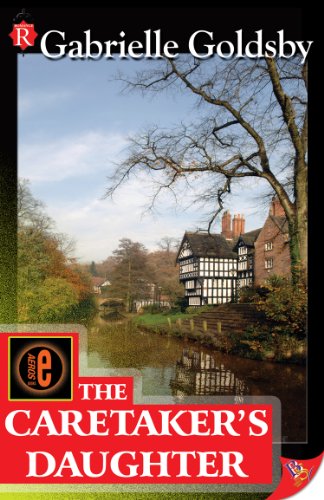
I've decided to give myself persmission to DNF (did not finish) books if they don't grab me in the first couple chapters (or first couple stories for a collection). With that as preface, you can guess that The Caretaker's Daughter ended up falling in that category. So why didn't it grab me? This is a f/f Regency-era romance featuring the abused wife of a disabled gentleman ("gentleman" as a class label, not a personality description) and a woman who works on her husband's estate (hoping no one notices that the father whose duties she took over has actually died quite some time ago). The first elements that made me realize the book was going to be a tough sell were the cartoonish villainy of the husband (plus the unfortunate trope that physical disability makes you bitter and abusive), plus the fact that both women have been assigned surnames as their given names: Brontë(!) and Addison. I'm not going to apologize for the fact that improbable naming in a historic setting grates on me.
The book could have risen above those flaws and held my attention if the writing were better. Unfortunately it relies heavily on info-dumps and shifts point of view too abruptly on a regular basis. There's also slut-shaming of a secondary female character (apparently for no other reason than that she isn't the love interest but wants to be so). Maybe the book gets better after the first two chapters, but I'm afraid I'm not going to stick around to find out.
The book also features italicization of random half-sentences but that's the publisher's fault, not the author's, since it's clearly a formatting glitch not an intentional technique.
Major category:
ReviewsThursday, June 6, 2019 - 07:00

I'm still stretching the definition of "Kalamazoo books" a little here. The first book was neither purchased nor marked for purchase at the conference, but I was given the reference by someone at my session for inclusion in the expanded version of my paper.
Sturges, Robert S. (trans). 2015. Aucassin and Nicolette: A Facing-Page Edition nd Translation. Michigan State University Press, East Lansing. ISBN 978-1-61186-157-0
- One of the medieval French romances that includes a cross-dressing heroine. I'd skipped tracking down this text for my presentation because I didn't know that there was a facing page translation available and I had to prioritize texts I could easily find translations for.
Owen, Morfydd E. and Dafydd Jenkins (eds). 2017. The Welsh Law of Women. (Second edition) University of Wales Press, Cardiff. ISBN 978-1-78683-159-0
- I have the original edition of this collection of papers, but there is some updated and new material in this edition. The topic is near and dear enough to my heart that it was worth updating my library.
Morrison, Susan Signe. 2017. A Medieval Woman's Companion. Oxbow Books, Oxford. ISBN 978-1-78570-079-8
- A sourcebook of brief biographies of women in a variety of fields. In addition to general interest in women's history, it has a chapter on crossdressing motifs and their social context.
Still waiting on the backordered books from Boydell, and the books from University of Toronto Press.
Major category:
ConventionsWednesday, June 5, 2019 - 07:51

Today, my department at work is taking me out for a lunch celebrating my 15 year anniversary at the company. My plan and goal (knock on wood) is to be here to celebrate my 20 year anniversary and ideally to retire at some point shortly thereafter. I don’t know whether my career path is at all typical of my generation, but it’s certainly different from that of my parents’ generation and feels different from how my younger friends talk about career expectations. So I thought it might be amusing to set out exactly what my work history has been (with all the serial numbers carefully filed off).
When I graduated college with a BS in a life science, my initial thought was to find a job in the same town where the university was located. Something doing research, perhaps. The why is lost to time, but probably it was just a matter of not having a clear idea what to do next and that was one way to narrow the possibilities down to a manageable level. But I was a practical sort, so the first goal was to get a job, any job, to enable me to continue my career search. That’s how I ended up working in fast food. For a month. Not that the job drove me away, but by the end of that month, one of my housemates had recommended me for a position at his workplace, which had the advantage of being 40 hours a week and better pay. And that’s how I ended up working in mobile home construction. I believe that was for six months. I was continuing my more science-oriented job search through it all, but people with life science skills looking for entry level positions are a glut on the market in a university town. So when an opportunity offered itself for a “wanderjahr” in the UK, I decided it was a good opportunity—one I might never have again.
That opportunity involved room and board in exchange for…well, what it was supposed to be in exchange for was not quite what the expectations turned out to be. (Nothing horrible, but lots of emotional labor in addition to the economic productivity.) I’d originally gone thinking I might be there for a year. I stuck it out for two months, after which I still had enough money to do a further month of sightseeing before heading back home. (The job there did not include pay, so this was money saved up from the construction job.)
Heading literally “home” since I defaulted back to my parents’ house at that point. The life sciences job search began anew, but once I’d gotten a sense of the job market, I decided that the best pickings were going to be in the SF Bay Area. Fortunately I had relatives I could stay with there. I think it was about half a year’s searching to find a job. I’ve never been substantially jobless since then. That job was with a small private clinical lab (doing medical testing for doctors unaffiliated with hospitals). Mostly I did “chief cook and bottle washer” work, washing glassware, preparing media in petri dishes, running the blood chemistry analyzer. I also learned phlebotomy (taking blood samples) and did some of the morning rounds of the care homes that we serviced. I have stories. After a couple years there, I realized that the only step up in that organization was to get certified as a medical technician and perform the more complicated analytic work. And that wasn’t quite what I was looking for. So back to job hunting, though not with any urgency.
The first interview I went to, I was offered the position at the end of the interview. I rushed back to give my boss notice (he was about to go on vacation), found a new place to live, and moved, all in the space of two weeks. That job was at a university-affiliated lab where I mostly worked with lab animals. The job lasted a couple years until the lab was defunded, but a former boss had a lead on a position with her new employer (a start-up biotech company) and I barely had to interview before I was hired. This is something of a continuing motif. I seem to be good at making an impression on the people who hire me.
The biotech company gave me opportunities to learn a lot of new lab skills and my second boss there was delighted to have me tackle database projects, SOP writing, and assorted other skill-accumulation opportunities. I enjoyed the work, impressed the management, and even got a company award. I might have been happy to stay there for quite a while, but two things intervened. One was that I’d been thinking more and more about tackling the intellectual challenge of graduate school—not in the life sciences (which is where I would have been steered if I’d done it right out of college), but in linguistics, as an outgrowth of my historic interests. So I’d investigated the possibilities at a local university and was taking some classes through extension to beef up my application. The second thing? I’d been at the biotech company for 7 years when my employer hit a snag in getting their product approved, resulting a quarter of the company getting laid off. I was laid off and laughed all the way through my exit interview because I was getting 6 months’ severance instead of worrying about when to give notice. I had some mild anxiety during the few months between being laid off and getting my grad school acceptance, but in the mean time, personal connections had landed me a job at a small fiction magazine that would be the perfect half-time job to go along with my academics.
The magazine job filled the next three years until I felt my professional development called for switching to student instructor jobs. Those carried me through the remaining (painful, many) years of grad school until I’d maxed out my eligibility for teaching positions, which meant it was time to hand in my dissertation and return to the Real World. I’d entered grad school thinking in terms of an academic career, but during the (*cough* eleven *cough*) years I was in school, the academic job market had shifted from promising to abysmal and I recalibrated my expectations. I was in my 40s, I was part owner of a house, I owned a lot of stuff™ that I didn’t want to be moving every year until I’d racked up enough short-term positions to maybe earn a tenure-track job somewhere. I said goodbye to the dream of academia and for the first time in 20 years found myself seriously worrying about being unemployed.
On the other hand, I had a lot of possible directions to go. I had experience in biotech, in teaching, in publishing, in writing…and after only a couple months of searching, I landed the perfect intersection of those skills: technical writing and editing for the documentation department of a pharmaceutical company. It was a temp job for a crunch project and the contract was up after I’d been there for five months. I liked the location. I liked the work environment. So I asked my agency rep to see if he could find me something else. Evidently my manager told people I walked on water, because I got a call from another manager saying, “I don’t really have time to do interviews, so can you just start next month?” I didn’t worry about asking what the job entailed; I said yes. And that’s how I landed a job that was even more perfect for my skillset and one I never even knew existed. (Discrepancy investigation.) The job turned permanent after four months and that’s what I’ve been doing ever since (with several promotions). There have been a couple times when I've looked into lateral moves in the company, but when it comes down to it, I love what I'm doing and I'm damned good at it.
It’s not as continuous a career path as a previous generation would have expected. It wasn’t until my present job that I had anything resembling a decent retirement plan. And 15 years is more than twice as long as I've been at any other single job. But it’s a more solid path than many of my contemporaries have enjoyed. And having a retirement plan at all is more than most people expect these days. (Retirement planning is on my mind a lot these days.) Those are just the salaried jobs. There’s also been the writing: not high paying, but fairly regular and varied. The thread through it all is broad-based technical knowledge and language skills. Sometimes the emphasis has been on one, sometimes on the other. Being able to combine them ended up being the secret to my success.
It occurs to me, in this month of graduations and students wondering what they'll do with their lives: none of the major turns of my career path are anything I would have (or even could have) predicted that day I stood at the end of a very long line of black-robed graduates to receive my diploma. (They graduated my whole division in a lump, grouped alphabetically by major. My major was Zoology.) You don't need to know what all the branches of your path will be. The important thing is to start walking and be ready for whatever comes your way.
Major category:
ThinkingTuesday, June 4, 2019 - 07:00

Worldbuilding for a series is a tenuous balance between casual references to people, places, concepts, and events that will later be important, and not overwhelming the reader with details that appear (and may in fact be) unimportant to the immediate story. So how prescient does an author need to be to figure out what to mention long before that topic suddenly needs to have been clearly established long before? Part of the answer is that, unless that full outline of a series is known before you start writing, it is exactly those "unimportant" casual worldbuilding details that then inspire future story ideas. In Floodtide, the profession of riverman is a major presence. Liv follows that family trade, and her familiarity with the "water roads" through Rotenek is key to several plot points. Further, we see how water transit is a constant, if often unnoticed, presence in the city. Did I know how important it was going to be so I could set up the reader's knowledge in advance? Absolutely not! So let's look at how the profession of riverman developed through the series so far, such that I could present it as a known fact in Floodtide.
In Daughter of Mystery, when Barbara is attacked on the bridge: “She dodged down the water-steps at the southern end of the parapet to the landing below where the rivermen docked.” She convinces one of them to row her to safety, but he balks at landing her at Tiporsel House, saying, “It’s worth my license to dock there without leave.” And that's it. No mention of regular use of the river for deliveries, no mention at all of the canal system. A slight implication that the rivermen are licensed and organized and that they are bound by certain rules. And an implication that there are regular public landing places where they are availble for hire. But the important reason for introducing rivermen was to give Barbara an escape route.
In contrast to that one lone scene, The Mystic Marriage includes 9 search returns for the string "riverm". (In Daughter of Mystery I alternate between "riverman" and "boatman". At one point I considered standardizing on "waterman". But "boatman" felt like it should be more generic, also applying to those who worked on ships and barges coming up the Rotein from elsewhere. And "waterman" just didn't have the feel I wanted.) The first reference is specifically a worldbuilding pause: Barbara is contemplating her several possible transit options for traveling outside the city down to Urmai in pursuit of a rare book as a present for Margerit. (This of course, is the first clue being planted for Margerit's eventual purchase of property there for her college.)
As she stepped out into the narrow courtyard where the groom was waiting with the horses, Barbara glanced up at the thin afternoon sun. Enough hours of light to get to Urmai and back and enough in between to examine the books Chasteld was said to have on offer if there were no delays. But with Chasteld there was no guarantee. Perhaps it would be better to take the town-chaise instead, despite the delay. No, Bertrut would have taken it already. On a better day she might have considered hailing a riverman to row her downstream. Chasteld’s place had its own frontage and dock on the river. But though the trip down would be swift, it would be slower coming back when there was more chance of rain. Her errand scarcely warranted the trouble of a coach and four, and she preferred to ride in any case.
The next five mentions of the word are all in the context of Antuniet's fevered escape from her nemesis (a somewhat deliberate echo of Barbara's experience in the first book--establishing the river as something of a metaphorical symbol of escape). Like Barbara, she frantically hails a ride so that her pursuers on foot will be foiled. When the riverman discovers she's passed out, he continues downriver to deliver her to a charity hospital outside the city (thereby conveniently taking her out of the story long enough for everyone to be worried).
The rest of the mentions are more background: reference to less well off people hiring a boat to travel up to the Carnival fair in the market grounds; mentioning the calls of the rivermen as part of the background noise of the city--at least for those living along the water; and another casual mention of the public docks when Jeanne entices Antuniet out for a picnic lunch by the river in the heat of the summer.
But The Mystic Marriage talks about other kinds of river traffic: pleasure boats that the more wealthy might hire to host entertainments--the sorts of entertainmens Jeanne has a knack for organizing; the commercial barges that fuel the warehouse district and that prove an attractive hazard for Aukustin's dreams of adventure. Still no mention of the importance of the canal system in Rotenek, though I do mention one nouveau riche family that made their money by investing in canals. But these would be the longer transport canals just being expanded through the countryside that become a bone of personal and political contention in Mother of Souls.
So let's move on to Mother of Souls. Now we have 21 returns for the search string "riverm." We get a better sense that boat transit is viewed as a cheaper alternative to either owning or hiring a carriage. Though, of course, it's only useful if you can get where you're going by water, but especially when traveling along the length of the Rotein. Or if you want the discretion of not arriving somewhere in a personal and clearly identifiable carriage! That's the reason Barbara gives for taking Margerit down to the old Chasteld place by boat for the purpose of claiming first dibs on the late Chasteld's library of esoteric books. (Margerit, of course, ends up buying the entire property instead.)
But now we also get mention of the chanulezes--the canal system. We can use the excuse that they only exist in the lower and flatter parts of the city--the south side and the western area around the Nikuleplaiz--and further that the residents of Tiporsel House do have private carriages and riding horses to get around casually. There are other good excuses for not having mentioned the transit importance of the chanulezes in previous books: Jeanne lives in a part of town with the wrong geography for canals, and Antuniet for the most part was on too strict a budget to opt out of walking (though, in retrospect, her original workshop was definitely in an area where the rivermen must have plied their trade). But Luzie's house is only half a block from a chanulez and she's right at the economic break-point where hiring a riverman is an occasional convenience, but hiring a fiacre is too much of a luxury.
Of course, in Floodtide, introducing and exploring the chanulezes is a vital plot point with regard to the failure of the Rotein to flood as expected. In Mother of Souls we get regular references to the low water levels in the chanulezes, both interfering with transit availability and exposing the foul-smelling sediments that collect when not scoured away regularly. (Although I never mention it in detail, I do have an epidemiological model for why significant flooding after years of low water creates a risk of river fever epidemics. It was important to me to have that model, but it wasn't important to bring it into the plot. We haven't yet gotten to the era of germ theory, and "caused by stirring up the stinking mud in the chanulezes" is the most appropriate level of understanding for my characters.)
The chanulezes get to feature in the "bookends" for Mother of Souls as part of the interconnected water system that stars in the magically-inhibited snowpack of the Alps:
High in the mountains to the east and south of Alpennia, spring rains and warming winds wash the winter’s snow from the peaks and send it tumbling down the valleys. The melt gathers in rivulets; rivulets turn to streams; streams feed rivers. The Esikon, the Tupe and the Innek swell the Rotein, which flows through the heart of the city of Rotenek. And the city flows through the Rotein: in barges bringing goods up from French ports, in riverboats rowing passengers along the banks and up the narrow chanulezes that thread through the neighborhoods of both the upper and lower town.
And all of that preceding information then sets us up to understand both the ordinaryness and the importance of the rivermen that winds through Floodtide in exactly the way the chanulezes wind through the city. Roz--as mentioned in last week's teaser--is the ideal point of view to expand that understanding because she's still figuring out that aspect of Rotenek life for herself, as we see here:
* * *
The garden sloped down from the back of the house to the river. You could enjoy watching the birds skim over the water and listening to the whistles and shouts of the rivermen. Sometimes one of the family would send word down to hail a riverman and then I could see them pass by in all their fine clothes to be handed into the boat and rowed off somewhere. Once Charsintek wanted me to bring a delivery back from the Nikuleplaiz and gave me a coin for a ride. But most times when a boat came to the dock, it was the kitchen delivery from the market out past the east gate. Every morning Cook or her assistant took a hired fiacre off to the market and sent the baskets back by the river. It was like a second set of roads. There’d be a sharp whistle up from the dock and Cook would send whoever was idling about down to fetch things up. Sometimes the riverman would help carry baskets too, just for the extra teneir, or to get the boat unloaded more quickly.
Major category:
PromotionPublications:
FloodtideMonday, June 3, 2019 - 07:00

OK, I confess that the blog title is unabashed click-bait. But the story behind it is deeply fascinating and ultimately satisfying. The image of 19th century "romantic friends" as involving flowery, sentimental language that is purely conventional in content and not to be taken as *gasp* implying an erotic relationship is eroded a bit every time a collection of private records such as this comes to light. Not to say that all "romantic friends" can be assumed to include sexual relationships, but that such a possibility should never be categorically excluded. What makes this book valuable is not only that it presents the full, unabridged correspondence between Rose Cleveland and Evangeline Simpson Whipple, but that it has been contextualized in a sympathetic and open-minded way with a detailed historic apparatus that provides the reader with the background, not only of these two women, but of how their relationship was presented and understood, both privately and publicly.
I'm still amused at the thought that I'm receiving review copies of books I can include in the Project. (I actually received this to review for The Lesbian Review, not specifically for the LHMP.) Now if only I could convince some of the really really expensive academic presses to make similar offers!
This post marks the 250th publication covered by the Project. Maybe I should have treated it as more of an important symbolic event. It's hard not to look at the 600+ titles in my cumulative database and, rather than thinking "wow, look at what I've accomplished," instead think, "I'm never going to catch up!" But at the very least I can look at that list and be confident that at some point I'll be able to celebrate having covered 500 publications. (And by then, I'll probably be able to look confidently ahead to 1000.)
Major category:
LHMPFull citation:
Ehrenhalt, Lizzie and Tilly Laskey (eds). 2019. Precious and Adored: The Love Letters of Rose Cleveland and Evangeline Simpson Whipple, 1890-1918. Minnesota Historical Society Press, St. Paul. ISBN 978-1-68134-129-3
[The following is duplicated from the associated blog. I'm trying to standardize the organization of associated content.]
The image of 19th century "romantic friends" as involving flowery, sentimental language that is purely conventional in content and not to be taken as *gasp* implying an erotic relationship is eroded a bit every time a collection of private records such as this comes to light. Not to say that all "romantic friends" can be assumed to include sexual relationships, but that such a possibility should never be categorically excluded. What makes this book valuable is not only that it presents the full, unabridged correspondence between Rose Cleveland and Evangeline Simpson Whipple, but that it has been contextualized in a sympathetic and open-minded way with a detailed historic apparatus that provides the reader with the background, not only of these two women, but of how their relationship was presented and understood, both privately and publicly.
# # #
This is a deeply contextualized edition of the correspondence of romantic partners Rose Cleveland and Evangeline Simpson Whipple, covering the period from around their first meeting in 1890 to Cleveland’s death during the Spanish Flu epidemic of 1918. There is a foreward from Lillian Faderman who situates them within the context of Romantic Friendship and notes how the content of the letters explodes the illusion that such relationships were passionless and non-sexual (though she describes the relationship as “one of the most remarkable love relationships between women in American History” which seems to me to contradict one of the important points, which is how normal and ordinary they were within their historic context).
Unlike their contemporaries of the professional classes who formed long-term domestic partnerships known as “Boston marriages,” Rose and Evangeline were wealthy enough that not only could economics not be used as an excuse for sharing a household, but their business concerns and social responsibilities prevented such an arrangement for much of the time they knew each other. Faderman also notes that, while there were a number of social framings for women who loved women available in the later 19th century, most of them had associations that women such as Rose and Evangeline would have rejected.
The preface outlines how author Tilly Laskey stumbled on the correspondence presented in this volume and how, after something of a pilgrimage to the town in Italy where Rose and Evangeline finally lived together as a couple, she determined to put together this edition. It is presented in the tradition of a local history project, based on the collection of Whipple family papers curated by the Minnesota Historical Society, but with the advantage (to queer-friendly readers) of being written at a time when the implied sexuality of the correspondents is not seen as scandalous or derogatory. (As opposed to 1969 when the material was first reviewed by an archivist and locked away as too “sexually suggestive.”)
The introductory material provides a detailed history of the two women, their social and business connections, the path of their relationship (which included Rose’s heartbreak when Evangeline entered into her second marriage with Henry Whipple, the first Episcopalian bishop of Minnesota), and how they renewed their bond after his death and eventually moved to Italy to live as a couple. One of the central considerations is the strongly passionate and erotic nature of Rose’s letters to Evangeline (the other side of the correspondence was not preserved) and how the two women understood the nature of their feelings for each other. I’m going to summarize the basic features, but the meat of this book is the verbatim transcripts of the letters themselves.
Rose Cleveland (1846-1918) was the sister of U.S. president Grover Cleveland and served as First Lady (official White House hostess) during the initial part of his first term until his marriage. But apart from that, she was an educator and author, successful enough that she was financially independent and able to make shrewd real estate investments. The social prominence from her time as First Lady helped maintain her popularity as an author, which in turn supported her continued financial success. Rose was considered something of a bluestocking and used her White House position in support of various reform movements including women’s suffrage, temperance, abolitionism, and Indigenous sovereignty. This prominence also subjected her to public scrutiny and her name was linked to a number of close female friends (including Evelyn Ames who was a close companion and business partner during her estrangement from Evangeline) though there is no concrete evidence for any of those relationships having the same romantic/erotic components as the correspondence with Evangeline offers.
Evangeline Simpson Whipple was propelled into wealth from more humble beginnings by a brief marriage to an elderly textile merchant and philanthropist. (He was 73 at the beginning of their two-year marriage.) His death left her an extremely wealthy widow at age 28, whereupon she became the support of her family and took up the successful management of her late husband’s ventures.
The two women met around 1890 in Florida where both had real estate investments and Rose’s letters (beginning in April 1890) indicate a passionate attachment between them that clearly had an erotic component.
“My Eve! Ah, how I love you! I paralyzes me. I have been going over & over your written words until the full message of them--some of them--has made me weary with emotion. This I must try and escape, for your sake. But let me cry & shout it. Oh Eve, Eve, surely you cannot realize what you are to me. What you must be. Yes, I dare it, now, I will not longer fear to claim you. You are mine by every sign in Earth & Heaven, by every sign in soul & spirit & body--and you cannot escape me. You must bear me all the way, Eve; clasp me in my despair of any other and give me every joy & all hope--this is yours to do.” (April 23, 1890)
Although they didn’t share a permanent household, the two traveled together extensively, including a trip through Europe and the Middle East in 1891-93.
But Evangeline was also susceptible to the courtship of another member of their social circle, Henry Whipple, the first Episcopal bishop of Minnesota. And there are suggestions in the correspondence that--without a clear social framework for understanding romantic relations between women as being of equivalent importance--the combination of Whipple’s personal charms and religious charisma hit a chord. Rose pleaded her case: “I will give up all to you if you will try once more to be satisfied with me. Could you not take six months for that experiment? We would go away from everyone.”
Whether due to a stronger attachment (she was clearly genuinely in love with Whipple) or to the attractions of convention, Evangeline became Mrs. Whipple and spent five years immersed in supporting Whipple’s professional and charitable endeavors until his death. (He was 74 when they married, and 36 years older than Evangeline.) Rose wrote both of her hurt and her acceptance: “I will not stand in the way. That means that I will study only for your comfort and pleasure and happiness... What is yet for us I cannot see. But I think you will need me yet--in a future, perhaps.”
They continued to correspond and meet socially, though Rose’s extended trip abroad in company with Evelyn Ames shortly thereafter can’t help but be seen as something of a rebound. That future did arrive, however. After Henry Whipple’s death, Evangeline remained in Minnesota for nine years, continuing her late husband’s projects, but with regular travels that intersected with Rose. Then, in the years leading up to 1910, Rose made various arrangements to sort out her business affairs, feeling that she wasn’t as able to keep up the same level of activity in her 60s. In 1909 she wrote to Evangeline, “I need you and life is not long enough to always wait.”
The next year, perhaps with the excuse that Evangeline’s brother had fallen ill in Italy, the two of them traveled together to be with him until his death two years later. And then they stayed. They settled in the small mountain town of Bagni di Lucca, perhaps because of its English expatriate community and Anglican church, as well as literary associations. They purchased property there, supported a social community of female associates, and worked tirelessly in social services during World War I and after when the area was flooded with refugees and hit by the flu epidemic. Both Rose and their close friend Nelly Erichsen died of influenza while nursing the sick. Evangeline continued living in Bagni di Lucca until shortly before her own death in 1930 and her body was returned there to be buried next to Rose, with matching headstones.
Rose’s letters to Evangeline were not written with a thought for public consumption. They are candid in their passion and eroticism, as well as being largely filled with the minutiae of everyday life. The accident of their preservation (note that Evangeline’s letters to Rose did not survive except in quoted responses) is largely due to the fact that Evangeline doesn’t appear to have intended her move to Italy to be permanent. Her house was shut up, intact, for her return, which never happened. It was willed to a charitable organization which disposed of some of the contents, but the vast quantity of Whipple family papers were acquired by various local historical societies and the letters themselves were not identified until a cataloging project in the 1960s.
It is interesting that a certain amount of how Rose talks about love revolves around the inexpressibility of what she feels (while simultaneously clearly expressing it). There is a sense of a self-conscious censorship in naming their emotions, a sense of falling back on plausible deniability of what the content makes clear. This is present not only in the letters to Evangeline, but also letters to others in their social circle such as Evangeline’s mother, to whom Rose writes, “There are some things we both know and feel which we shall never, never say to each other. But I want to say that I shall never, never cease to be Eva’s if she ever needs me again.” (Written a month after Evangeline’s marriage to Henry Whipple.) The letters use the language not only of romantic love but of legal oaths that evoke marriage and commitment. And the correspondence around Evangeline’s marriage makes it clear that Rose considered it a heartbreaking betrayal of what she considered a competing bond. What makes their story special is how their paths returned to each other, in time for them to renew and enjoy that bond.
[Note: I received a complimentary review copy of this book from the publisher. No money was exchanged for the inclusion of this book in the LHMP.]
Place:
Event / person:
Saturday, June 1, 2019 - 07:00
Lesbian Historic Motif Podcast - Episode 108 (previously 35a) - On the Shelf for June 2019 - Transcript
(Originally aired 2019/06/01 - listen here)
Welcome to On the Shelf for June 2019.
It’s been a busy month for me, what with giving a paper on cross-dressing women at the International Medieval Congress in Kalamazoo, and then finishing up the month at BayCon the local science fiction and fantasy convention. But all my immediate project deadlines are complete and I can relax a bit in June and July.
Next month I plan to start seriously plugging the 2020 fiction series for the podcast. I want people to make it as hard as possible for me to choose just four stories to publish, by inundating me with great lesbian historical short fiction. So this time I’ll be reminding folks on a regular basis. Just keep in mind that submissions still won’t be open to send them in until January, but that gives you a lot of time to brainstorm and then polish up your best ideas.
Publications on the Blog
So what’s the blog been doing lately? I started out May by finishing up the last couple articles from the Journal of the History of Sexuality, one of them on love magic in Coptic Egypt that has only tangential references to the use of love magic for same-sex relationships, and the other on formalized cross-gender roles in the Balkans. May finished up with a couple of sourcebooks, presenting texts from a variety of genres. The first, A Rainbow Thread: An Anthology of Queer Jewish Texts from the First Century to 1969, was a bit disappointing as it had relatively little lesbian-relevant material, and most of what it did have was not that different from non-Jewish texts of similar eras. But the second sourcebook is one I recommend highly: Same-Sex Desire in Early Modern England 1550-1735.
For June, I’m tackling some publications that have been getting kicked down the road for a while for various reasons. Precious and Adored is a critical edition of the correspondence between Rose Cleveland and Evangeline Simpson Whipple around the turn of the 20th century, tracing the ups and downs of their romantic relationship. I’ll also be covering the new bilingual edition of the medieval romance of Yde and Olive, and finally working my way through a French article on medieval cross-dressing romances from the Journal of the History of Sexuality. If it arrives in time, I may complete the theme with a discussion of the cross-dressing themes in another medieval French romance, Aucassin and Nicolette. Since I’ll be expanding the cross-dressing paper I gave at Kalamazoo for publication, I have a number of publications that I’ll be prioritizing for that purpose.
Book Shopping!
New books acquired for the blog are primarily from the academic presses that exhibit at the medieval congress. There are a couple of interesting articles in the collection Illicit Sex: Identity Politics in Early Modern Culture edited by Thomas Dipiero and Pat Gil.
I’ve turned up another collection of articles on single women: The Single Woman in Medieval and Early Modern England: Her Life and Representation edited by Laurel Amtower and Dorothea Kehler. The field of singlewomen studies is extremely relevant to my project as it explores lives outside the marriage economy and thus normalizes the lives of women who might choose not to marry for reasons of sexual preference.
Victoria Blud’s book The Unspeakable, Gender and Sexuality in Medieval Literature 1000-1400 is generally about the intersection of language and the concepts of gender and sex, but it includes a chapter on “the unspeakable sin” that includes discussion of female sodomy.
Just yesterday, I received a couple books that my girlfriend spotted in the Kalamazoo bookroom but that I didn’t get a chance to buy there. Like Man, Like Woman is about gender roles in classical Rome, and Knights, Riddles and Cross-dressing Saints looks like it has some useful discussion of cross-dressing motifs in medieval literature.
So all of that should keep me going for a while, although some of the books themselves are still in transit. I’ve gotten into the habit of having my Kalamazoo purchases shipped, not simply to save the space in my luggage, but because it’s like getting presents at random intervals for the next month!
Author Guest
This month’s podcast guest will be Anna Clutterbuck-Cook. Anna is a librarian and a reader of queer fiction. We ended up spending two podcasts talking about a wide range of topics around her favorite books, the books she wants to read but can’t find, the dynamics of queer fiction communities, and all sorts of other things.
Essay
For this month’s essay, I’m planning on combining a multi-person review of the new Emily Dickinson movie, Wild Nights with Emily, and a discussion of how and why Emily Dickinson has become a point of contention around topics of sexuality.
Fiction
And the month’s podcasts will finish up with our second audio short story. At the beginning of the year, I pledged myself that I’d get the fiction all recorded and set up far in advance this time--a pledge that I haven’t managed to keep at this point. So the choice of which story I’ll be broadcasting is partly going to depend on which one I can make arrangements to record in time. But maybe this means I’ll get them all recorded and fulfill part of my pledge after all.
[Sponsor Break]
Recent Lesbian Historical Fiction
And now we come to recent and forthcoming lesbian historical fiction. Only five titles this month, and only three of them are June books.
Dipping back to April, we have Clio Rising by Paula Martinac from Bywater Books. This one uses the popular “historic research” motif to explore the lesbian salons of 1920s Paris.
In 1983, Livvie Bliss leaves western North Carolina for New York City, armed with a degree in English and a small cushion of cash from a favorite aunt. Her goal is to launch a career in publishing, but more important, to live openly as a lesbian. A rough start makes Livvie think she should give up and head home, but then a new friend helps her land a job at a literary agency run by the formidable Bea Winston. Bea hopes Livvie’s Southern charm and “boyish” good looks will help her bond with one of the agency’s most illustrious clients—the cranky Modernist writer Clio Hartt, a closeted octogenarian lesbian of the Paris Lost Generation who has rarely left her Greenwich Village apartment in four decades. When Livvie becomes Clio’s gofer and companion, the plan looks like it’s working: The two connect around their shared Carolina heritage, and their rapport gives Clio support and inspiration to think about publishing again. But something isn’t quite right with Clio’s writing. And as Livvie learns more about Clio’s relationship with playwright Flora Haynes, uncomfortable parallels begin to emerge between Livvie’s own circle of friends and the drama-filled world of expatriate artists in the 1920s. In Clio’s final days, the writer shares a secret that could upend Livvie’s life—and the literary establishment.
Another early 20th century story came out in May: The Rhythm of the Tide: A lesbian romance self-published by Lia Curling. (I confess that I’m conflicted about book titles that feel they have to explicitly tell readers “Hey, this is a lesbian story.” On the one hand, it makes it easier to figure out whether they’re relevant to the podcast. But on the other hand, it always feels like maybe you could just indicate that in the cover copy?)
London, 1913. After bombing the Prime Minister’s house, suffragette Natalie Petrov is chased by the police. She is rescued by Lady Thompson, an aristocratic doctor who offers her a way out: Natalie will stay at the Thompson’s country house for six months, until her name vanishes from the ‘most wanted’ list. She agrees to work as a maid for Lady Thompson’s daughter, Elizabeth, a cold and distant socialite who doesn’t know Natalie’s true identity. However, the task becomes progressively harder as Natalie finds herself attracted to her mistress.
The June books start with another early 20th century story, An Impossible Distance to Fall by Miriam McNamara from Sky Pony Press.
It’s 1930, and Birdie William’s life has crashed along with the stock market. Her father’s bank has failed, and worse, he’s disappeared along with his Jenny biplane. When Birdie sees a leaflet for a barnstorming circus with a picture of Dad’s plane on it, she goes to Coney Island in search of answers. The barnstorming circus has lady pilots, daredevil stuntmen, fire-spinners, and wing walkers, and Birdie is instantly enchanted—especially with a girl pilot named June. Birdie doesn’t find her father, but after stumbling across clues that suggest he’s gone to Chicago, she figures she’ll hitch a ride with the traveling circus doing what she does best: putting on a convincing act and insisting on being star of the show. But the overconfidence that made her belle of the ball during her enchanted youth turns out to be far too reckless without the safety net of her charmed childhood, and a couple of impulsive missteps sends her and her newfound community spinning into freefall.
Mainstream publishing offers us a highly anticipated book in Olivia Waite’s A Lady's Guide to Celestial Mechanics: Feminine Pursuits from Avon Impulse. This Regency-era romance looks like it was designed to hit all my sweet spots.
As Lucy Muchelney watches her ex-lover’s sham of a wedding, she wishes herself anywhere else. It isn’t until she finds a letter from the Countess of Moth, looking for someone to translate a groundbreaking French astronomy text, that she knows where to go. Showing up at the Countess’ London home, she hoped to find a challenge, not a woman who takes her breath away. Catherine St Day looks forward to a quiet widowhood once her late husband’s scientific legacy is fulfilled. She expected to hand off the translation and wash her hands of the project—instead, she is intrigued by the young woman who turns up at her door, begging to be allowed to do the work, and she agrees to let Lucy stay. But as Catherine finds herself longing for Lucy, everything she believes about herself and her life is tested. While Lucy spends her days interpreting the complicated French text, she spends her nights falling in love with the alluring Catherine. But sabotage and old wounds threaten to sever the threads that bind them. Can Lucy and Catherine find the strength to stay together or are they doomed to be star-crossed lovers?
Jenn LeBlanc’s Louisa (Trumbull Family Saga Book 8) from Illustrated Romance is another Regency story. The book description includes a content warning for sexual assault.
When Ellie and Lou fall in love, it is with great abandon. And they have grand ideas. A small cottage, a garden, a goat to manage the weeds, sheep for wool to knit. But the truth of the matter lies in the reality. Louisa must marry, to the satisfaction of her father, and so must Ellie—whose family hopes for a title to add legitimacy to their status, opening doors in the ton. And when Louisa’s father discovers them together nothing can ever be the same. A friend rescues Louisa from a horrible fate, sending her into hiding for her own protection. For three long years, Louisa remains in exile out of fear of what her father could do. Necessity returns Louisa to London, and as soon as she does, the memories of her beautiful Ellie haunt her. But Louisa has no idea if Ellie is even here, or unmarried, or still in want of her as Louisa is and has been since that first moment she saw her across the shimmering ballroom. Louisa fears discovering the truth of it all, that she was but a passing fancy born of the excitement of the heat of a first season. Will she find Ellie? Will the woman still want her? And even if so, what can they do now that they couldn’t do before? Nothing has changed, but everything is different.
What Am I Reading?
And what have I been reading in the last month in the realm of lesbian historical fiction? I enjoyed Proper English, by K.J. Charles, a short Edwardian country-house murder mystery layered in with a bit of romance. If you enjoy seeing awful people get their just desserts in a murder mystery, this should be right up your alley.
Ask Sappho
There are no questions for the Ask Sappho segment this month. Remember that you can send in questions about queer women in history for a quick answer on the podcast.
And that’s the show for June.
Show Notes
Your monthly update on what the Lesbian Historic Motif Project has been doing.
In this episode we talk about:
- My recent conferences
- Recent and upcoming publications covered on the blog
- Frankfurter, David. 2001. “The Perils of Love: Magic and Countermagic in Coptic Egypt” in Journal of the History of Sexuality vol.10 no. 3/4 480-500.
- Horváth, Aleksandra Djaji?. 2011. ‘Of Female Chastity and Male Arms: The Balkan ‘Man-Woman’ in the Age of the World Picture” in Journal of the History of Sexuality vol. 20 no. 2 358-381.
- Sienna, Noam (ed). 2019. A Rainbow Thread: An Anthology of Queer Jewish Texts from the First Century to 1969. Print-O-Craft, Philadelphia. ISBN 978-0-9905155-6-2
- Loughlin, Marie H. 2014. Same-Sex Desire in Early Modern England, 1550-1735: An Anthology of Literary Texts and Contexts. Manchester: Manchester University Press. ISBN 978-0-7190-8208-5
- Ehrenhalt, Lizzie and Tilly Laskey (eds). 2019. Precious and Adored: The Love Letters of Rose Cleveland and Evangeline Simpson Whipple, 1890-1918. Minnesota Historical Society Press, St. Paul. ISBN 978-1-68134-129-3
- Abbouchi, Mounawar. 2018. “Yde and Olive” in Medieval Feminist Forum: A Journal of Gender and Sexuality, vol 8.
- Perret, Michele. 1985. “Travesties et Transsexuelles: Yde, Silence, Grisandole, Blanchandine” in Journal of the History of Sexuality 25:3 pp.328-340
- Book Shopping for the blog
- Illicit Sex: Identity Politics in Early Modern Culture edited by Thomas Dipiero and Pat Gil
- The Single Woman in Medieval and Early Modern England: Her Life and Representation edited by Laurel Amtower and Dorothea Kehler
- The Unspeakable, Gender and Sexuality in Medieval Literature 1000-1400 by Victoria Blud
- This month’s guest is Anna Clutterbuck-Cook
- This month’s essay topic is: Emily Dickenson in movies
- New and forthcoming fiction
- Clio Rising by Paula Martinac (Bywater Books)
- The Rhythm of the Tide: A lesbian novel by Lia Curling (self-published)
- An Impossible Distance to Fall by Miriam McNamara (Sky Pony Press)
- A Lady's Guide to Celestial Mechanics: Feminine Pursuits by Olivia Waite (Avon Impulse)
- Louisa (Trumbull Family Saga Book 8) by Jenn LeBlanc (Illustrated Romance)
Links to the Lesbian Historic Motif Project Online
- Website: http://alpennia.com/lhmp
- Blog: http://alpennia.com/blog
- RSS: http://alpennia.com/blog/feed/
- Twitter: @LesbianMotif
- Discord: Contact Heather for an invitation to the Alpennia/LHMP Discord server
- The Lesbian Historic Motif Project Patreon
Links to Heather Online
- Website: http://alpennia.com
- Email: Heather Rose Jones
- Twitter: @heatherosejones
- Facebook: Heather Rose Jones (author page)
Major category:
LHMPThursday, May 30, 2019 - 20:42
It's only cheating just a smidge to consider these part of my Kalamazoo haul. I'd already done my day in the bookroom and missed spotting these, when my girlfriend texted the covers and suggested they might be interesting. I never did make it back to the bookroom to check them out, but when I looked them up online I concurred. Since they'd been spotted at the Powell's Books vendor, I tried the Powell's website first but couldn't find a listing, but I was able to pick them up second hand from another seller.
Challet, Claude-Emmanuelle Centlivres. 2013. Like Man, Like Woman: Roman Women, Gender Qualities, and Conjugal Relationships at the Turn of the First Century. Peter Lang, Oxford. ISBN 978-3-03911-912-7
- The author challenges the idea that Roman culture viewed women and men in substantially different terms, and looks at how Roman male writers actually described women. The result is a double vision: a traditional, idealized voice that does represnt the genders in qualitatively different terms, and an individual, realistic voice that views the qualities and abilities of individual women as equivalent to those of men. While the study doesn't directly address same-sex desire, it provides a more nuanced context for the treatment of gender in Roman society. (One of my novel projects is set in the 1st century in Rome and Britain, so I often pick up background research toward that end.)
Honegger, Thomas (ed.) 2004. Riddles, Knights and Cross-dressing Saints. Peter Lang, Oxford. ISBN 3-03910-392-X
- A collection of conference papers on England in the middle ages. Specifically of interest for the paper on cross-dressing saints.
I still have four shipments pending, so expect more exciting updates!
Major category:
ConventionsTuesday, May 28, 2019 - 07:35
I blogged once about how one of the things I value in a protagonist is standing outside the norms and structures of societal power in some way. It gives them more incentive to see the cracks in the system. The fact that all my protagonists are women in early 19th century Europe gives them a head start on that outsider status, though there were certainly plenty of women who didn't view themselves in that way. Ones who enjoyed and accepted the place that gave them in the world.
Roz is an "outsider" in comparison to my previous point of view characters in being of the working class. Even Serafina--who otherwise comes the closest--understands herself more as the daughter of a scholar than being from a laboring family. But Roz is an outsider in a much more useful way for story-telling, because she is still relatively newly come to the city of Rotenek and has only the barest familiarity with some of the people, habits, and trades of the city that others might take for granted.
The rivermen, who provide transport along the Rotein and up the larger chanulezes, are unique to Rotenek as an Alpennian institution. So when Roz encounters Oliva Hald and--through her--becomes curious about the rivermen's trade, her fascination with every little thing that Liv does becomes an opportunity for us, as readers, to notice those things as well. We don't necessarily understand the details, because Roz doesn't understand them and she's our window. And at the moment, Liv seems disinclined to enlighten her ignorance...
* * *
She only glared at me and twitched the tie rope to pull it loose from the ring, then gave a whistle for her dog. As he jumped down into the boat, she dipped her fingers into the river then tasted them or kissed them or something. That seemed a filthy thing to do, even here where the water didn’t smell as much. I wondered if she meant it as an insult, like making horns against me. She pushed away from the dock and as the current pulled the boat away from the bank, she worked the oars and spun it around. With a few strong pulls, she shot away into mid-river. On the water it was like she wasn’t crippled at all.
I kept thinking about her all that day. Not the way she struggled with the baskets but the way she’d spun the boat like it was a part of her. Was that why she’d ended up on the water? I’d seen a few women in the boats before but mostly it was men for their strong arms. And because you never knew what sort of passengers you might get. The rivermen were a clannish sort and mostly you had to be born to it. So maybe she would have taken it up even without her twisted foot.
Major category:
PromotionPublications:
FloodtidePages
