Blog
Friday, October 6, 2017 - 07:00
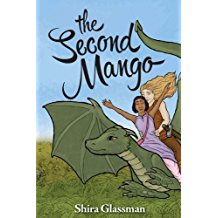
Shira Glassman writes self-described "fluffy queer Jewish princess fantasies" (ok, I may have reworded slightly but I think I've kept the essence of it). The Second Mango introduces the reader to Perach, a secondary-world fantasy realm where everyone just happens to be Jewish. I mean that in the most positive possible way -- when creating a fantasy setting completely separate from real-world history, why not set it up exactly as you choose? It's subversive in its own way, because every time I was tempted to trip over the concept, I thought about all the similar fantasy settings that never get questioned or challenged when they silently echo dominant real-world cultures without presenting any logical basis for why they should. But perhaps I digress too much into literary theory.
The Second Mango is a fairly straightforward quest adventure, where a young, newly-installed queen goes off on a quest to find a girlfriend. There is just enough heteronormativity in the setting that her quest leaves her advisors and courtiers baffled and confused, but not so much that everyone won't cheerfully accept the outcome when she succeeds. The quest is aided by a masked gender-bending swordswoman and her shapeshifting horse-dragon, with barriers and challenges being offered variously by scheming innkeepers and misogynistic sorcerers.
The book is very young adult in feel, not so much for the age of the protagonist, but for the relative straightforwardness of the plot. Characters are pretty much who they present themselves as, challenges are relatively straightforward and solvable, and the plot twists are foreshadowed well enough for a pleasant reading experience without being obvious enough to spoil it. The prose is on the explanatory side more than the immersive side, and various aspects of character identity (such as food sensitivities) are solidly rooted in contemporary discourse rather than being given a more oblique in-world presentation. For the target readership of this series, I assume this is a solid feature, not a flaw. If the phrase "fluffy lesbian Jewish queen with food sensitivities finds true love" makes your heart go pitter-pat, then you are solidly in the target demographic for The Second Mango and I strongly recommend it to you.
Major category:
Reviews View comments (0)
Monday, October 2, 2017 - 07:00

In last week's post, I lamented that I'm increasingly finding less new material in general medieval works such as this. But I was able to extract three new publications to track down from this book: two on pairs of women buried together with a common memorial (where it's clear they aren't family members), and one on the source of an anecdote I've been seeing references to for many years. This last is a description of a group of women showing up at a tournament dressed as men to take part in the activities. While women cross-dressing in the context of chivalric culture is a not uncommon literary motif, I've been a bit skeptical of how solid the evidence for this event was in the third and fourth-hand references I'd seen of it previously. Now I have a publication to track down and plans for a podcast topic on gender-transgressive women in tournament contexts.
It's been delightful to see some of the more recent research and discoveries on the history of homoeroticism (by "recent" I mean generally post-1980 or so!) being published as general studies such as this one and the text on sexuality in general by Karras that I covered last week. I recently had a request from a friend for research materials on male homosexuality in medieval England for a historic novel she's working on and was able to enthusiastically lend her Karras, the present volume, and Mills' book Seeing Sodomy in the Middle Ages. I'm always delighted to know that people are using the results of this project for their fiction.
Major category:
LHMPFull citation:
Linkinen, Tom. 2015. Same-sex Sexuality in Later Medieval English Culture. Amsterdam University Press, Amsterdam. ISBN 978-90-8964-629-3
Publication summary:
Pretty much exactly what it says on the label.
Introduction
As with most general works on same-sex sexuality (and especially ones authored by men) this book is overwhelmingly focused on male sexuality. There is also the tendency usual in this context to suggest that texts, situations, and commentaries that don’t specifically include women can be extrapolated to them.
[For this reason, I’ve largely passed over the sections discussing generic texts. Most of them were created by men, for a male readership, and with the assumption that male sexuality was the only topic worth writing about. So I have strong doubts that they can be taken as providing relevant information for female study. The chapters that focus exclusively on men have very short summaries.]
This study looks not only at the nature of medieval same-sex sexuality and attitudes toward same-sex relationships, but also how accusations of sodomy were used to stigmatize men for political reasons. The final section of the book takes a more positive look at how the omissions and silences in the historic record suggest “implicit possibilities for love and desire” both in spite of and because of medieval attitudes toward the topic.
The book is primarily taken from written sources (descriptive, moralistic, literary) but also some visual art.
Chapter 1: Framing condemnations
This is a general discussion of the concept of sodomy in the general sense of sex “against nature”. Some texts discussing sodomy specifically include women having sex together, but more often there is no explicit inclusion. Even texts clearly discussing woman-woman sex don’t necessarily use the term “sodomy”. Despite the title of Helmut Puff’s paper on the 14th century trial of Katherine Hetzeldorfer, the trial records and interviews never use the term “sodomy” for what she was accused of. Or any specific categorical label at all.
Theologian Peter Abelard, in reference to Saint Paul’s famous text, suggests that the sin in woman-woman sex was that women’s genitals were intended for the use of men “not so women could co-habit with women.” That is, women’s homoerotic activity was not a sin in itself, but a sin against masculine prerogative, access, and authority.
Medieval versions of Ovid’s story of Iphis and Ianthe, e.g., Gower’s, focus on the transformation of “unnatural” female/female love to “natural” male/female activity via a miraculous bodily sex change. Female/female love, though portrayed as real and genuine, is still treated as “vain” and a state in need of correction.
Much of the anxiety around same-sex sexuality was an extension of general concern with transgressing gender boundaries and roles. The central sin in sodomy (other than being non-procreative) was a man “turning himself into a woman” in taking what was considered a passive role in the act. Women need not be thought to be having “unnatural” sex to be condemned for claiming masculine roles. A story is given from Knighton’s Chronicle of women dressing as men to take part in tournaments in Berwick (on the Scottish border) in 1348. [This is a reference I’ve been trying to track down a good citation for, since it provides a fascinating historic rather than literary precedent for women openly cross-dressing in the medieval period.] “A rumor arose and great excitement concerning some armed women taking part in the tournament. They were all very eye-catching and beautiful, though hardly of the kingdom’s better sort.” And “neither fearing God nor abashed by the voice of popular outrage, they slipped the traces of matrimonial restraint” and seemed to have been punished by nothing worse than bad weather which was held to be God’s punishment on them. Their offense was claiming a masculine presentation and taking part in masculine activities, but it was an offense against gender, not sexuality.
The vague references in penitentials to “a woman sinning with a woman” may have had broader concerns than penetrative sex. The French court records concerning Jehanne and Lawrence are discussed (where the activity appears to have been tribadism). In general, though female same-sex acts are virtually absent from the legal record. There are essentially no English examples up through 1500.
Chapter 2: Silencing the Unmentionable Vice
What do the silences in the written record mean? In primary sources, it can mean the simple absence of data, but in secondary sources it can mean that historians aren’t asking the questions that would lead them to find the existing data. For women’s same-sex activities, that silence is even deeper, not only the silence around same-sex sexuality but the silence around women in general. The author briefly discusses this as an observation but doesn’t really dissect the reasons why.
In primary sources, even the avoidance of topics can provide clues. Moral instructions and penitential manuals often specifically recommend against “giving people ideas” by being too specific in questioning them regarding their activities. In this context Ancrene Wisse (a manual for anchoresses--lay women devoted to pious seclusion, but living in the community and with regular social contacts) notes several contexts for the possibility of sexual sin and warns “Anchoresses have been tempted by their own sisters.” [Please note: this is not a suggestion of incest, but rather the use of “sister” to refer to fellow anchoresses.]
Chapter 3: Stigmatizing with Same-sex Sexuality
Close personal relationships among the powerful, especially those that suggested political corruption, often attracted accusations of sodomy. (Much discussion of King Edward II.) This chapter is concerned exclusively with relations between men, as women were far less often in a position with that type of authority and similarly less likely to have an opportunity to extend benefits to close same-sex friends. [A couple of notes: Recall that this work focuses specifically on medieval England. Accusations against powerful women that their close personal friendships might be tainted with same-sex desire occurred, for example in Iberia, and in later centuries in England, see e.g., Queen Anne.]
Chapter 4: Sharing Disgust and Fear
This chapter discusses the public performance of disgust and fear around (men’s) same-sex activities as a means of communicating and enforcing social standards.
Chapter 5: Sharing Laughter
When same-sex relationships were a topic of humor, it was usually mean-spirited mockery, but that label could apply to entire genres of medieval humor, especially when sexual or scatological or involving gender reversals (which were either punished, or appeared as punishment for some other transgression). Like expressions of disgust, humor was a means of expressing anxiety as well as communicating cultural attitudes. Examples of material covered here are fabliaux, Chaucer’s Canterbury Tales (which are often borrowed from fabliaux), satirical songs and poems. Visual humor of a sexual or scatological type is often found in marginal manuscript art.
Chapter 6: Framing Possibilities
The author ventures into controversial territory in this chapter by asking, “Where are the possibilities within the evidence for non-condemnatory attitudes towards same-sex relations?” He focuses primarily on attitudes towards same-sex friendship and love (rather than sex) but with the question of whether these institutions might have allowed for expressions of desire as well, even though the accepted medieval discourse about the love of friends considered the two to be incompatible. (He notes that the vocabulary used by defendants in medieval sodomy trials came from the realm of sex and sin, not love and affection.)
Silence around same-sex desires and acts allowed for the possibility of their unremarked presence. The inability to name--or avoidance of naming--same-sex sins allowed for individuals to express same-sex desire secretly and without condemnation. English law lacked explicit statutes against same-sex activity until the 16th century (and then only against men), and social privilege could protect the participants from consequences and scrutiny.
The silence is even deeper around women’s sexuality, leaving even more possibility for women’s same-sex relations to go unremarked and thus uncondemned. The avoidance of naming specifics, e.g., in Lollard anti-clerical polemics referencing acts “shameful to speak of” and the “most horrible sin possible” or women “having sex with themselves...or inanimate objects” made it possible to be ignorant of what was meant. [It occurs to me to wonder whether in the original language it would be possible to distinguish between “themselves” as reflexive or mutual.]
Women’s activities were typically considered of concern only as they affected men. If their same-sex activities were considered irrelevant to the lives of men, would they have been mentioned in the literature at all? One gendered activity that does come in for regular negative attention is gossip, and women’s close friendships regularly came under male suspicion in this context.
Anchoresses are warned against the temptations of lust, noting it can come “in the eye, or with the mouth, or with the hand...and many unseemly and unnatural things.” This passage is closely followed by the abovementioned acknowledgment that an anchoress might be tempted by “sisters”, i.e., by other anchoresses or religious women. Concerns about religious women sinning with men were usually described explicitly, so the lack of specificity in these passages seems to exclude a male presence. These sensual temptations are presented in parallel with ordinary, everyday concerns, as if they are both expected and of no special moment. The text Hali Meidenhad (Holy maidenhood) similarly suggests sensory temptations: that lechery may come through sight, speech, kisses, and feeling by the hands.
Instructions to confessors for soliciting details of sins in confession (and this is specifically in a context concerned with sexual sins) suggested that prompts for details should begin with vagueness and then suggest the penitent offer details. If there were a partner she is prompted to explain it was “this sort of man...a married man, or an innocent thing, or a woman as I am.”
One same-sex context the author suggests [that I have some skepticism about] is that as “lust” was personified in these Latin texts as linguistically female. So while discussions of men's temptation were linguistically heterosexual, this usage could lead to discussions in which a female Lust tempted a female virgin, which might have presented ideas to a previously ignorant reader. [I’m not discounting the potential for arbitrarily gendered words to both reflect and shape cultural concepts, I’m just skeptical.]
Continental records of this era, including penitentials and medical manuals, are more explicit about sexual activity between women using manual stimulation or dildos. Some medical manuals even recommend that midwives use stimulation to orgasm in some cases to promote female health.
The literary imagination offered female same-sex relations in works such as John Gower’s version of Ovid’s Iphis and Ianthe.
The final part of the chapter is focused on the romantic implications of elevated “noble friendships” and is centered almost entirely on men. The discourse around friendship at the time (written entirely by men, of course) considered friendship only possible between equals, and thus impossible between those of the same gender.
After a discussion of male friendships being celebrated on joint grave memorials, there is a brief mention of two examples of female pairs on joint grave memorials. A funeral brass of two women in the mid 15th century commemorates Elizabeth Etchingham and Anne [actually Agnes] Oxenbridge, two unmarried women of local aristocratic families who were buried and memorialized together, despite 30 years separating their deaths. Another case of female co-burial in 15th century London provides no information about the women other than their names: Joan Isham and Margery Nicoll.
The chapter ends with a discussion of how these close loving friendships were understood at the time. Andreas Capellanus (The Art of Courtly Love) presents the apparently contradictory positions that the love of men for each other (in friendship) is elevated over what they feel for women, but elsewhere he explicitly excludes the possibility that courtly love can exist between people of the same sex. This is not contradictory if you understand “courtly love” to be sublimated sex, but reintroduces ambiguity in analyses that point out that courtly love relationships were often ways for men to create transitive bonds with other men (i.e., with the husband of the woman they are paying court to).
Conclusions
No new information is introduced in the conclusion.
Time period:
Place:
Event / person:
Saturday, September 30, 2017 - 19:21
Lesbian Historic Motif Podcast - Episode 21 (previously 14e) - The Highwaywoman Special
(Originally aired 2017/09/30 - listen here)
[First two verses of “The Highwayman” by Alfred J. Noyes, music by Phil Ochs, pronouns adjusted]
Outlaws have been a staple of popular stories as far back as recorded literature. Specific types of outlaw arise out of the society of the times. Laws restricting the hunting of game created poachers. The age of merchant ships crossing the seas spawned pirates. The concentration of cash in banks gave rise to bank robbers. And the establishment of regular coaching routes to carry passengers and commerce on fixed schedules were the temptation that gave rise to highwaymen.
In England, the great era of mythic highwaymen began around the 17th century and continued into the early 19th. The majority of real life highwaymen were male, of course. But a few highwaywomen made their way into song and story and the pages of history as well. Some examples in literature may have simply been an opportunity to turn gender tropes on their head, but throughout early modern history, there have been many women who found the economic temptations of male professions sufficient to trade skirts for trousers.
Not all depictions of literary highwaywomen were particularly feminist in spirit, though. The earliest known highwaywoman ballad, “The Female Highway Hector” from the 17th century, is more of a cautionary tale. After a long series of successful robberies against various stereotyped victims, she tries to rob a “real” highwayman and is defeated and sexually assaulted.
Here’s the beginning of the ballad. The original broadsheet suggests singing it to a tune called “The Rant” and I’ve used a tune with that name that is believed to be the one that was originally used.
The Female Highway Hector
You gallants of every station
Give ear to a frollicksome song
The like was ne’er seen in this nation
‘Twas done by a female so young.
She bought her a mare and a bridle
A saddle and pistols also
She resolved she would not be idle
So upon the pad she did go.
She clothed herself in great splendor
For breeches and sword she had on
Her body appear’d very slender
She show’d like a pretty young man.
And then like a padder so witty
She mounted with speed on her mare
She left all her friends in the city
And steered her course towards the Ware.
We’ll leave her story there, as the rest of the ballad is not edifying.
Real life highwaywomen--those for which we have solid evidence--were rarely romantic figures. But then, neither were most male highwaymen.
Legal records of prosecutions of women for this crime seem to have been rare, though not unheard of. Joan Bracey was hanged in Nottingham in the later 17th century for highway robbery, as was Ann Meders, hanged at Tyburn. Both met their ends at a relatively young age, not surprisingly. Both began their careers in partnership with male companions, as did Nan Hereford, who managed to carry on the profession for six years after her husband was hanged before meeting her own end.
Legend is more likely to view highwaymen--and women--as romantic figures. The early years of the profession corresponded with the political struggles in England between the Cavaliers and the Roundheads during the English Civil War and the dashing cavalier turned highwayman was a staple of popular culture.
Katherine Ferrers was a 17th century Englishwoman whom legend holds to have been the “Wicked Lady”, a notorious female highwayman. Katherine became an heiress at age six, during a period when her family was swept up in conflicts between the Royalist supporters of King Charles I and the forces of Parliament. Katherine’s family were Royalists and financial difficulties related to this state inspired them to marry Katherine off at age 14, after which most of her inherited property was sold off. She died at age 26, shortly after the return of King Charles II to the throne. For the last couple years of her life, her husband had been in prison for participating in an uprising. This much is fact.
Legend holds that--like a number of impoverished Royalists--she turned her hand to highway robbery to support herself during her husband’s imprisonment. Legend further holds that, after being shot during a robbery she died of her wounds, being discovered wearing men’s clothing. In this case, legend is unlikely to hold any truth. There are no mentions of Katherine’s supposed exploits in any of the sensational histories of famous highwaymen published in the 18th century. The first mention of her supposed exploits seems to be in the mid 19th century, but the image of a beautiful and daring woman taking to the highway has been irresistible to authors and filmmakers, and The Wicked Lady has been the subject of several novels and films, as well as inspiring ghost stories associated with her residence.
Within the context of this podcast, it must be admitted that--like most legends and ballads of cross-dressing women, the tales of female highwaymen from the 17th and 18th centuries remain steadfastly heterosexual. One notable exception is Mary Frith, known as Moll Cutpurse, a real woman living around 1600 who was notorious for dressing in men’s clothes and rumored to be sexually interested in both men and women. Contemporary records portrayed Moll Cutpurse as a thief, a fence, and a pimp but an early 18th century writer who produced a history of famous highwaymen, decided she also needed to be given a brief fictional career of highway robbery.
A much more cheerful (though still solidly heterosexual) story is told in a ballad titled “Sovay” or “The Female Highwayman” which was collected in the late 19th century, at a time when highwaymen had long since disappeared. This one is worth performing in full as it introduces a motif particularly popular in modern female highwayman fiction.
Sovay, or The Female Highwayman
Sovay, Sovay, all on a day,
She dressed herself in man's array,
With a sword and pistol all by her side,
To meet her true love
To meet her true love away did ride.
She met her true love all on the plain,
And when she saw him she bid him stand,
'Stand and deliver, kind sir,' she said,
Or else this moment
Or else this moment I’ll shoot you dead.'
Oh, when she'd robbed him of all his store,
She says, 'Kind sir, there is one thing more,
A diamond ring which I know you have,
Deliver that,
Deliver that, your sweet life to save.'
'That diamond ring a token is,
That ring I’ll keep, my life I’ll lose;'
She being tender hearted just like a dove,
She rode away
She rode away from her own true love.
Next morning in the garden green,
O like true lovers they were seen;
He saw his watch hanging by her clothes,
Which made him flush
Which made him flush like a red rose.
'What makes you flush at so silly a thing,
I fain would have had your diamond ring,
‘And if you had given me the ring,’ she said,
I’d have pulled the trigger
I’d have pulled the trigger, I’d have shot you dead.’
In the oldest version of the ballad, Sovay only tells her love that demanding the ring was a test, but I rather like the stronger version that I performed. But remember this trope of stealing a love token, because it’s going to come up again.
The era of the rise of highwaymen was also an era when popular media was fascinated with gender disguises and the possibility of accidental homoerotic encounters with women disguised as men. Denise Walen’s extensive study of female cross-dressing in early modern drama doesn’t seem to include any examples where the disguised woman has a homoerotic encounter while acting as a highwayman, but it’s exactly the sort of plot one might find in that context.
Lesbian historical romance, on the other hand, has latched on to the motif of the cross-dressing female highwayman as an excellent way to combine swashbuckling, gender play, and the possibility of accidentally falling in love with a woman who was forbidden to you both by gender and profession.
Within this sub-genre, the motif of the stolen trinket that provides an excuse for further contact almost seems a requirement. In fact, we can lay out a formula for the standard lesbian highwaywoman romance: a respectable young woman (though one with a yearning for something beyond her foreseeable fate on the marriage market) is one of the victims of a highwayman’s robbery, protesting the loss of a piece of jewelry that has deep sentimental meaning. The highwayman, in a change of heart, returns the jewelry prompting (or encouraging) an inexplicable attraction between the two, and the highwayman is (eventually) revealed to be a woman who took to an outlaw life due to a tragic backstory. They, of course, fall in love, struggle with the personal, social, and legal barriers to their relationship, and eventually work their way through to a happy ending.
Here are five stories about female highwaymen finding love and redemption in the arms of another woman.
* * *
Rebeccah and the Highwayman by Barbara Davies (Bedazzled Ink, 2008)
I loved the solid historic grounding in Barbara Davies’ Rebeccah and the Highwayman. At the beginning of the 18th century, in the time of Queen Anne, Rebeccah Dutton has a series of encounters with the mysterious highwayman Blue-Eyed Nick, but the secret that “Nick” is actually a woman proves dangerous as both women are drawn together again and again.
The meaningful keepsake in this story is Rebeccah’s family signet ring, which she is allowed to keep in the initial encounter. They are reunited when Kate--in the guise of Blue-Eyed Nick--is wounded in the course of rescuing Rebeccah, who must then conceal the highwaywoman during her recovery. Kate has a brush with the gallows, but we know it will come off well--after all, this isn’t a Sarah Waters novel! I particularly liked the novel’s use of the relationship between Queen Anne and Sarah, Duchess of Marlborough (who is conveniently Rebeccah’s distant cousin) to convey understandings and attitudes towards women’s romantic relationships at the time. The story is solidly written with only occasional historical info-dumps. Kate’s eventual change of profession was delightfully true to the times. Unlike several of the books discussed in this show, the erotic content draws the curtain after passionate kissing, though more is clearly implied. This is an excellent book for those who want both good writing and good history.
The Locket and the Flintlock by Rebecca S Buck (Bold Strokes Books, 2012)
Rebecca S. Buck’s The Locket and the Flintlock takes a Regency era setting and draws on the motifs of that genre as well as the standard highwayman tropes of a stolen sentimental keepsake (as one might guess from the title) and a highwaywoman with a tragic backstory, a heart of gold, and a drive for social and economic justice. A few days after her dead mother’s locket has been taken during a daring highway robbery, Lucia Foxe recognizes the thieves riding past from her bedroom window and sets out after them, bareback on her favorite mare, to retrieve the keepsake in the middle of the night. And there lies one of the major flaws of this work: almost all the characters do something important that breaks my willingness to believe in the story. But if you can overlook plot holes and inconsistencies, it’s a rollicking adventure with a lot of angsty self-examination and the level of steaminess one tends to expect from a Bold Strokes book.
Daring and Decorum by Lawrence Hogue (Supposed Crimes, 2017)
Except for one issue, which I’ll get to in a moment, I loved Lawrence Hogue’s Daring and Decorum. Set in 18th century England, Elizabeth Collington longs for something beyond the life of a respectable vicar’s daughter. Then one day she encounters a highwayman who steals her mother’s necklace...and a kiss. The encounter stirs feelings that must be kept secret, and an even greater secret is that the highwayman is a woman. The book’s strength is its solid worldbuilding and the deliberation with which it builds the relationship between the two female protagonists, making both their attraction and the obstacles to it believable and solidly grounded in the social history of the times. Unlike many stories that plunge the women directly into a relationship, Daring and Decorum provides a realistic pacing for the relationship, though this may cause some readers to find it slow. I loved Hogue’s writing. He has a solid grasp of the flavor of early 19th century novels without resulting in any stilted awkwardness of language. The one thing that got the book off on the wrong foot for me was a mild sexual assault in the opening scene. Nothing more than groping, but I’m not fond of the message that women will, of course, get turned on by assault as long as it’s by the person who ends up being the love interest. It wasn’t enough to put me off the book entirely, but I think the story could have worked just as well with a different opening.
The Mask of the Highwaywoman by Niamh Murphy (self-published, 2017)
In The Mask of the Highwaywoman by Niamh Murphy, Evelyn Thackeray is traveling to visit friends in advance of her upcoming marriage to a business associate of her widowed father when a band of highwaymen--and one highwaywoman--stops the coach she’s traveling in. Robbed of her money and a locket that Evelyn risked the anger of the highwaymen to try to keep, she’s now stranded penniless in a village. She offers to work at an inn in exchange for a room for the night...and then Bess, the highwaywoman, climbs through her window there, out of the darkness.
The story uses the standard collection of highwaywoman tropes: the soft-hearted thief, the keepsake stolen and then returned as an excuse to meet again, the sudden inexplicable attraction to an outlaw. And it tries to add in a layer of off-balance, constantly shifting loyalties and triple-crosses, but never quite sticks the landing in terms of believability. The plot consists of a non-stop sequence of chases, kidnappings, and escapes, punctuated by emotional confrontations and betrayals. I found it hard to sympathize with either Evelyn or Bess, and the question of how a highwaywoman successfully retires from a life of crime felt glossed over a bit too easily. But if non-stop action is your thing, check it out.
Behind the Mask by Kim Larabee (Alyson Books, 1989 out of print)
What is a single young woman in the Regency era to do if she must support a household? In Kim Larabee’s Behind the Mask, as an alternative to setting one’s cap for a handsome man with a title or a fortune, our hero Maddie Elverton turns to highway robbery. But her double life threatens to unravel when she encounters Allie Sifton, at first as a victim of her robbery, and then as a partner in her secret. There is a theft and return of jewelry, though not of the usual sentimental keepsake.
This story is largely a light-hearted romp, filled with exquisite writing, and leavened by a small amount of peril from the dogged pursuit by Lt. Bridgewater, who has set his sights on taking the highwayman in hand. Larabee is mistress of the language and conventions of the Regency romance, and turns the usual tropes of the genre on their head to bring Allie and Maddie together for their happily ever after. I highly recommend this book if you can find a copy, however unfortunately it is out of print.
* * *
There are plenty of ideas left to tackle in the female highwayman genre. England isn’t the only possible setting and the field is wide open for a plot that starts out with something other than the theft of a sentimental keepsake.
I’ll take what may be unfair advantage to note that I included a brief highway robbery scene in my novelette “The Mazarinette and the Musketeer”, set in the late 17th century where the crime is planned to cover up the retrieval of sensitive state documents. There is, of course, also a damsel in distress to rescue. There’s a link to the free story in the show notes.
Whether your heroines meet over the theft of a sentimental locket or rob Roundheads in support of King Charles, whether they run off together to enjoy their life of crime or eventually settle down in the guise of lady companions, it’s hard to beat a highwaywoman for swashbuckling adventure!
[Final verse of “The Highwayman” by Noyes & Ochs]
Show Notes
This is my first “fifth week special” episode, when I have to come up with something outside my 4-topic rotation. Today we have a multi-media look at female highwaymen in history, song, and story, including five lesbian highwaywoman romances.
In this episode we talk about:
- The historic era of the highwaymen
- Ballads featuring female highwaymen (you get to hear me sing!)
- Women in history who went “on the pad” as they say, or who were rumored to have done so
- The most popular formula for lesbian highwaywoman novels
- Five lesbian highwaywoman romances, plus one bonus highway robbery incident
The various persons and works discussed or presented in this podcast (in order of appearance) are as follows. Some historic references may apply to more than one person.
- “The Highwayman” (excerpt, lyrics by Alfred Noyes music by Phil Ochs, performed by Heather Rose Jones)
- “The Female Highway Hector”, 1683-1703 (excerpt, anonymous broadside ballad, sung to the tune “The Rant”, performed by Heather Rose Jones)
- Historic highwaywomen Joan Bracey, Ann Meders, Nan Hereford
- Rumored highwaywomen Katherine Ferrers (“The Wicked Lady”) and Mary Frith (Moll Cutpurse)
- “Sovay, or The Female Highwayman” (full text, traditional ballad, music traditional?, performed by Heather Rose Jones)
- For cross-dressing motifs in literature in general:
Novels with Highwaywoman Romances
- Rebeccah and the Highwayman by Barbara Davies (Bedazzled Ink, 2008)
- The Locket and the Flintlock by Rebecca S Buck (Bold Strokes Books, 2012)
- Daring and Decorum by Lawrence Hogue (Supposed Crimes, 2017)
- The Mask of the Highwaywoman by Niamh Murphy (self-published, 2017)
- Behind the Mask by Kim Larabee (Alyson Books, 1989 out of print)
- “The Mazarinette and the Musketeer” by Heather Rose Jones (self-published, 2016)
Links to the Lesbian Historic Motif Project Online
- Website: http://alpennia.com/lhmp
- Blog: http://alpennia.com/blog
- RSS: http://alpennia.com/blog/feed/
- Twitter: @LesbianMotif
- Discord: Contact Heather for an invitation to the Alpennia/LHMP Discord server
- The Lesbian Historic Motif Project Patreon
Links to Heather Online
- Website: http://alpennia.com
- Email: Heather Rose Jones
- Twitter: @heatherosejones
- Facebook: Heather Rose Jones (author page)
Major category:
LHMPSaturday, September 30, 2017 - 10:41
When I expanded the LHMPodcast to a weekly schedule in August, I set up a rotating set of four monthly segments: On the Shelf (general discussion and listener questions), Author Interview, Author Book Appreciation, and the Historic Essay that I'd started out with. But four times a year, there's going to be a fifth Saturday in the month. For the moment, I'm planning to use those for some random surprise topics--something intentionally different from anything I do in the other segments. I also have some exciting long-term ideas that I may be ready to share soon.
The Highwaywoman Special is the first of these Week 5 surprises. I decided to take a trope that has some popularity in lesbian historic fiction and look at it from several angles: the historic roots, the literary history, and a discussion of some lesbian novels featuring the motif. So you get the history of some notorious female highwaymen, a few ballads, a discussion of some popular themes in highwayman fiction, and micro-reviews of five books that feature unexpected romance when the masked stranger on the road turns out to be a woman.
I'm adding another feature for some of the podcast episodes: transcripts! Because I work very closely from scripts for the history essays and On the Shelf segments, providing a transcript is simply a matter of proofreading the original script against what ended up on the recording. I won't be able to provide transcripts for the interview segments, unfortunately, becasue I simply don't have the time to do the transcription. To find the transcript for an episode, find the show in the cumulative index and click on the link that says "transcript". The transcripts appear as part of my blog feed, so the ones for older episodes will be backdated to have the date when the original show was released.
Have an idea for a Week 5 Special? Or a question about pre-20th century lesbian history or literature you'd like me to answer? Just click on the Contact link at the top of the page.
Major category:
LHMPFriday, September 29, 2017 - 09:40

I've been a fan of Donoghue's academic works on the history of same-sex relations between women, but although I've collected up a number of her novels, I've only recently decided to prioritize them on my reading list. One essential thing to know, going in, is that a Donoghue novel about romantic and/or sexual relationships between women in history is not a "lesbian historical romance." These aren't formulaic books with happily-ever-after endings, they're fictionalizations of the lives of real historic women. Messy, complicated lives that don't resolve easily into feel-good endings. But neither are they necessarily tragedies.
The Sealed Letter interprets the life of Emily Faithful (nicknamed "Fido"), a 19th century English feminist, writer, and printer, who became tangled up in the scandalous divorce trial of a friend, alternately being accused of abetting the woman's infidelity and--by extremely veiled suggestion--of being part of the woman's infidelities. The setting of the story explores the precarious lives and careers of women who tried to expand the options for women in all fields of life, while having to dodge accusations of being "unwomanly" for doing so and struggling for the necessary financial support. There is also a great deal of exposition regarding divorce law in England at the time.
All this necessary exposition sometimes teeters on the edge between presenting historic research in the guise of fiction and providing a fictional story with the necessary background for the reader. I found it to keep the right balance, but as a fan of historical research I may have a fairly high tolerance. To some extent the story works best as a mystery: doling out clues to how the present state of affairs came to be through the lens of an entire cast of unreliable narrators. (I don't think there's a single viewpoint character who is entirely honest with the reader.) This unreliability delivers a delightful payload at the very end of the story when we're treated to one last tidbit about Fido and her divorcing friend that throws the puzzle pieces up in the air and leaves them to settle in an entirely new configuration.
Donoghue is a skilled and polished writer and managed to pull off a technique that many writers would struggle with. The book is written in multiple first-person present-tense viewpoints. I really stumbled over the present tense aspect in the first several pages because it left me confused and uncertain exactly how the people and events that were being discussed were related to each other. But after needing to re-read the opening several times to settle in, this aspect of the writing style faded to invisibility. The shifting first person approach worked excellently to show the skewed and filtered understanding that each character had of reality, allowing the reader to build their own understanding of what might have happened. I thought this worked particularly well given how the story is based on actual fact--but a set of facts that are themselves incomplete and ambiguous.
Major category:
ReviewsMonday, September 25, 2017 - 07:00
I'm somewhat torn between disappointment and smug satisfaction at how very little material there is in books like this that I'm not already aware of (and, indeed, that I haven't already covered in their original publications). Disappointment, because it suggests that there are few new treasures waiting for me to find for the medieval period. Smug satisfaction, because it suggests that I've been doing a good job at tracking down all the essential publications. This is a book that I would strongly recommend for anyone wanting a basic grounding in medieval attitudes toward sex and sexuality. Its bibliography is also a good place to start for further research.
Major category:
LHMPFull citation:
Karras, Ruth Mazo. 2005. Sexuality in Medieval Europe: Doing Unto Others. Routledge, New York. ISBN 978-0-415-28963-4
Publication summary:
This work is intended as a non-specialist introductory text on the subject, e.g., for general college courses on medieval history. I found it to have excellent and up-to-date coverage in the areas I'm famliar with.
[The following is duplicated from the associated blog. I'm trying to standardize the organization of associated content.]
I'm somewhat torn between disappointment and smug satisfaction at how very little material there is in books like this that I'm not already aware of (and, indeed, that I haven't already covered in their original publications). Disappointment, because it suggests that there are few new treasures waiting for me to find for the medieval period. Smug satisfaction, because it suggests that I've been doing a good job at tracking down all the essential publications. This is a book that I would strongly recommend for anyone wanting a basic grounding in medieval attitudes toward sex and sexuality. Its bibliography is also a good place to start for further research.
# # #
Chapter 1: Sex and the Middle Ages
The book has a solid introductory discussion of the complexities of sexuality in history, especially historic differences in how orientation was viewed. This book is a general work for non-specialists. It includes a focus on the different experiences of men and women in all situations, including within marriage and outside of it. Other than this introductory chapter, the only chapter with relevant material to the LHMP is Chapter 4 (Women Outside of Marriage). Although the relevant lesbian material is limited, I’d have no problems recommending this book as an introductory text for those who want to contextualize sexual issues in the Middle Ages.
(Of the remaining chapters, only #4 has relevant material)
Chapter 4: Women Outside of Marriage
Women’s extramarital sex was less tolerated than men’s at least in terms of heterosexual activity. Women were considered more lustful than men, but held to stricter standards. Upper class women’s sex lives were closely overseen, but for unmarried women of the lower and middle classes, although sexual activity outside of marriage was considered a sin, it was treated as normal and expected. The book has four pages on same-sex activity, starting with the usual acknowledgement that there’s very little data on the topic and it’s hard to know what was really happening.
In the 13th century, medical writer William of Saliceto provides an early mention of the clitoris and its potential for penetrative sex if enlarged, but this would not become a significant preoccupation until the 16th century.
There is sometimes more evidence for women’s romantic feelings towards each other than sexual activities. Examples of erotic poetry written between nuns are offered. Anxieties about women’s sexual activities are laid out in penitential manuals, which were especially concerned with monastic women. Many of these are vague references, e.g., to women who “practice vice” together, which is punished less severely than heterosexual adultery and much less severely than male homosexual activity, unless the women use an “instrument”.
Court records of prosecutions for sex between women are scarce. Only 12 are mentioned in the entire medieval period, and these focused primarily on penetrative sex using a dildo. Legal condemnation was not for sex between women, as such, but for usurping a male role, as in the trial of Katharina Hetzeldorfer, which also involved cross-dressing.
The popular attitude towards non-penetrative sex between women is seen in de Fougères’ 12th century Livre des manières, which portrays it as ridiculous and pointless, rather than forbidden, though he admits the potential for sexual satisfaction.
Cross-dressing alone, especially if done for economic purposes or safety, was not strongly condemned. (Literary examples are cited, as well as the Krakow university student.) In fact, in some societies, female cross-dressing was associated with male homoeroticism, as in the 9th century Ummayad court’s institution of ghulamiyat [forgive the lack of diacritics], female slaves cross-dressing to appeal sexually to men who desired boys.
Medical manuals sometimes addressed the topic of the medical consequences of sexual frustration for women, expressed as a belief that the regular “emission of seed”, i.e., orgasm, was necessary for humoral balance. It might be prescribed for a midwife to treat this condition by manual stimulation. Another anecdote that recognized potential consequences of frustration told of Italian merchants’ wives in France who satisfied each other with dildos to avoid the risk of pregnancy that came with male lovers.
References to sex between women in literature, e.g., in the romance Tirant lo Blanc were carefully framed for male titillation and generally denied the possibility of genuine desire between women.
Time period:
Event / person:
Sunday, September 24, 2017 - 12:48

"Shadow Duet" is a short story with the same setting and characters as her 18th century historic fantasy novel Masks and Shadows, featuring the famous castrato singer Carlo Morelli and his accompanist-lover Baroness Charlotte von Steinbeck. (Needless to say, their relationship--which was established after the end of the novel--is something of a scandal.) I'd call this work more of a character sketch than a short story, to tell the truth. Our characters are in London where Morelli is performing and the story is entirely encompassed by a society party where Charlotte encounters all manner of reactions to her existence and relationships from the upper class attendees and meets a number of real-world artists who have a somewhat broader-minded reaction. But there is no plot, as such, simply a great deal of delightful description and conversation.
I wouldn't recommend this work to anyone who hasn't already read Masks and Shadows, but if you have and you're thirsty for just a bit more of the characters, "Shadow Duet" should do the trick.
Major category:
ReviewsSaturday, September 23, 2017 - 18:00
Lesbian Historic Motif Podcast - Episode 20 (previously 14d) - What did Medieval Lesbians Do in Bed?
(Originally aired 2017/09/23 - listen here)
You might guess from the title of this episode that this one is definitely not safe for work, though you’re going to get far more technical details than racy erotica. But be aware that we’re going to talk about sex today. A lot.
At first thought, it might seem silly to ask, “how did medieval European lesbians have sex?” I mean, you just do what comes naturally, right? I’ve noticed in my interviews with authors of historic lesbian fiction that when it comes to what characters do in bed together, most people shrug and say, “I use my imagination.”
But especially when you move away from the tab A and slot B basics of heterosexual reproduction, sexual activity is a complex and culture-specific activity. Did you ever have the experience as an adolescent of taking a peak in a book like The Joy of Sex and thinking, “Wait...do people actually do that?” Imagination isn’t always an accurate guide.
The mechanics of sexual pleasure are not necessarily obvious, and although many people succeed in re-inventing favorite techniques on their own, there’s a large cultural component in the behavior, the logistics, and the associated equipment. To say nothing of how people thought about what they were doing. People learn sexual techniques in many ways: from lovers, from popular culture, from gossip, from jokes, from observation. Keep in mind that different ages have different concepts of personal privacy, and medieval people learned a great deal about sex from seeing it performed in front of them.
All these factors come into play even for marginalized sexual subcultures. In the early 18th century, when Catharina Linken was on trial for passing as a man, marrying a woman, and having sexual relations with her, she testified that she knew of other women who had done the same and thought there wasn’t anything wrong with it. A 17th century French manual for priests taking confession from their female parishioners told them to ask whether something lewd took place with other girls or women, and if so, who they learned it from or may have taught it to.
Although today’s podcast covers an earlier era, we can expect that there may have been similar networks of information--that women who desired women knew of others who felt the same, and so learned how to act on those desires.
But conversely, we can’t assume that specific sexual acts and techniques are either universal or obvious. When writing historical fiction about lesbian characters, it can be just as important to consider what types of sex your characters might have been familiar with as to consider what clothes they might have worn or what food they might have eaten.
So where can we find evidence on this question? After all nobody was writing sex manuals in the Middle Ages were they?
Well, perhaps they were. There were actually some interesting sex manuals written in the Islamic world during the Middle Ages, although that won’t be covered in this particular podcast.
One source of information for how people were having sex--or at least how people thought other people were having sex--are lists of what sexual activities were prohibited. Starting in the early Christian era, religious authorities began drawing up penitential manuals to help priests when taking confessions. These penitentials would provide lists of possible sins, including details of minor variations that might make the sin greater or lesser, along with the penances that should be assigned for them.
During much of the medieval period, the Catholic church was the primary institution concerned with sexual transgressions in Europe. Secular law codes only came into the picture later. But that doesn’t mean that people weren’t brought into court for reasons related to same-sex relationships, and even when the specific sex acts aren’t the charge, they may be discussed as part of the evidence.
While penitential manuals listed what was prohibited, trial records documented what people were accused of. Whether or not the specific accusations were true, they represent what the “common knowledge” was at the time. What people imagined that their neighbors might be doing. That common knowledge was just as available to women contemplating sex with each other as it was to busybodies who wanted to restrict what they were doing. In fact, as time went by, the penitential manuals started getting more and more vague, noting that a confessor should avoid giving people ideas by asking questions that were too specific.
Of course, laws and trial records distort the historic record in many ways. If an act isn’t considered to be sex unless it resembles heterosexual intercourse, then all manner of activities may fly under the radar and fail to be mentioned. Official records have a rather prurient interest in the use of penetrative sex toys and other activities that seem to mimic heterosexual sex. It’s likely that this focus reflected the activities that made male authorities most anxious, rather than the ones that were necessarily most common among women.
Beyond that, there are mentions of tribadism--of women lying on top of each other and rubbing vulvas together--as well as mentions of manual stimulation. Kissing and general references to fondling are common, but references to oral sex are rare. Not unheard-of, but rare. Does this mean that medieval European women weren’t practicing oral sex? It’s hard to say. We have clear evidence that women in Classical Rome were accused of doing so, but that doesn’t mean that it was practiced continuously.
Let’s take a look at the specific references that we can find. Although I want to focus on the medieval period in Europe, I’m going to extend coverage though the Renaissance and cut things off around 1600. It’ll be a chronological tour, though it would be just as interesting to compare different countries. I’m also focusing specifically on Christian Europe which, as we all know, had some very decided hang-ups around sex. During the same era, the Islamic world provides some interesting and more sex-positive information, which I may tackle in a future podcast.
pre 10th
Saint Augustine’s instructions to nuns in the 5th century acknowledged the potential for lesbian sex but in non-specific terms. “The love between you, however, ought not to be earthly but spiritual, for the things which shameless women do even to other women in low jokes and games are to be avoided, not only by widows and chaste handmaids of Christ, living under a holy rule of life, but also entirely by married women and maidens destined for marriage.”
A similar rule for cloistered women written by Donatus in the 7th century dances around the potential for sex acts. He addresses it via more public behaviors. He is concerned “that none take the hand of another or call each other ‘little girl’ It is forbidden lest any take the hand of another for delight or stand or walk around or sit together.” And the rules for sleeping arrangements suggest that privacy and easy access to naked bodies were considered too tempting. Nuns should each sleep in a separate bed in groups with a light burning in the chamber. They should sleep clothed, with their dresses belted.
While penitential manuals begin addressing the topic of lesbian sex as early as the 7th century, the specific acts aren’t described in detail. Theodore of Tarsus says, “If a woman practices vice with a woman, she shall do penance for three years. If she practices solitary vice, she shall do penance for the same period.” In context, it’s clear that vice is referring to sex, but in what form?
The 8th century English penitential of Saint Bede offers specific imagery, specifying “If nuns [have sex] with a nun, using an instrument, seven years’ penance.” Vague references to an instrument or similar language can always be understood to mean a dildo.
In the 9th century, the Frankish writer Hincmar of Reims expands on this theme, writing of such women, "They do not put flesh to flesh as in the fleshly genital member of one into the body of the other, since nature precludes this, but they do transform the use of that part of their body into an unnatural one: it is said that they use instruments of diabolical operations to excite desire.”
So we see women being condemned for calling each other by endearments and walking hand in hand, and for employing dildos for sexual enjoyment. But what about something between those extremes?
11th
Alongside religious and legal attitudes toward sex, there is a long tradition of medical writing that was often more open-minded. That open-mindedness may in some cases be directly related to standing apart from Christian religious traditions. The Persian physician Avicenna, writing in the 11th century, explained an accepted theory that women’s sexual pleasure was essential for their health, as well as being required for the successful conception of children. This idea is part of the humoral theory of medicine that was popular throughout Europe at the time. Although Avicenna noted that “rubbing among other women” was one way to address this need, he discouraged the practice. This sort of therapeutic stimulation fell out of favor in later medieval medical manuals, but appears again in the Renaissance.
12th
The 12th century German abbess Hildegard of Bingen had her own rather passionate attachments to fellow nuns, but seems to have made a distinction between even very intense spiritual love and sexual activity. She wrote that “a woman who takes up devilish ways and plays a male role in coupling with another woman is most vile in my sight, and so is she who subjects herself to such a one.” Hildegard’s description reflects the active-passive model of sex that prevailed in the middle ages. In context, it might suggest penetrative sex, but it could simply frame one woman as the pursuer and the other as pursued.
How well does the penitential literature describe how nuns expressed erotic desire for each other? Not well at all if you go by a 12th century German poem addressed by one nun to her absent beloved, in which she recalls “the kisses you gave me, and how with tender words you caressed my little breasts”.
It’s possible that kisses and caresses were not typically perceived as sexual between women. The 12th century French theologian Allan of Lille wrote a treatise De Planctu Naturae “Nature’s Complaint” that personifies Nature in relation to God and specifically attacks homosexuality as against nature. And yet illustrated editions of this work depict pairs of female allegorical figures in passionate physical embraces and kisses with only positive implications. The images may even be described in the text literally as “nuptial embraces”, that is, a formal action representing marriage. So while it’s possible that these artistic images were given a pass on their passion for being mere symbols, it’s also possible that this sort of sensuality was not considered to be sexual in a forbidden sense.
Elsewhere, embraces, kisses, and formalized gestures such as one lover holding the other’s chin (a gesture called a chin-chuck or chucking under the chin), are used as clear symbols of an implied sexual relationship. An entire series of illustrated Bibles of the 13th and 14th centuries show female and male pairs of lovers (clearly labeled as “sodomites”) lying together (fully clothed), kissing, with their arms around each other, and touching each other’s chin in the chin-chuck gesture. These gestures, and in particular touching or holding the lover’s chin, were part of a formalized artistic vocabulary of erotic activity. We see such signs again in illustrated versions of Ovid’s tale of Callisto created in the same era. The nymph Callisto is being kissed and embraced and touched on the chin by Diana (who is actually Zeus in disguise) and then, later, Callisto turns up pregnant.
So it seems reasonable to add kissing and embracing to the set of activities that were recognized as directly related to sexual activity, whether or not they were categorized as sex acts in and of themselves.
The English monk Aelred of Rievalux tackled this question directly in the 12th century when contemplating distinctions between spiritual and carnal friendship. He concludes that kissing on the lips can either be a spiritual act or a sexual one. Aelred included same sex relations in this concern, for in a treatise aimed at anchorites, he warns that a woman can be inflamed with passion for another woman. Female religious recluses were warned against “playing games of tickle” with female companions, which suggests another activity that may have balanced on the edge of sexuality.
13th
In the 13th century, Thomas Aquinas expressed similar concern about the erotic potential of these non-genital actions, asking “May there be mortal sin in caresses and kisses?” He answers that kisses and embraces can be innocent, but if done for the sake of pleasure then they can be sinful, that is, sexual.
In this same era, changes to procedures for accusation and evidence in the courts created a greater scope for the prosecution of private sexual activity on the basis of rumor or suspicion alone. Now we begin to see a new category of evidence for women’s sexual activities: the accusations of their neighbors.
In the late 13th century, an Italian woman named Bertolina, was tried in Bologna for sodomy with other women. An anonymous accuser claimed that she was publicly known as a sodomite and that she had “conducted herself lustfully with women” using a sexual instrument made of silk to satisfy her lovers. The accusation seems to have been inspired by personal enmity, and Bertolina doesn’t seem to have made any secret of her activities. One witness, named Ugolino, told a story of how he’d heard some men serenading someone near his house, and he went out to ask if they’d serenade his own lady-love, Dolzebone. The singers said they’d been hired by Bertolina, but she said they could take the other job and went along with them to Dolzebone’s house, asking Ugolino, “Are you interested in her?” It turned out that Bertolina was another longtime suitor of the lady in question. When Ugolino scoffed at her, “How can you be interested in women?” Bertolina pulled out her silken dildo and said she knew how to satisfy them.
15th
When lesbian sex came to the attention of the law, most commonly it involved some trespass on male prerogatives, and especially the use of a dildo or involving male disguise. But one early 15th century French couple that I discussed in the very first episode of this podcast, were described simply as “climbing on top of each other, as a man does on a woman,” suggesting that the activity may have been closer to tribadism. Their ongoing relationship was consensual and they thought there was nothing wrong in what they were doing, but when their breakup turned violent the law got involved.
The more common situation in which the law got involved is seen in cases like a Spanish couple where a woman was passing as a man and twice married women, but was later convicted of sodomy for using a dildo for sex with them.
The details in the German trial of Katherina Hetzeldorder in the later 15th century shows a woman imitating the worst of male sexual aggression, but also has one of the most detailed descriptions of sexual activity found in medieval records. One woman testified that Katherina had “deflowered her and had made love to her over two years.” Another asserted that Katherina had “grabbed her just like a man” … “with hugging and kissing she behaved exactly like a man with women.” The most detailed testimony in the trial concerned how Katherina used an artificial penis both in her gender disguise and as a sexual aid. “She made an instrument with a red piece of leather, at the front filled with cotton, and a wooden stick stuck into it, and made a hole through the wooden stick, put a string through, and tied it round; and therewith she had her roguery with the two women….” Katherina’s sexual repertoire also included manual stimulation. One partner described how “she did it at first with one finger, thereafter with two, and then with three, and at last with the piece of wood that she held between her legs as she confessed before.”
So we have evidence that women were using digital stimulation for everyday pleasure as well as it being recommended as a medical treatment. Avicenna’s somewhat hesitant suggestions on that topic return in medical manuals by Italian physicians such as Antonio Guaynerio and Giovanni da Gradi, who recommended a treatment for sexual frustration under the name “suffocation of the womb.” A midwife should apply an ointment to the mouth of a woman’s vulva and rub it in using her finger in a circular motion both around and inside the vulva until the woman expelled the seed that was being retained. That is, until she came to orgasm.
16th
It’s curious that so little of the medieval material talks about the simple act of sexual rubbing, when so much of the vocabulary for lesbians focused on this activity. Whether it’s the Greek tribade, the Latin fricatrix, the English rubster, or the Arabic suĥaqiyya, meaning “grinder,” the linguistic assumption was that lesbian sex could be defined as rubbing. In the 16th century, professional literature about sex joined the image of rubbing genitals with the medical rediscovery of the clitoris and invented the idea that lesbian desire either was caused by, or would result in, an enlarged clitoris that was capable of penetrative sex all by itself. It’s pretty clear that this medical focus on the clitoris is due to its being considered an analog of the penis. And therefore people who assumed there could be no sexual pleasure without a penis, saw it as a focus for female sexual pleasure. It was true, but the logic was wrong.
There were still harsh legal penalties for sex between women involving dildos, and we still find trial records making reference to them in Spain and France. But now we start hearing stories of women who could perform sexually as if they were men using their own anatomy. Although this possibility is within the range of natural anatomical variation, the trope of it being common was largely a male fantasy.
As England had no tradition of prosecuting women for same-sex activity, medical literature is one of the few types of sources we have for what 16th century women may have been doing there. The medical fascination with the connection between tribadism and enlargement of the clitoris by writers such as Helkiah Crooke suggests that this was considered one popular sexual activity. But as I mentioned earlier, the medical theory of humoral balance included a belief that the “emission of seed”--that is to say, orgasm--could restore health to an abstinent woman. Sexual frustration even had its own name--“green sickness”--and some doctors prescribed treatment by the hand of a skilled midwife using a medicinal ointment. Though this wouldn’t have been considered a sexual act, it may have provided women a context for pleasure with official sanction.
There may have been any number of contexts in which women found excuses or reasons for why their sexual activities with each other were acceptable, or even desirable. One of the more extreme cases was that Benedetta Carlini, the abbess of a convent at Pescia, Italy in the early 17th century--which I’m including outside my date range because of the details. Benedetta may have been emotionally disturbed--possibly including hallucinations. And the relationship she had with the nun who provided testimony definitely involves some questionable consent, although it’s also true that the nun had a strong motivation for claiming to have been unwilling and admitted to having experienced sexual satisfaction.
Benedetta made a number of outrageous claims. She claimed to have received stigmata--that is, wounds in imitation of the wounds of Christ. She claimed to have had visions of divine figures and conversations with them, and to be the embodiment of an angel named Splendidiello. Benedetta was originally being investigated for the possibility that her experiences were holy and miraculous--a topic the church took seriously and was interested in either confirming or denying. Only as the testimony came out at great length did the sexual topics appear.
The nun who reported Benedetta’s activities was originally assigned to be her companion, to sleep with her and assist her during her episodes of hallucination and self-injury. (The stigmata were eventually proven to be self-inflicted.) As the holy nature of Benedetta’s experiences began to unravel, the nun who was her companion testified in detail to a sexual relationship.
Benedetta’s relationship with the nun began with kissing and putting her face between the other woman’s breasts and kissing them. Benedetta would lie on top of her and “stir herself on top of her so much that both of them corrupted themselves”. Benedetta grasped the other woman’s hand and placed it on her genitals, with a finger inside her, and then “holding it there she stirred herself so much that she corrupted herself.” I should note that “corrupted herself” in this context is an unambiguous reference to orgasm. Then Benedetta would perform a similar act to bring the nun to orgasm.
Benedetta’s explanation was that the angel Splenditello was acting through her, causing her to kiss the other woman and to fondle her breasts, and perform the other actions. On other occasions, the voice speaking through her presented itself as Jesus and told the nun that what they were doing was not a sin.
Although the context of these activities can hardly be viewed as a healthy, loving romantic relationship, the details provide us with a wealth of information about what sexual techniques 16th century nuns either learned from others or came up with on their own. And given this wealth of detail, it may be meaningful that there is no description of oral sex inciuded.
There was an understanding and expectation that women in convents--who may have been sent there with no particular religious vocation--might find solace and enjoyment in close personal relationships with each other. Even as penitential manuals grew more vague in their specifics, sets of rules for convents began to address secondary behaviors that were considered to lead to “special friendships” or to provide the opportunity for sin.
Spanish convent rules in the 16th century forbade nuns to sleep in the same bed or to be alone together behind closed doors. Special scrutiny was given to nuns who were seen hugging or “joining their faces together” (one wonders why they didn’t simply say “kissing” so perhaps something more specific was meant here).
When secular female couples came under the scrutiny of the courts, the traditional concern for the use of dildos was still present and punished harshly, sometimes with death, especially if gender disguise were involved. A woman in Valencia escaped the death penalty on a technicality despite passing as a man, marrying a woman, and enjoying sexual relations with her using an artificial penis made of lambskin. “Lambskin” was sometimes the term used for a condom made from a sheep’s intestines, so it’s possible that she was using a stuffed condom as a sex toy.
A much wider range of erotic activities are discussed that received non-lethal penalties when punished. Inés de Santa Cruz and Catalina Ledesma enjoyed a long-term, if stormy, domestic partnership “eating at the same table and sleeping in the same bed” that was public knowledge among their families and neighbors. Gossip presented at their trial included the results of eavesdropping where they were heard panting and grunting and making comments like, “Does that feel good?” as well as pillow talk. The sexual acts they admitted to included rubbing vulvas together and manual stimulation. They provided inconsistent testimony regarding the use of a dildo and there’s a sense that they may have been trying to include that item simply because the court expected them to.
The French writer Pierre de Bourdeille, better known by his title, Brantôme wrote a sensational book titled The Lives of Fair and Gallant Ladies that includes a number of homoerotic encounters between women, though the specifics may owe more to the male imagination than the female repertoire. Along with the usual descriptions of tribadism and the use of dildos attached using straps, he describes tongue-kissing, calling it “kissing in the manner of pigeons” that is, with the mouth open and the tongue in the mouth.
Summary
I would never treat the period from the 8th through 16th centuries as a single unified culture. The frequency with which particular techniques are mentioned varies over time, though in part this is due to changes in what the people making the records were most concerned about. There are some clear regional differences to be found in sexual behavior once you have enough data to look for them. But when you summarize the evidence for the types of sexual and erotic activities women enjoyed in Christian Europe in the middle ages and Renaissance, the same items are mentioned throughout this period and the same items are absent.
One category of activity that is notably absent is oral stimulation of the genitals, although this is a behavior that is clearly documented during Classical Roman times as well as after the Renaissance.
The activities that women did enjoy that were either considered to be sexual or that were clearly associated with erotic relationships include: kissing, in some cases including tongue-kissing, embracing, fondling of the breasts, tickling, the use of verbal endearments, hand-holding, chucking under the chin, sleeping in the same bed, lying on top of one another either clothed or naked and rubbing the genitals together, use of a dildo, manual stimulation and penetration with fingers.
Some of these activities could also be engaged in publicly without being considered sexual: including kissing, embracing, and sharing a bed.
So now you have a better idea about what your fictional medieval and Renaissance lesbians might have been up to.
Show Notes
This episode looks at the historic evidence for the specific sexual techniques enjoyed between women in the middle ages and Renaissance. Caution: although this essay isn’t intended as erotica, it does include a lot of detailed technical descriptions of bodies, sex acts, and sex toys. The content is very definitely Not Safe For Work.
In this episode we talk about:
- What are the sources of historic evidence for this question?
- Which sources can we trust for what women were actually doing, and which ones are more likely to be about what men thought they were doing?
- Did the repertoire of sexual techniques change over time? Was it different indifferent places?
- What was the range of activities that medieval people considered to be “sex”? How did it differ from modern definitions?
This topic is discussed in one or more entries of the Lesbian Historic Motif Project here:
- Benkov, Edith. “The Erased Lesbian: Sodomy and the Legal Tradition in Medieval Europe” in Same Sex Love and Desire Among Women in the Middle Ages. ed. by Francesca Canadé Sautman & Pamela Sheingorn. Palgrave, New York, 2001.
- Borris, Kenneth (ed). 2004. Same-Sex Desire in the English Renaissance: A Sourcebook of Texts, 1470-1650. Routledge, New York. ISBN 978-1-138-87953-9
- Brown, Judith C. 1984. “Lesbian Sexuality in Renaissance Italy: The Case of Sister Benedetta Carlini” in Signs 9 (1984): 751-58. (reprinted in: Freedman, Esteele B., Barbara C. Gelpi, Susan L. Johnson & Kathleen M. Weston. 1985. The Lesbian Issue: Essays from Signs. The University of Chicago Press, Chicago. ISBN 0-2256-26151-4)
- Crompton, Louis. 1985. “The Myth of Lesbian Impunity: Capital Laws from 1270 to 1791” in Licata, Salvatore J. & Robert P. Petersen (eds). The Gay Past: A Collection of Historical Essays. Harrington Park Press, New York. ISBN 0-918393-11-6 (Also published as Journal of Homosexuality, Vol. 6, numbers 1/2, Fall/Winter 1980.)
- Lansing, Carol. 2005. “Donna con Donna? A 1295 Inquest into Female Sodomy” in Studies in Medieval and Renaissance History: Sexuality and Culture in Medieval and Renaissance Europe, Third Series vol. II: 109-122.
- Matter, E. Ann. 1989. “My Sister, My Spouse: Woman-Identified Women in Medieval Christianity” in Weaving the Visions: New Patterns in Feminist Spirituality, eds. Judith Plaskow & Carol P. Christ. Harper & Row, San Francisco.
- Merrick, Jeffrey & Bryant T. Ragan, Jr. 2001. Homosexuality in Early Modern France: A Documentary Collection. Oxford University Press, New York. ISBN 0-19-510257-6
- Mills, Robert. 2015. Seeing Sodomy in the Middle Ages. The University of Chicago Press, Chicago. ISBN 978-0-226-16912-5
- Murray, Jacqueline. 1996. "Twice marginal and twice invisible: Lesbians in the Middle Ages" in Handbook of Medieval Sexuality, ed. Vern L. Bullough and James A. Brundage, Garland Publishing,. pp. 191-222
- Puff, Helmut. 2000. "Female Sodomy: The Trial of Katherina Hetzeldorfer (1477)" in Journal of Medieval and Early Modern Studies: 30:1, 41-61.
- Schibanoff, Susan. “Hildegard of Bingen and Richardis of Stade: The Discourse of Desire” in Same Sex Love and Desire Among Women in the Middle Ages (ed. by Francesca Canadé Sautman & Pamela Sheingorn), Palgrave, New York, 2001.
- Traub, Valerie. 2002. The Renaissance of Lesbianism in Early Modern England.Cambridge University Press, Cambridge. ISBN 0-521-44885-9
- Velasco, Sherry. 2011. Lesbians in Early Modern Spain. Vanderbilt University Press, Nashville. ISBN 978-0-8265-1750-0
Links to the Lesbian Historic Motif Project Online
- Website: http://alpennia.com/lhmp
- Blog: http://alpennia.com/blog
- RSS: http://alpennia.com/blog/feed/
- Twitter: @LesbianMotif
- Discord: Contact Heather for an invitation to the Alpennia/LHMP Discord server
- The Lesbian Historic Motif Project Patreon
Links to Heather Online
- Website: http://alpennia.com
- Email: Heather Rose Jones
- Twitter: @heatherosejones
- Facebook: Heather Rose Jones (author page)
Major category:
LHMPSaturday, September 23, 2017 - 09:47

When interviewing authors of historical fiction for the podcast, one of things that come up regularly is that people have a hard time finding research on what, specifically, women in earlier ages were doing in bed together. But both sexual practices and attitudes towards them are strongly influenced by culture. Imagination alone isn't a good guide to sex any more than it is to cuisine or clothing. Today's podcast takes a look at the types of documentary evidence we have for specific sexual techniques and practices, and what they tell us about medieval European women's sexual lives.
Listen to the podcast at The Lesbian Talk Show, or subscribe via iTunes, Podbean, or Stitcher.
Major category:
LHMPThursday, September 21, 2017 - 10:21

Bella Books is holding one of its periodic surprise sales. This time the theme is relatively recent ebooks, so if you haven't gotten around to buying Mother of Souls yet (yes, I'm secretly tapping my foot impatiently) it's only $5.99 through this weekend. Plenty of other bargains as well!
Major category:
PromotionPublications:
Mother of SoulsPages
